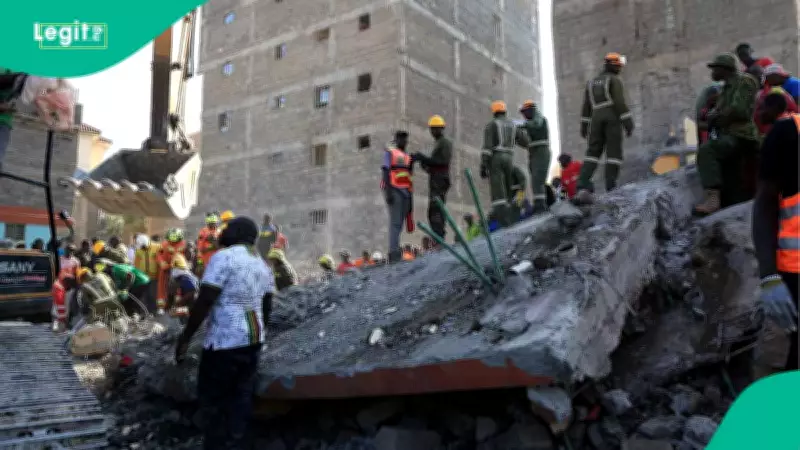
Deadly Church Building Collapse in Accra Claims Three Lives
A tragic building collapse in Accra, Ghana, has resulted in the deaths of three worshippers and injuries to twenty others, raising serious concerns about construction safety standards in the region. The incident occurred on March 29, 2026, when a three-storey structure being used as a church suddenly gave way in the New Town area.
Rescue Operations and Survivor Accounts
Emergency response teams worked tirelessly through the night under floodlights to search the rubble of the collapsed building. According to Ghana's Interior Minister Muntaka Mohammed-Mubarak, rescue personnel successfully extracted twenty survivors, predominantly women and children, who are now receiving urgent medical treatment at local hospitals.
The minister expressed confidence that no additional victims remained trapped, stating there was "90-95% certainty" that all individuals had been accounted for following the extensive search operation. Initial reports had indicated two fatalities and fourteen rescued individuals, but these figures were later updated to reflect the complete toll of three deaths and twenty survivors.

Structural Concerns and Eyewitness Testimonies
Local residents reported that the building had stood unfinished for several years before being repurposed for religious gatherings. Eyewitnesses described the structure as "very weak" and poorly maintained, with the community having long been aware of its precarious condition. One witness recounted hearing trapped victims calling for help from beneath the debris immediately following the collapse.
While heavy rainfall preceded the incident, authorities have not determined the exact cause of the structural failure. Investigations have been launched to examine why the building collapsed and why it was permitted to host public gatherings despite its apparent safety risks.
Broader Safety Implications in Ghana
This tragedy has reignited urgent conversations about building safety standards and regulatory enforcement in Ghana. The collapse recalls similar incidents in the country's history, including the 2012 multi-storey shopping centre disaster that was attributed to poor construction practices.
The incident highlights critical questions about the use of unfinished structures for public assemblies and the effectiveness of safety oversight mechanisms. As families mourn their losses and survivors recover from their injuries, the disaster serves as a stark reminder of the life-or-death importance of proper building regulations and their consistent enforcement.
Related Safety Incident in Nigeria
In a separate but related development, a classroom block at Odokekere High School in Lagos, Nigeria, collapsed during school hours earlier this year. Fortunately, no casualties resulted from that incident as students had been evacuated before the structure gave way completely.
The Lagos Special Committee on Rehabilitation of Public Schools confirmed that the building had already been marked for demolition prior to its collapse, with plans underway to replace it with modern educational facilities. This parallel incident underscores the broader regional challenges surrounding infrastructure safety and maintenance.