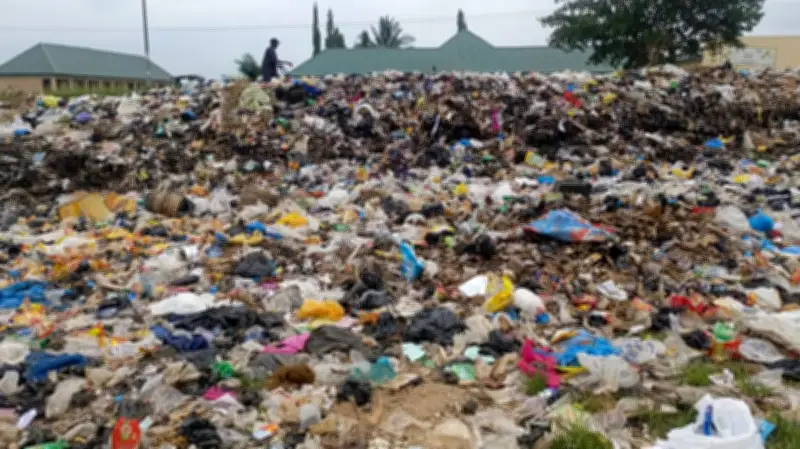
Waste Management Crisis in Nigeria's Megacities
The absence of effective waste management mechanisms in Lagos and Abuja has led errant residents and corporate entities to resort to unregulated waste disposal, creating significant health risks. With a combined population estimated at 27 million and over 20,000 tonnes of waste generated daily in both cities, proper infrastructure and behavioral change could transform this challenge into a multi-billion-naira revenue stream.
For daily commuters on the Karu-Karshi Expressway, what should be a smooth ride into Abuja has become a test of patience, nerves, and health. The once-vital artery linking the capital to its satellite towns is now lined with heaps of household and commercial waste. Vehicular lanes are narrowed, traffic crawls, and the stench of rotting refuse pervades the air. During the rainy season, runoff carries trash into clogged drains, forming stagnant puddles that breed mosquitoes and harbor disease vectors.
“This road was supposed to connect us effectively to Abuja Central Area, but every trip now feels like a gamble with traffic, dirt, and disease,” said commuter Gabriel Ukah. Another resident, legal practitioner Otasowie Isibor, lamented the increasing presence of waste along major roads and in residential communities like Gwarinpa and Maitama. “There is refuse everywhere on the road. Which other parts of Abuja can you go to now without encountering this problem?” he asked, expressing concern about public health impacts.

A Director in the Ministry of Defence, who requested anonymity, commended infrastructure development but stressed the need for equal attention to sanitation. “The FCT Administration is doing very well on infrastructure, but more attention needs to be paid to cleanliness and waste evacuation. Waste can be evacuated at least twice a week, or even daily in some locations, early in the morning or at night, as done in many cities worldwide,” he said.
Traders, residents, and transport operators blame inconsistent waste collection, poor infrastructure, and weak enforcement. The Federal Capital Territory Administration (FCTA) set up a task force to clear dumps and manage traffic, but no visible improvement has been recorded. Experts caution that this is a systemic issue. While Abuja generates thousands of tonnes of waste monthly, functional recycling plants are virtually non-existent. The absence of effective waste management has led to unregulated dumping in unauthorized areas, with serious health implications, higher accident risks, worsening air and water quality, and a spike in diseases like malaria and cholera.
Environmental scientist Dr. Said Mustapha agreed that more needs to be done. “Without sufficient collection infrastructure, recycling facilities, and public awareness, the cycle of dumping refuse on motorways will continue.” The Abuja Environmental Protection Board (AEPB) appears overwhelmed, with refuse heaps littering the city. Officials declined to comment, and the FCT Minister's spokesperson had not responded to inquiries.
In Lagos, the situation is equally dire. The city operates a PSP model with about 450 operators, but compliance remains weak. Bauhbon Environmental Services, one of the operators, has failed to deliver services in parts of Mushin Local Council, where bins have been emptied only three times in 12 weeks. Governor Babajide Sanwo-Olu reintroduced monthly environmental sanitation exercises, but residents worry that without proper waste removal, the situation could worsen. LAWMA's Director of Public Affairs, Mukaila Sanusi, said the agency has perfected strategies for statewide deployment of trucks and personnel.

LAWMA is engaging with the Lagos State House of Assembly to review its enabling law, aiming to strengthen compliance, address operational gaps, and institutionalize sustainable waste-to-resource models. The state has initiated a 10-year waste management plan, including procurement of 100 CNG-powered compactor trucks this year, with plans for 200 to 250 trucks annually. Managing Director Dr. Muyiwa Gbadegesin announced a statewide enumeration and automated billing system, where households will be billed by the state and PSP operators paid only after service delivery. He noted that 22 underperforming PSP operators had their contracts terminated, and the state plans to acquire 500 mobile compactor tricycles to address the waste burden and absorb cart-pushers.
Executives at Polysmart Group, a recycling company, said Lagos generates about 13,000 metric tonnes of waste daily, translating to 13 million tonnes yearly, with a potential revenue of $2.5 billion per year from recycling, composting, and energy conversion. Head of Operations Ikenna Abanonu projected that PET plastics alone could contribute between N39 billion and N58.5 billion yearly at current market rates. Scrap metals could net N32.5 billion to N48.75 billion annually. He noted that these gross values remain impressive even after accounting for logistics and overheads.