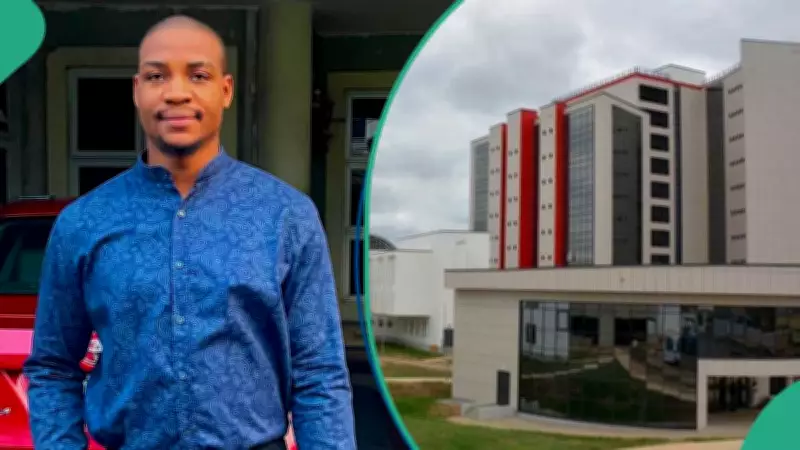
EFCC Headquarters Falsely Marketed as Luxury Hotel in Viral Social Media Post
The Economic and Financial Crimes Commission (EFCC) has issued a public response after a verified social media user on X platform falsely advertised its Abuja headquarters as a hotel available for purchase, creating a significant online stir across Nigeria. The commission acknowledged the misleading post through its official verified account, contributing to the growing digital conversation without immediately announcing any formal legal action against the individual responsible.
Details of the Misleading Property Listing
The viral post originated from a user identified as @osere_x, who uploaded a photograph of the EFCC's main administrative building in the Federal Capital Territory and presented it as a hospitality facility ready for acquisition. The fraudulent listing specified an asking price of N800 million for the property, with an additional N120 million designated as agent fees, presenting the anti-corruption agency's operational center as commercial real estate.
The advertisement text explicitly stated: "HOTEL AVAILABLE. Location: Abuja. Price – 800M. Agent fee – 120M. Only serious buyers should DM," which rapidly gained substantial traction across the social media platform. By the morning of February 10, 2026, the post had accumulated hundreds of reposts and replies, alongside thousands of likes and more than 400,000 views, demonstrating the remarkable reach of this unconventional digital incident.

EFCC's Official Response and Public Reaction
The commission eventually entered the online discussion through its verified X account, delivering a concise yet pointed response to the misleading advertisement. The EFCC's official statement read: "Hmmm.. You get mind oo", reflecting both acknowledgment of the situation and subtle commentary on the audacity of the false listing. This response further fueled the ongoing digital conversation without providing specific details about potential investigations or legal consequences.
Social media users across Nigeria responded with a mixture of humor, disbelief, and creative commentary, with many participants immediately recognizing the building as the headquarters of the country's primary anti-graft agency. The online community generated numerous witty observations about the situation:
- @Inuwaunited humorously noted: "Lmao. Full picture of EFCC hqtrs. Featuring the male and female cell blocks and even the clinic."
- @IamMustyP creatively described: "Great location! Very secure. 5star amenities including interrogation rooms and underground cells. Perfect for the business owner who wants to stay close to their money. Just don't ask for a late checkout."
- @Sheikh_of_light expressed amazement: "If no be say you get mind, in what universe do you wake up, stretch, and decide to advertise the EFCC Headquarters for sale??"
- @slimmmmrlo observed: "The fact this isn't a faceless account still Dey muzz me This guy get mind like mad I like your energy bro, no sha let them catch you, you go too explain oh"
- @ayokanmi94 summarized: "Omo, person wan sell EFCC headquarters Nothing we won't see on naija Twitter"
Broader Context of EFCC Operations
This unusual incident occurs against the backdrop of the EFCC's ongoing anti-corruption efforts across Nigeria. The commission has recently been involved in high-profile cases, including declaring former Minister of State for Petroleum Resources Timipre Sylva wanted over allegations of conspiracy and dishonest conversion of funds amounting to $14,859,257. According to official statements, these funds were reportedly part of resources injected by the Nigerian Content Development and Monitoring Board into Atlantic International Refinery and Petrochemical Limited for refinery construction projects.

The false hotel listing episode highlights the evolving challenges law enforcement agencies face in the digital age, where social media platforms can become venues for both legitimate discourse and unconventional forms of misinformation. While the EFCC's response remained measured in this instance, the incident underscores the importance of verifying online information and the potential consequences of disseminating false claims about government institutions and properties.
As Nigeria continues to navigate complex digital landscapes, this event serves as a reminder of the intersection between official institutions, public perception, and the sometimes unpredictable nature of social media engagement. The commission's choice to respond with subtle commentary rather than immediate legal threats reflects a nuanced approach to managing its public image while addressing misleading online content.