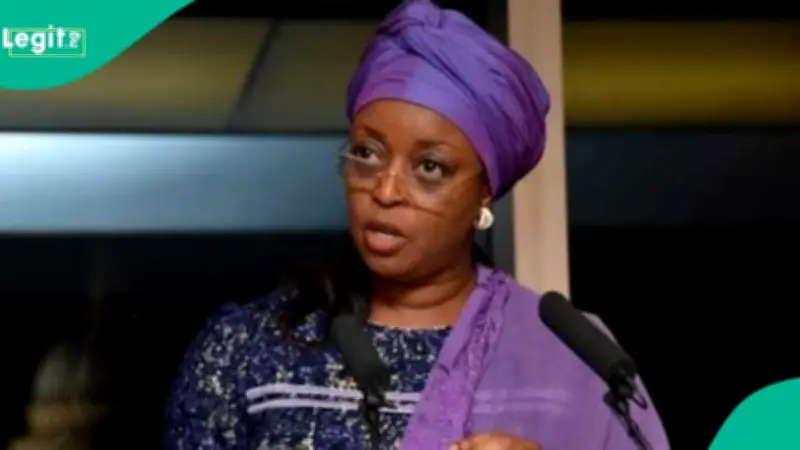
Former Nigerian Minister of Petroleum Resources, Diezani Alison-Madueke, has revealed that corruption allegations severely damaged her reputation and integrity, claiming that powerful interests orchestrated the legal battle she faced.
In her first major interview after the conclusion of her court case in the United Kingdom, Alison-Madueke told the BBC that the accusations were particularly painful because of her position as the first female to lead Nigeria's petroleum ministry and the first female president of the Organisation of Petroleum Exporting Countries (OPEC).
Allegations Affected Years of Hard Work
The former minister described the accusations as "completely damaging from the beginning," saying they affected years of hard work that led to her becoming one of Africa's most prominent female political figures.

She said achieving leadership positions in major global institutions was a difficult journey, and the allegations became traumatic. "To be the first female of these institutions and break global ceilings for women, and then to have these accusations against me, was a complete breakdown of my reputation and integrity," she said.
Alison-Madueke said her rise to leadership positions was achieved through determination and hard work, adding that the allegations affected her personal and professional image.
Claims Oil Sector Reforms Angered Cabals
Alison-Madueke alleged that her attempts to introduce reforms in Nigeria's oil sector angered influential individuals, whom she referred to as "cabals." "The things I tried to put in place to fight corruption in the oil sector did not go well with the cabals at all," she said.
She maintained that her position as Nigeria's first female petroleum minister and first female OPEC president made her a target in a male-dominated environment. "I was the first female to enter that kind of position as petroleum minister and as head of OPEC in a very misogynistic society," she said.
Calls for Review of Handling of Case
When asked who she blamed for the ordeal, Alison-Madueke said responsibility should not be placed on one side alone, urging both Nigerian and UK authorities to examine the processes involved. "I think blame is everywhere. I don't think one group can take all the blame alone," she said.
She also said authorities should have spent more time examining the information provided during the investigation before reaching conclusions.
Historic Rise in Nigeria's Oil Sector
Alison-Madueke became Nigeria's first female Minister of Petroleum Resources in April 2010. Before then, she served as Minister of Transportation in 2007 and later as Minister of Mines and Steel Development in 2008. She became OPEC president in 2014, making history as the first woman to lead the organisation. Her appointment placed her among Africa's most influential political figures in the energy sector.