A Utah judge has postponed a decision on whether to find prosecutors in contempt for violating a pretrial publicity order in the case against Tyler Robinson, the man accused of killing conservative activist Charlie Kirk. The ruling could determine whether the death penalty remains a possible punishment if Robinson is convicted.
Judge sets new hearing date
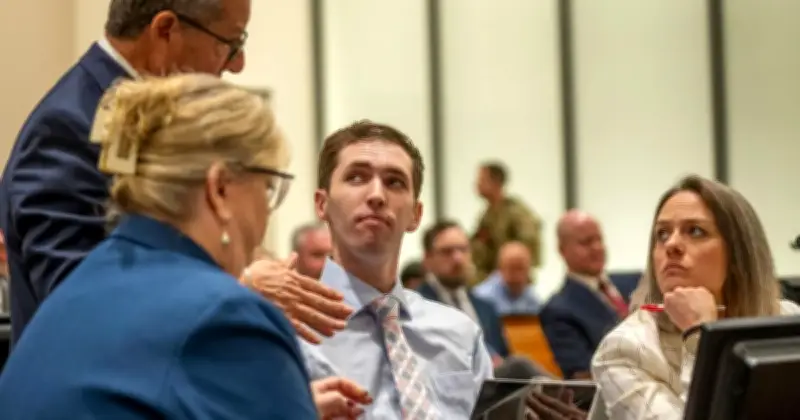
Instead of issuing a ruling during Monday's hearing, district court Judge Tony Graf scheduled a Friday morning hearing to address the contempt issue. Robinson's attorneys argued that comments made by prosecutor Christopher Ballard to multiple media outlets violated the judge's order, which was issued in September and amended in December, prohibiting public comments about the case except under specific circumstances.
Defense seeks death penalty removal
Robinson's legal team has asked Judge Graf to remove the death penalty as a possible outcome if prosecutors are found in contempt. Robinson faces charges including aggravated murder, felony use of a firearm, obstruction of justice, and witness tampering in the September shooting death of Kirk on a Utah university campus. Robinson has not yet entered pleas. The defense suggested other penalties for contempt, such as attending a continuing education program or referral to the state bar association.

Prosecutors filed an objection to the contempt request, calling it "grossly disproportionate to the alleged misconduct." They argued that even if the court found the prosecution could have made a better statement, it does not warrant the "drastic and never-before-imposed remedy of reducing the aggravated murder charge to a first-degree felony." Robinson's defense countered that the objection was uninvited, as the court did not authorize any post-hearing briefing.
Background of the contempt motion
The contempt motion stems from interviews Ballard gave to several media outlets at the end of March and beginning of April regarding an inconclusive ballistics report referenced in a defense filing. Ballard testified that his remarks were about circumstances leading to inconclusive test results, not specific evidence, and he noted in each interview that Robinson is presumed innocent. He said he does not believe his comments violated the court's order.
Robinson's attorney Richard Novak argued the comments were "extremely reckless" and found no credibility in Ballard's sworn testimony that he only intended to communicate generally about bullet fragment analysis. Kirk's death triggered an avalanche of misinformation, and Robinson's attorneys have repeatedly raised concerns about news coverage harming their client's right to a fair trial.
Prosecutors allowed hearsay evidence
In a separate ruling, Judge Graf decided prosecutors can submit hearsay evidence during Robinson's preliminary hearing, scheduled to begin July 6. "In Utah, the primary purpose of the preliminary hearing is limited to determining whether probable cause exists," Graf said. "Although the preliminary hearing is a critical stage of the criminal process, it is not a trial and does not involve the determination of guilt or innocence."
Under Utah law, hearsay is any statement offered into evidence made by a person who is not testifying. Defense attorney Michael Burt argued a video deposition with a key witness—identified as Robinson's roommate and romantic partner at the time of the shooting—is hearsay and should not be admissible because the witness could not be cross-examined. The roommate is expected to provide insight into digital messages related to the shooting, including an alleged confession by Robinson and a handwritten letter left under a keyboard.
Judge rejects defense arguments
Graf rejected the defense's arguments, stating: "Defendant’s arguments rest on the premise that effective assistance of counsel requires access to the full range of adversarial tools, including cross-examination, at every stage of the criminal proceeding. The court is not persuaded by defendant’s arguments." He also declined to certify a subpoena that would have required the witness to give live testimony, after the witness's attorney refused to accept service.

Prosecutor Ballard contended earlier this month that the defense is not entitled to cross-examine witnesses at this stage because the preliminary hearing has the limited purpose of establishing probable cause. He added that granting the defendant's motion would make the court the first to find that the Sixth Amendment right to confrontation applies at a preliminary hearing.