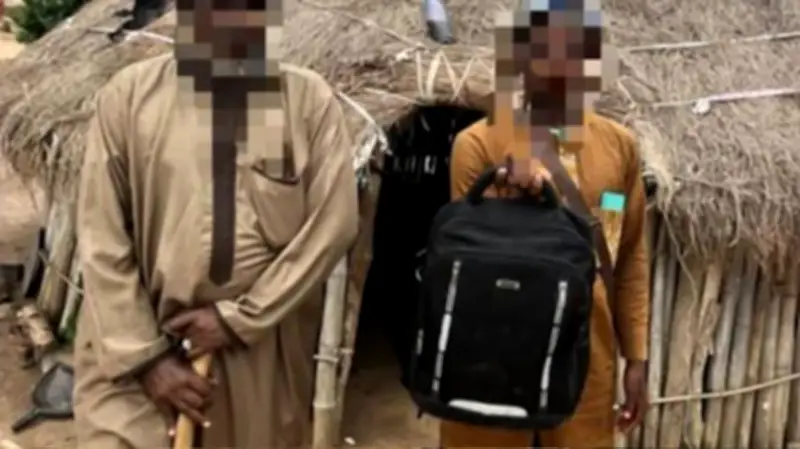
It has been nearly three weeks since teachers and school pupils were abducted in Oriire Local Government Area of Oyo State, yet the Nigerian government has not secured their release, even though both the abductors and victims remain within the country's borders. This situation is deeply painful, inhumane, and terrifying for the victims held in harsh forest conditions, as well as for their families whose lives have been shattered by this trauma.
What excuse can any government offer other than the plain truth that it has failed in its primary constitutional responsibility to protect lives and property within its sovereign territory? None. However, it must be acknowledged that a state government can only do so much when the nation's security architecture is largely controlled by the federal government. Nonetheless, no responsible government should pretend all is well after losing control of such a fundamental duty.
The insecurity situation continues to deteriorate daily. In recent days, there have been numerous reported killings and kidnappings across the country. Just this morning, another kidnapping was reported around the Challenge area of Ibadan, Oyo State. The implication is clear: the government has been overwhelmed by the scale of insecurity and can no longer claim to be in control. Things are worsening with each passing day.

Many analysts have written extensively, offering advice and practical suggestions on tackling insecurity in Nigeria. Unfortunately, successive administrations have failed to confront the problem with the seriousness, courage, and decisiveness required. This failure is a major reason the monster of insecurity has grown unchecked. If truth be told, when a country relies on foreign troops or external assistance to combat internal insecurity, it admits that the government has fallen short of its responsibility to maintain peace and order.
Even more painful is the politicization of insecurity by politicians and citizens, rather than treating it as a collective national emergency. Instead of uniting against a common enemy, people are increasingly divided along ethnic, religious, and partisan lines. Some blame Fulanis; others describe every incident as targeted religious genocide. But did kidnappers separate Muslims from Christians before abducting victims in the South? Did they identify ethnic backgrounds before attacks in the North? Is it impossible for criminals to disguise themselves in Fulani attire or exploit native languages and religious slogans to push dangerous narratives and deepen division?
The reality is that evil-minded individuals can manipulate identities and sentiments to deceive the public and fuel hatred. Anyone can shout "Allahu Akbar" or say "Bismillahi" while wearing Fulani attire to commit heinous acts, but that alone cannot and should not be taken as automatic proof of identity or motive. To defeat insecurity in Nigeria, we must rise above ethnic, religious, and political sentiments and form a united front against criminality. We must eliminate mutual suspicion and stop viewing every security challenge through the lens of tribe, religion, or partisan politics.
Nigerians must remain vigilant, cooperate with security agencies, and report suspicious activities promptly. Only through unity, sincerity, vigilance, and collective action can we begin to restore peace, stability, and national confidence. Meanwhile, the immediate priority must be the safe release of the abducted teachers, pupils, and every other Nigerian currently held captive across the country. Whether the government chooses negotiation, tactical operations, or other lawful means is secondary. What matters most is that these innocent citizens regain their freedom without further delay.