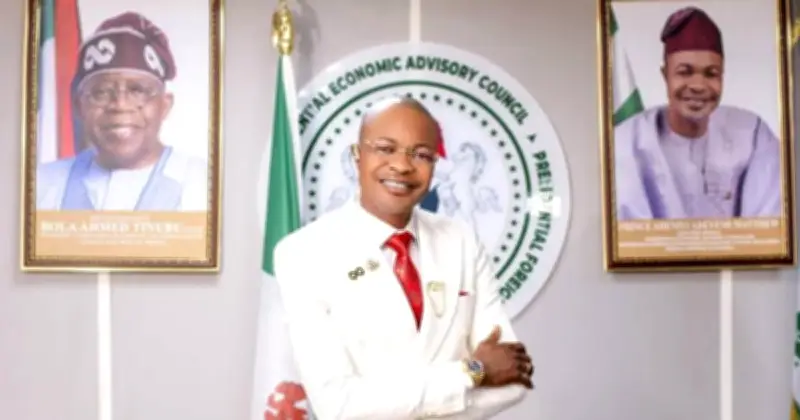
The Presidency is embroiled in a fresh controversy after a man, Prince Adeniyi Adeyemi Matthew, was accused of creating a non-existent government agency, appointing himself Director-General, and allegedly operating as a legitimate federal institution for months. According to the Presidency and the Nigerian Police, Adeyemi established an organisation called the Presidential Foreign Intervention Promotion Council (PFIPC) and managed to operate from an office inside the Federal Secretariat Complex in Abuja.
Alleged operations and discovery
Investigators say Adeyemi hosted ambassadors, held meetings with ministers, wrote official letters to government agencies, requested diplomatic support from the Ministry of Foreign Affairs, and even represented Nigeria at international events while presenting himself as the head of the council. The matter became a major talking point online due to the extent of the alleged operation before it was uncovered.
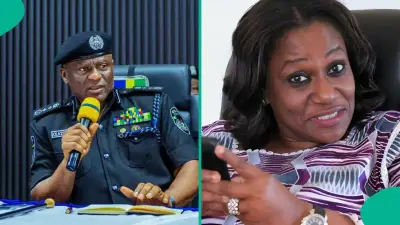
The Presidency, in a statement released on Wednesday by Special Adviser on Information and Strategy, Bayo Onanuga, explained that the case began after officials at the Nigerian Investment Promotion Commission noticed another organisation carrying out similar activities. The Office of the Chief of Staff, Femi Gbajabiamila, later petitioned both the DSS and the Nigeria Police on October 17, 2025.

Arrest and charges
Adeyemi was arrested on October 27, 2025, at his office inside the Federal Secretariat. Police later filed an eight-count charge against him and two other suspects, identified only as Femi and Anu, who are currently said to be on the run. Allegations include conspiracy, forgery, impersonation, and producing fake official documents from the Presidency. One charge reads: "That you, Prince Adeniyi Adeyemi Mathew, forged an appointment letter purported to have been issued by His Excellency, President Bola Ahmed Tinubu, GCFR, and signed by the Chief of Staff to the President, Femi Gbajabiamila." Another alleges: "That you falsely personate as the Director-General of the Presidential Foreign Investment Promotion Council."
Financial operations uncovered
Investigators face growing scrutiny after revealing that the suspect managed to open a functional account with the Central Bank of Nigeria (CBN) by presenting forged documents to the Office of the Accountant-General. Police investigators uncovered 34 bank accounts, including nine allegedly opened in the names of non-existent government agencies. The Presidency insists no government money was paid into the account, but police described it as an attempt to infiltrate Nigeria's financial system. Search warrants executed at his office and residence led to the recovery of forged appointment letters, fake official letterheads, government correspondence, and several other documents. Police also alleged that three officials from the Office of the Accountant-General were posted to his office in August 2025 but reportedly performed no official duties.
Diplomatic protocol breach
Before his arrest, the Ministry of Foreign Affairs became suspicious after Adeyemi hosted ambassadors at the Wells Carlton Hotel in Abuja without informing the ministry, describing it as a breach of diplomatic protocol. In his petition to security agencies, Gbajabiamila wrote: "The attention of this office has been drawn to the activities of certain individuals and groups engaged in the forgery of official appointment letters purportedly issued from my office. The fake documents, bearing falsified signatures, reference and folio numbers, and seals, have been used to claim leadership appointments to non-existent entities, with particular reference to the Presidential Foreign Intervention Promotion Council." He added: "They have been parading themselves as a legitimate government agency, hosting meetings with both foreigners and Nigerian citizens, and even going so far as to request a Note Verbale from the Ministry of Foreign Affairs of the United States of America to facilitate visas for some of their staff. The above development not only constitutes a serious criminal act but also undermines the integrity of the Presidency and the credibility of official government communication."

Budget allocation controversy
The case became more controversial because Adeyemi insists the agency was real. During a press conference, he accused Chief of Staff Femi Gbajabiamila of making conflicting statements and alleged that references to the PFIPC appeared in the 2026 Appropriation Act. He questioned how an agency the Presidency now says never existed allegedly received a budget allocation of ₦1,302,978,784. He also made corruption allegations against Gbajabiamila, claiming he demanded money and a percentage of the agency's take-off grant to secure his appointment. The allegations have not been proven in court, and Gbajabiamila has consistently denied any involvement. Adeyemi has called on President Bola Tinubu to establish an independent panel to investigate the matter.
Falana calls for independent probe
Senior Advocate of Nigeria, Femi Falana, says the Presidency cannot simply clear anyone involved. According to him: "The Presidency is not in a position to clear anybody. It is the duty of the police and anti-graft agencies to investigate cases of official corruption. The Presidency can only refer Femi Gbajabiamila, as well as the other individual, to the ICPC because allegations of fraud and corruption have been raised." Falana also questioned how a body the government now describes as fictitious could allegedly have a budget line and access to a CBN account. He said: "The government will have to explain to Nigerians how a whopping sum of N24bn was budgeted for an unknown agency, as well as how that agency had accounts with the Central Bank of Nigeria."
Court proceedings ahead
Adeyemi is expected to return to the Federal High Court in Abuja on July 27, 2026, where the forgery and impersonation case against him will continue. The Presidency maintains that the PFIPC never existed officially, while the police prosecution continues. However, questions remain: If the agency was fake, how did it allegedly operate from the Federal Secretariat, interact with diplomats, open official-looking bank accounts, and become linked to discussions around the national budget? Those questions are likely to remain central as the case heads back to court.