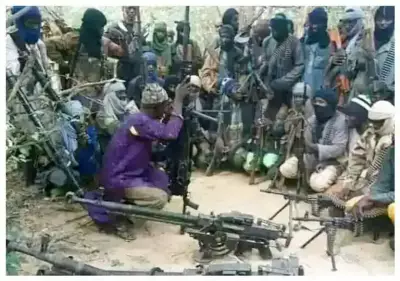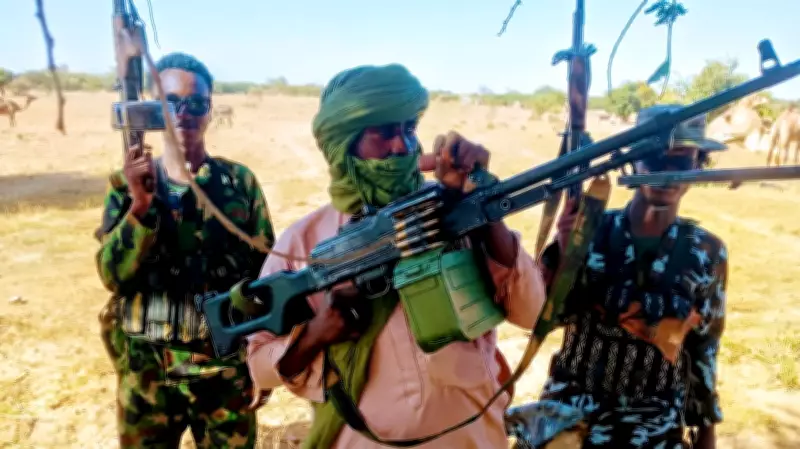
Nigeria is facing an alarming security crisis, with approximately 2.2 million kidnapping incidents and ransom payments estimated at N2.2 trillion recorded in a single year, according to security expert Professor Oyesoji Aremu.
Public lecture highlights crisis
Aremu, a security scholar at the University of Ibadan and Acting Vice Chancellor of Achievers University, Owo, Ondo State, made the disclosure while delivering a public lecture organized by the Social Sciences Students' Association (SOSSA) of Adekunle Ajasin University, Ondo State. He examined Nigeria's position on global security indexes and the escalating human and economic cost of insecurity.
Citing data attributed to the National Bureau of Statistics and reported in December 2024, Aremu said the figures reflect the emergence of a well-organized "ransom economy" driven by banditry, kidnapping syndicates, and insurgent networks across the country. He warned that the scale of kidnappings and ransom payments has turned insecurity into a structured criminal enterprise, with devastating consequences for families, communities, and the national economy.

Global rankings show deterioration
Aremu also referenced Nigeria's poor performance on global security benchmarks. The country currently ranks 142 out of 143 on the World Justice Project Rule of Law Index, 148 out of 163 on the Global Peace Index, and 5th globally on the Global Terrorism Index. According to him, these indicators confirm a sustained deterioration in safety and governance, with severe implications for development and investor confidence.
Historical roots and current challenges
Tracing the roots of Nigeria's security crisis, the lecturer cited historical flashpoints such as the Civil War, Maitatsine riots, Niger Delta militancy, and the rise of Boko Haram, which he said escalated after early warning signs were neglected. He explained that the fragmentation of extremist groups, including ISWAP and other splinter cells, alongside the expansion of banditry and illegal mining operations, has further complicated national security responses.
Aremu expressed concern over the use of vast ungoverned forests such as Sambisa, Alagarno, Kamuku, Kuyambana, Kuduru, and Old Oyo National Park as safe havens for criminal groups, describing them as evidence of weak state presence in remote areas. He stressed that repeated attacks on schools, including Chibok, Dapchi, Kagara, Greenfield, and recent incidents in parts of Oyo State, underscore persistent failures in intelligence coordination and preventive security measures.
Recommendations for improvement
The scholar warned that Nigeria's response to insecurity has been weakened by institutional rivalry and lack of collaboration, describing the situation as a "blame game" that undermines effective action. To address the crisis, he recommended state policing, stronger community intelligence systems, enhanced inter-agency cooperation, coordinated surveillance among neighboring states, and the deployment of forest guards to secure ungoverned spaces.
In his remarks, the Vice-Chancellor of the university, Olugbenga Ige, who was represented by the Deputy Vice-Chancellor (Academic), Professor Adebisi Daramola, described the lecture as timely and relevant to Nigeria's current security realities. Also speaking, the Dean of the Faculty of Social Sciences, Professor Adesuyi Adebukola, called for sustained collaboration among stakeholders, stressing that insecurity remains a major obstacle to national development.