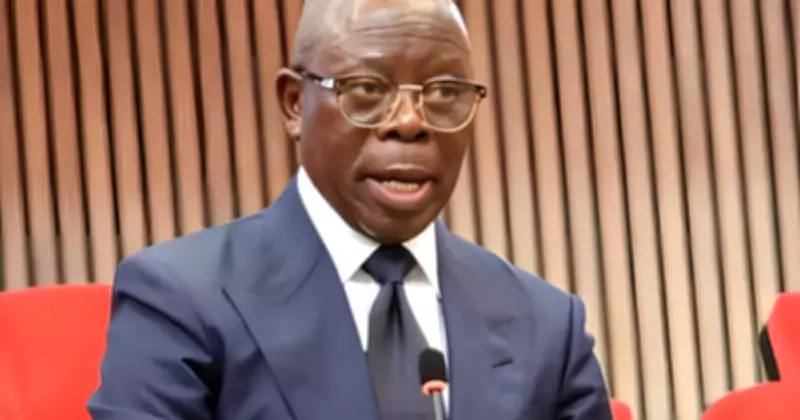
Senator Adams Oshiomhole has called on the Nigerian government to impose economic sanctions on South African companies operating in Nigeria, including telecommunications giant MTN and pay-television provider DSTV, in response to renewed xenophobic attacks against Nigerian citizens in South Africa. The senator representing Edo North Senatorial District made the demand during a plenary session on Tuesday, arguing that economic retaliation is a necessary diplomatic principle.
Oshiomhole's Proposal for Economic Retaliation
Speaking on the floor of the Senate, Oshiomhole declared, "If you hit me, I hit you," framing his proposal as a matter of diplomatic principle rather than aggression. He argued that South Africans who claim Nigerians are taking their jobs should face the consequences of Nigerian-controlled replacements for MTN and DSTV. "When we hit back, the president of South Africa will not only talk, but will go on his knees," he stated.
The senator linked the current tensions to broader political dynamics in South Africa, noting that anti-immigrant sentiment has featured prominently in the country's domestic politics, influencing attitudes toward foreign nationals, including Nigerians. He urged the federal government to revoke the operational licences of these companies as a strong message.

Senate Declines Proposal
Despite Oshiomhole's passionate appeal, the Senate declined the proposal on procedural grounds. The Senate President emphasized that diplomatic engagement remains the preferred path and that economic retaliation against businesses would not be the preferred course of action. Instead, lawmakers pushed for diplomatic and humanitarian responses.
Escalating Xenophobic Violence
The attacks that prompted Oshiomhole's outburst have been escalating for weeks. Since late March, foreign-owned properties have been set ablaze, immigrants have been barred from receiving hospital care, and many have been driven from their livelihoods. The violence has been broadly directed at foreigners, though Nigerians have been among the most visible targets. At least two Nigerians and one Ethiopian have been killed in the attacks.
House of Representatives' Response
The House of Representatives strongly condemned the attacks and mandated its Committee on Foreign Affairs to work with the Nigerian High Commission in Pretoria to establish a 24-hour emergency response desk and a legal aid fund for affected citizens. Lawmakers also urged the government to develop a comprehensive evacuation contingency plan, including financial and logistical support for Nigerians willing to return home.
The House recommended a review of all bilateral agreements with South Africa, including trade and aviation treaties, and called for targeted economic measures such as a temporary suspension of business permits for new South African companies, pending demonstrable steps by Pretoria to halt the attacks, prosecute perpetrators, and compensate victims.
Historical Context
This is not the first time Nigeria has found itself at this crossroads. Major outbreaks of xenophobic violence in 2008, 2015, and 2019 saw foreign nationals, many of them Nigerians, targeted in widespread attacks on homes, shops, and businesses. Nigeria has at times recalled envoys and evacuated citizens in response. What makes this moment distinctive is the growing domestic pressure demanding more than condemnation. Nigerian citizens want action, and their lawmakers are listening, even if, for now, the loudest proposals remain on the table rather than in effect.