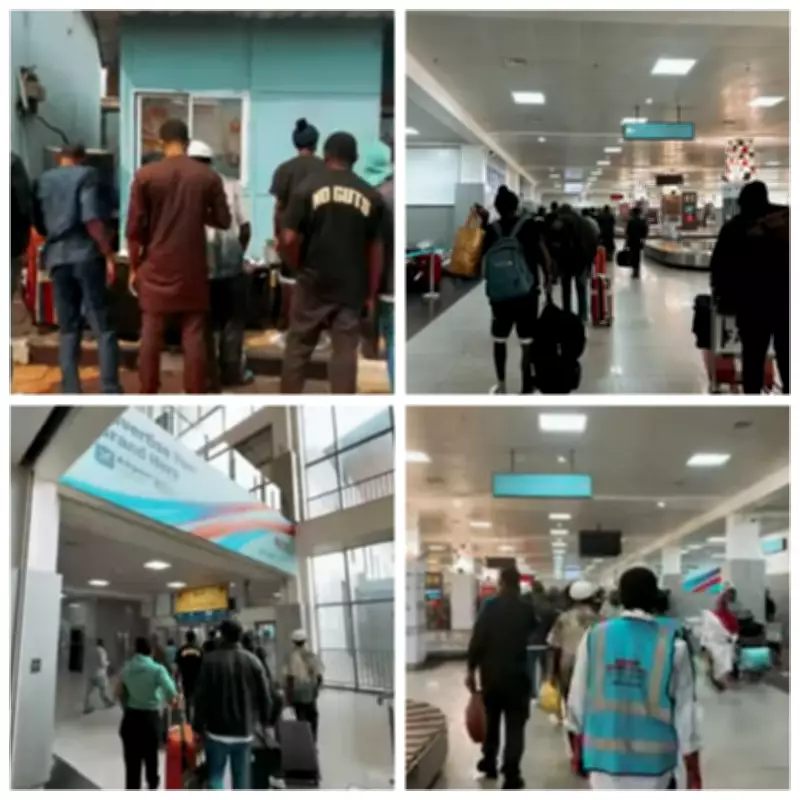
NAPTIP Rescues 23 Nigerians Trafficked to Thailand for Cybercrime Operations
The National Agency for the Prohibition of Trafficking in Persons (NAPTIP) has successfully rescued and repatriated 23 Nigerian youths who were suspected victims of human trafficking to Thailand for cyber-enabled criminal activities. The agency's Director-General, Binta Adamu Bello, disclosed this development on Wednesday, February 11, 2026, highlighting a disturbing new trend in human trafficking.
International Collaboration in Rescue Operation
According to a statement issued by NAPTIP's Head of Press and Public Relations, Vincent Adekoye, the rescue operation was conducted in collaboration with Eden (Myanmar), with critical support from the British Government and the Nigerian Embassy in Bangkok. The victims have now safely returned to Nigeria after being deceived with false promises of scholarships and lucrative employment opportunities.
The traffickers specifically targeted young Nigerians with computer and IT skills, as well as those with clean health records who do not smoke or drink alcohol. These individuals were then transported to various Southeast Asian countries including Myanmar, Thailand, Laos, and Cambodia under false pretenses.

Forced into Cybercrime Activities
Upon arrival in these destination countries, the victims were allegedly forced into various cybercrime operations including:
- Romance scams targeting individuals from the United States, United Kingdom, Ethiopia, and Canada
- Cryptocurrency-related fraud schemes
- Fake investment scams
- Other online financial fraud activities
The victims were accommodated in hostels with bunk beds and provided with all necessary technological gadgets to carry out their criminal assignments. They were closely monitored by what they described as "fierce-looking mafia guys" who would torture anyone who failed to meet daily targets.
A New Dimension in Human Trafficking
Director-General Bello described this development as "a new dimension of the human trafficking phenomenon" that specifically targets vibrant and intelligent Nigerians with technical skills. Some victims were even enrolled in language schools, particularly for Chinese language training, and quickly graduated to become translators used in customer care roles to deceive targets.
"This is a new dimension in trafficking to destination countries in the Southeast Asian region, and it is disturbing," Bello stated. "We have reactivated our various connections so that, with the support of partners, this deadly trafficking syndicate will be dislodged and the ringleaders arrested."
Disturbing Revelations from Victims
The victims shared harrowing accounts of their experiences, revealing that those who refused to comply with traffickers' demands faced severe consequences:
- Some were tortured to death in what they called "the dark room"
- Others had their organs harvested, particularly younger victims with non-smoking histories
- All were forced to work under constant threat and surveillance
This rescue operation comes just weeks after Director-General Bello promised tougher measures against human traffickers in Nigeria, vowing improved collaboration and upscaled strategies to detect, dislodge, and disorganize trafficking activities targeting Nigerians.
Appreciation for International Support
NAPTIP expressed gratitude for the support and collaboration from various international partners including:
- Civil society organizations in the South Asia region
- Eden (Myanmar)
- The British Government
- The Nigerian Embassy in Bangkok, Thailand
The Nigerian Embassy played a particularly significant role in facilitating the repatriation process, including issuing Emergency Travel Certificates for some victims who lacked proper documentation. This successful operation demonstrates the importance of international cooperation in combating the evolving tactics of human trafficking syndicates that now incorporate cybercrime elements into their exploitation schemes.