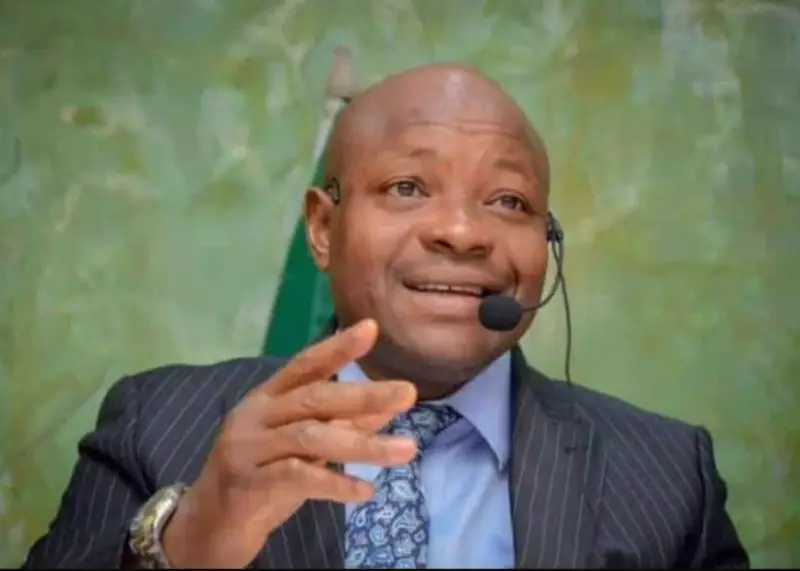
In a significant departure from past perceptions, Nigeria's Department of State Services (DSS) under Director-General Oluwatosin Adeola Ajayi charted a new course in 2025, defined by professionalism and restraint rather than public controversy.
A Shift to Proactive, Intelligence-Driven Operations
Since his appointment in 2024, DG Ajayi has systematically reoriented the Service's focus from reactive enforcement to intelligence-led prevention. This strategic pivot became fully evident throughout 2025, as DSS operatives successfully penetrated terrorist cells, dismantled kidnapping syndicates, and tracked arms trafficking networks, particularly in the North-East, North-West, and Middle Belt regions.
The core achievement was the neutralization of multiple threats before they could materialize into attacks, demonstrating the superior value of preemptive intelligence work over post-incident responses.

Breaking Silos: Enhanced Inter-Agency Coordination
One of the most critical reforms under Ajayi's leadership has been the drastic improvement in inter-agency cooperation. Historically, rivalry and poor intelligence sharing have crippled Nigeria's security architecture.
In 2025, the DSS strengthened its intelligence fusion with the Armed Forces, the Nigeria Police Force, and other security agencies. This collaboration eliminated operational duplication, slashed response times, and led to more coherent security operations across multiple conflict theatres.
Restoring Credibility and Public Trust
Beyond covert operations, the DSS under Ajayi made deliberate strides to rebuild its institutional credibility and respect for the rule of law. In a move hailed by observers, the Service undertook a review of legacy detention cases.
Individuals held without sufficient legal basis were released, and court orders on compensation were complied with. These actions drew commendation from legal practitioners, civil society, and commentators, proving that national security objectives can be pursued within legal boundaries.
The leadership's commitment to balance was further recognized when the Nigerian National Committee of the International Press Institute (IPI) named DG Ajayi a champion of press freedom in 2025, citing improved media engagement and a restrained approach to press-related security issues.
Internal Reforms and Grassroots Engagement
Internally, the Service implemented morale-boosting changes focusing on welfare, training, and career progression. Training programs were updated to counter emerging threats like cybercrime and transnational criminal networks. A landmark appointment saw the first female Deputy Director-General, signaling institutional maturity and a commitment to merit.
Quietly, community engagement became a cornerstone of the DSS strategy. By bolstering local intelligence networks and early-warning systems in volatile areas, the Service enhanced its preventive capacity, acknowledging that effective intelligence begins at the grassroots level.
While Nigeria's security challenges from terrorism, banditry, and organized crime persist, the DSS's trajectory in 2025 under DG Tosin Ajayi offers a blueprint: an intelligence service can be firm yet lawful, secretive yet accountable, and effective while earning public trust. Sustaining these reforms could firmly establish the DSS as a stabilizing pillar within Nigeria's democracy.