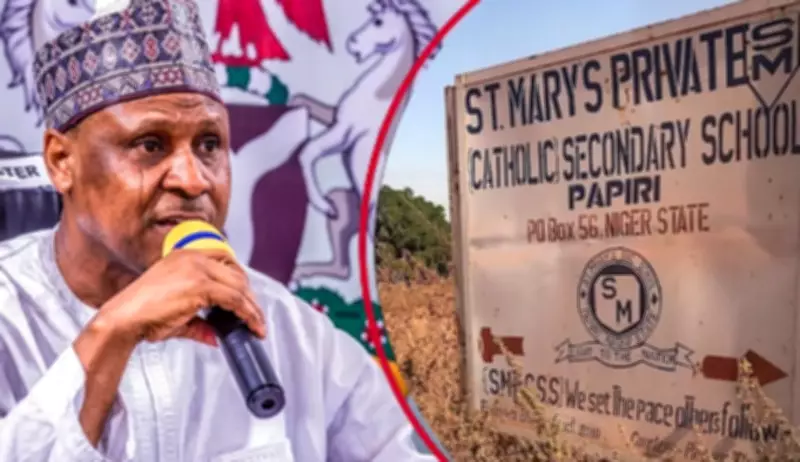
Nigeria Denies N2bn Ransom Payment for St. Mary's Papiri Pupils Release
The Federal Government of Nigeria has issued a firm denial regarding allegations that it paid a substantial N2 billion ransom to secure the freedom of students who were abducted from St. Mary's School in Papiri, Niger State. Minister of Information and National Orientation Mohammed Idris categorically described these claims as "false and baseless" in an official statement released on Tuesday from Abuja.
Government Reaffirms Anti-Ransom Policy
Minister Idris emphasized that the government maintains a strict and longstanding policy against making any form of ransom payments to criminal elements. He clarified that the successful release of the students was achieved through coordinated security operations, extensive intelligence gathering, and effective inter-agency collaboration, rather than through financial inducements. The administration of President Bola Tinubu highlighted that Nigeria is confronting what it terms a "structured, profit-driven criminal enterprise" and credited the safe rescue entirely to professional security efforts.
Response to AFP Report and Allegations
The government's statement was specifically addressing a report published by Agence France-Presse (AFP), which cited unnamed intelligence sources alleging that millions of dollars were paid to militants, alongside the release of two commanders, to secure the freedom of up to 230 pupils and staff abducted in November. Idris dismissed this report, noting it relied on anonymous sources and contained what he called "contradictions" that severely undermined its credibility.

He further labeled as "fiction" the claims that ransom funds were transported by helicopter to insurgents in northeastern Nigeria, adding that the Department of State Services (DSS) had already characterized the allegation as "fake and laughable." The federal government's statement read unequivocally: "No ransom was paid, and no militant commanders were freed."
Political and International Reactions
Despite the government's denial, the opposition Peoples Democratic Party (PDP) has called for complete transparency in the matter. The PDP warned that any ransom payment, whether direct or conducted through intermediaries, would be "shameful and troubling" and could potentially embolden criminal groups across the country. Similarly, the African Democratic Congress (ADC) demanded a detailed security briefing, arguing that inconsistent public communication was fueling public suspicion and mistrust.
The controversy has also attracted international attention. Members of the United States Congress reportedly submitted a security brief to President Donald Trump, expressing concern about persistent attacks on Christian communities in parts of Nigeria and urging stronger action against armed groups operating in the region.
Background on Kidnapping Crisis in Nigeria
AFP's report alleged that militants linked to Boko Haram were responsible for the abduction at St. Mary's School. Sources cited by the outlet claimed that ransom payments ranged from N2 billion to as much as 40 million naira per student, highlighting the lucrative nature of such criminal activities.
Nigeria has been grappling with mass kidnappings for over a decade, with criminal gangs and extremist factions routinely targeting schools, highways, and rural communities. Although a 2022 law criminalized ransom payments, carrying penalties of up to 15 years in imprisonment, families and, allegedly, intermediaries have continued to engage in negotiations to secure the release of hostages.
Security analyst Vincent Foucher of France's National Centre for Scientific Research told AFP that factions associated with Boko Haram have increasingly relied on kidnapping as a primary revenue source, particularly amid internal relocations and operational shifts. Kidnapping for ransom has evolved into a major security challenge in Nigeria. According to data from Armed Conflict Location & Event Data (ACLED), hundreds of abductions were recorded in the past year alone, many involving multiple victims.

Broader Implications and Ongoing Concerns
While the federal government maintains that no ransom was paid in the St. Mary's Papiri case, the broader debate underscores ongoing concerns about transparency, counterterrorism strategy, and the effectiveness of Nigeria's anti-kidnapping laws. The incident highlights the complex challenges faced by authorities in balancing security operations with public accountability and international scrutiny.