15-Year-Old Boy Arrested Over Attack on Army in Borno State
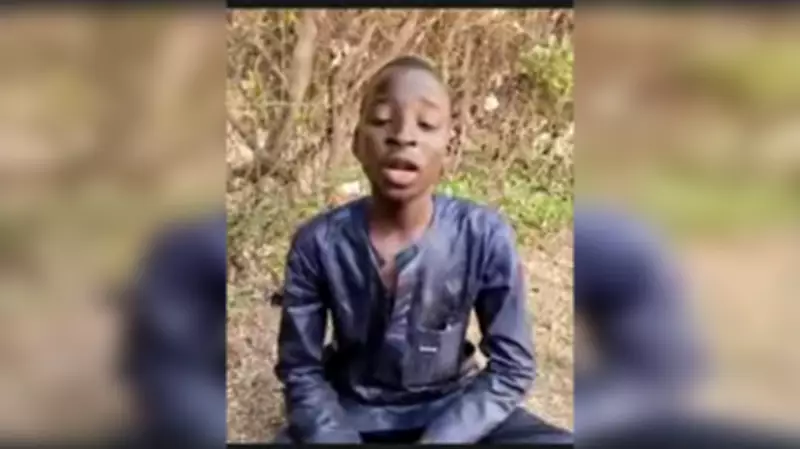
Troops of the Joint Task Force (North East), Operation Hadin Kai (OPHK), have arrested a 15-year-old boy identified as Tijjani for his alleged involvement in a deadly attack that claimed the lives of a senior military officer and two soldiers in Borno State. The arrest occurred on Sunday at Ngamdu, where Tijjani was reportedly on his way to purchase food for members of his group.
Confession and Details of the Attack
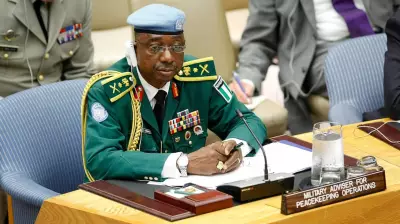
In a video confession, Tijjani admitted to participating in attacks on Benisheik and Ngamdu on Thursday. The assault resulted in the death of General Oseni Braimah, Commander of the 29 Task Force Brigade under OPHK, along with two soldiers, when suspected Boko Haram fighters targeted their base. Speaking in Hausa, Tijjani revealed that the attackers originated from Jilli and returned there after the operation.
"Before the attack, we came from Jilli and returned there after the attack," he said. "I was sent from Jilli yesterday with N850,000 to collect some logistics from Ngamdu, but I was arrested by troops. On Saturday, I left other fighters, my colleagues, at Jilli. I don't know what happened to them there."

HURIWA Condemns Recent Airstrike in Jilli Market
Meanwhile, the Human Rights Writers Association of Nigeria (HURIWA) has strongly condemned a recent Nigerian Air Force airstrike on Jilli Market along the Borno–Yobe axis. The strike reportedly killed more than 200 civilians, mostly traders, and left many others injured. HURIWA stated that this incident reflects a troubling pattern of fatal military air operations that have claimed civilian lives across Nigeria over the past decade.
In a detailed statement, HURIWA listed several past incidents, including:
- A March 16, 2014 airstrike in Kayamla, Borno State, which killed at least 10 civilians.
- The January 17, 2017 bombing of an IDP camp in Rann, Borno State, where over 100 people, including aid workers, died.
- A December 2017 strike in Shafaron and Nvi communities in Adamawa State that left at least 35 civilians dead and displaced thousands.
- A February 28, 2018 operation in Daglun, Borno State, which killed about 20 civilians.
- An April 11, 2019 air raid in Zamfara State that killed several civilians, including children.
- An April 2020 strike in Sakotoku, Borno State, which left 17 people dead.
- A June 2021 bombardment in Niger State that killed wedding guests and villagers.
HURIWA further referenced strikes in September 2021 that killed fishermen near Lake Chad in Borno and Yobe states, a December 2022 operation in Zamfara State that claimed 64 lives, and a January 2023 incident in Nasarawa State where more than 40 herders were killed after being mistaken for bandits. The group also recalled the December 3, 2023 drone strike on a religious gathering in Tudun Biri, Kaduna State, which left about 120 civilians dead, as well as incidents recorded between 2024 and 2025 in Sokoto and Zamfara states involving wrongly targeted villagers and vigilantes.
Criticism of Military Operations and Demands for Accountability
HURIWA asserted that these repeated incidents point to significant failures in intelligence gathering, target verification, operational discipline, and accountability within military operations. Its National Coordinator, Emmanuel Onwubiko, emphasized that such incidents can no longer be described as accidents.
"When such deadly errors become frequent and predictable, they amount to institutional negligence and a grave violation of the right to life," Onwubiko said. "The Jilli airstrike represents a catastrophic failure of state responsibility and a reminder that civilians remain vulnerable not only to insurgents but also to the forces mandated to protect them."
The group called for an independent investigation and urged the Federal Government to establish a civilian-led panel, including the National Human Rights Commission and civil society groups, to probe the incident and publish its findings. HURIWA demanded N200 billion in compensation for victims' families, calculated at N1 billion per victim, alongside medical care and rehabilitation for survivors.

Additionally, HURIWA urged affected families to seek legal redress and called on the military to issue a formal apology and review its rules of engagement. This includes implementing stricter intelligence verification before strikes, especially in civilian areas. The group warned that failure to address these recurring incidents would erode public trust and expose civilians to further risk.
"The value of Nigerian lives must never be reduced to statistics or collateral damage. This must be a turning point. Never again should such preventable tragedies occur," the group concluded.