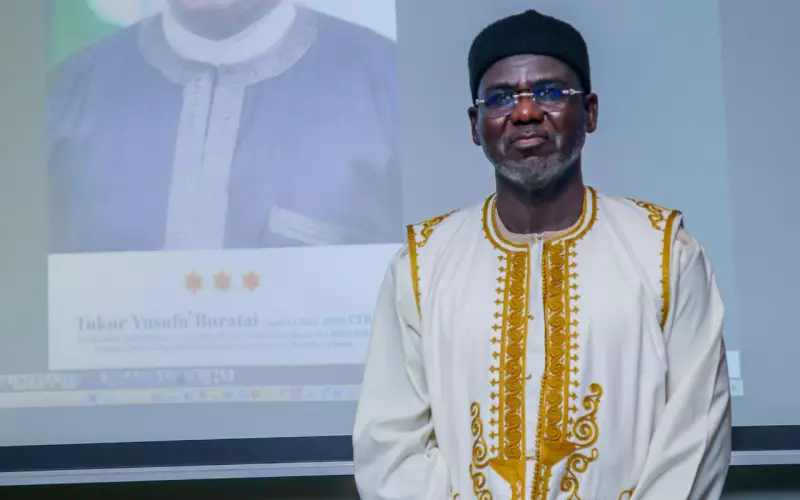
In a major policy address, former Chief of Army Staff, Lieutenant General Tukur Buratai (retired), has laid out a comprehensive blueprint for fundamentally reshaping Nigeria's approach to national security and development. The retired general, who also served as Nigeria's Ambassador to Benin Republic, delivered his urgent recommendations at a national symposium in Abuja on Monday, 12 January 2026.
A Five-Pillar Strategy for National Security
Speaking at the event commemorating the 2026 Armed Forces Celebration and Remembrance Day, Buratai presented five key policy recommendations. His lecture, titled "Securing Nigeria's Future: The Armed Forces and National Development," argued that the armed forces must be repositioned as a catalyst for long-term stability and national progress.
The first pillar focuses on a massive overhaul of internal security. Buratai called for a dramatic expansion and professionalisation of the Nigeria Police Force. He proposed a funded, multi-year plan to grow the police to a strength of approximately 1.5 million personnel. This, he stated, is essential to end the current over-reliance on the military for routine law enforcement duties and allow the armed forces to concentrate on core defence mandates.

Driving Innovation and Human Capital Development
Buratai's second major proposal is the creation of a National Defence Innovation Fund (NDIF). This fund would be financed through public-private partnerships and dedicated to research and development in critical dual-use technologies. Key areas for investment include cyber defence systems, unmanned aerial vehicles (drones), satellite communications, and renewable energy solutions for remote military bases. The aim is to ensure defence spending actively stimulates technological advancement in the civilian sector.
On human capital, the former army chief suggested a revised National Service and Veterans' Framework. This includes transforming the National Youth Service Corps (NYSC) into a mandatory National Service Scheme with both military and civic tracks to foster skill acquisition and national unity. He also urged the passage of a Veterans' Rights and Transition Bill to guarantee timely pensions, healthcare, retraining programmes, and legal protections for retired service personnel.
Strengthening Civil-Military and Regional Ties
Buratai emphasised the need for structured Civil-Military Cooperation (CIMIC). He recommended setting up permanent CIMIC directorates within the Ministry of Defence and service headquarters to ensure seamless collaboration with civilian agencies in post-conflict development, thereby preventing mission creep for the military.
On the regional front, he stressed the importance of deepening security cooperation through existing multilateral frameworks. He highlighted the Multinational Joint Task Force (MNJTF) and the Gulf of Guinea maritime security architecture as vital platforms for collective action against transnational threats and for promoting regional stability.
Government's Commitment to a Resilient Military
Earlier at the symposium, the Minister of Defence, General Christopher Musa (retired), reaffirmed the Federal Government's dedication to building a capable and professional armed forces. Musa stated that the current administration is prioritising troop welfare, advanced training, and the expansion of local defence production to create sustainable security capabilities and reduce foreign dependence.
In conclusion, Buratai asserted that a balanced strategy of defence reform, internal security restructuring, and robust regional cooperation will enable Nigeria to optimise its resources, strengthen national unity, and secure a more prosperous and stable future for all its citizens.