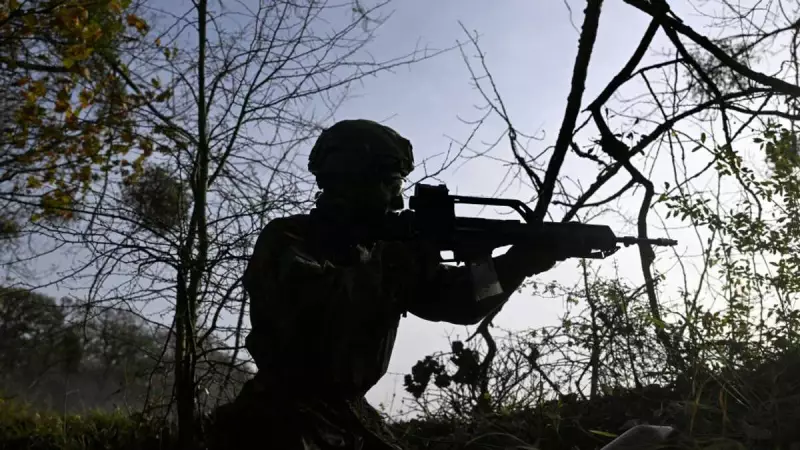
In a landmark move signalling a major shift in its defence posture, German lawmakers have given the green light to military acquisitions worth approximately 50 billion euros. This decision, approved by the parliament's budget committee on Wednesday, underscores Berlin's urgent drive to modernise its armed forces in response to a hostile Russia and evolving global security dynamics.
A Historic Defence Investment
The approved package, valued at around $59 billion, forms part of a record-breaking year for German defence procurement. Officials confirmed that the total value of acquisitions approved in 2025 alone now stands at a historic 83 billion euros. This massive spending spree covers a wide array of essential military hardware, ranging from advanced missiles and artillery systems to torpedoes, armoured vehicles, and new satellite communication technology.
Furthermore, the list includes a crucial provision for basic soldier kit, with plans to supply combat clothing and equipment for up to 460,000 troops and protective gear for 80,000 civilian staff. This addresses a longstanding issue, as Defence Minister Boris Pistorius pointedly remarked, "We can't put young soldiers in tracksuits because their uniforms haven't been delivered yet."

Geopolitical Drivers Behind the Spending Surge
This dramatic ramp-up in military expenditure is a direct consequence of two pivotal factors. First and foremost is the ongoing threat posed by Russia following its full-scale invasion of Ukraine in 2022. This event prompted Germany to decisively move away from the pacifist stance that had defined its policy since World War II.
The second critical driver is the perceived weakening of security guarantees from the United States, especially since the return of former President Donald Trump to the White House. This has accelerated rearmament plans across Europe, with Germany aiming to take a leadership role. The defence ministry stated the move sends "a signal to the (NATO) alliance and our partners: Germany is leading the way," emphasising its commitment to European security.
Chancellor Friedrich Merz, who took office in May 2025, has injected further momentum into this drive. His government has exempted defence spending from the country's strict debt rules, thereby freeing up significant additional funds for the military overhaul.
Long-Term Strategy and Future Commitments
The approved purchases, spanning more than 30 distinct projects, required parliamentary approval because each individual acquisition exceeded 25 million euros. The items include missiles for Patriot and Iris-T air defence systems, new artillery, and unmanned aerial reconnaissance systems.
Looking ahead, Germany has set ambitious long-term defence spending targets. Berlin announced earlier this year its goal to increase core defence spending to 3.5 percent of its GDP by 2029, aligning with a new NATO benchmark agreed upon under pressure from the US. The government is projected to spend over 500 billion euros on defence between 2025 and 2029.
Alongside equipment modernisation, Germany is also seeking to expand the size of its army, which shrank significantly after the Cold War. Lawmakers recently backed a new recruitment scheme to boost troop numbers. While mandatory conscription is not being reintroduced immediately, officials have warned it remains an option if voluntary recruitment falls short.
Defence Minister Pistorius acknowledged the scale of these investments, assuring the public that the government would handle the funds "carefully and conscientiously." He stressed the necessity of such "huge investments" in the coming years to ensure the Bundeswehr is fully equipped and prepared to meet its obligations, marking a definitive new chapter for German defence policy.