Kim Jong Un Takes the Wheel of Advanced Nuclear Rocket Launcher in Pyongyang Display
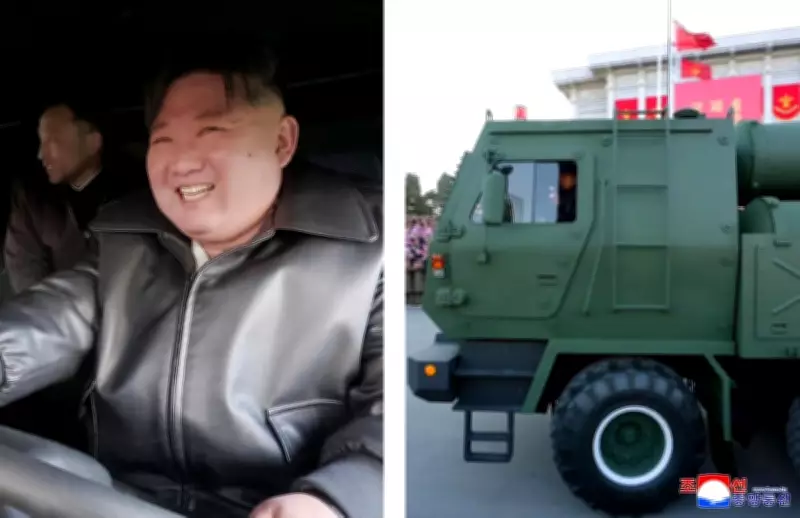
North Korean state media has broadcast striking images of leader Kim Jong Un personally operating a mobile, nuclear-capable multiple rocket launcher during a major military ceremony held in the capital city of Pyongyang. The event, which took place near the April 25 House of Culture, featured an imposing formation of 600mm-caliber multiple rocket launch systems arranged in precise rows across a central square.
Showcasing Advanced Artillery Systems with AI Guidance
According to detailed reports from the state-run Korean Central News Agency (KCNA), Kim Jong Un "personally drove a launcher vehicle to review the weaponry symbolic of absolute power" in preparation for the country's upcoming Ninth Party Congress. The broadcast footage captured Kim stepping down from one of the massive vehicles and later smiling broadly as he sat behind the wheel, emphasizing his direct involvement with the military hardware.
Each four-axle transporter in the display carries five large rocket tubes, with the 600mm rockets described by Kim as roughly double the size of those used in many conventional multiple launch systems. He claimed these weapons are comparable in capability to short-range ballistic missiles and incorporate artificial intelligence into their guidance systems for enhanced accuracy and operational effectiveness.

Strategic Timing Amid Regional Tensions
The military exhibition comes at a significant moment as North Korea prepares for a major ruling party congress, a period traditionally marked by heightened propaganda efforts and strategic military demonstrations. Pyongyang has established a pattern of unveiling or highlighting new weapons systems around key political gatherings, using these events to project strength and technological advancement.
"No other nations have got this kind of weapon system," Kim was quoted as saying by KCNA, adding that it "has completely changed the role and conception of artillery accepted by modern warfare." The agency previously asserted that the 600mm rocket system could reach targets across South Korea and be fitted with tactical nuclear warheads, underscoring its strategic significance.
Broader Military Context and Regional Implications
Regional tensions remain elevated between North Korea and South Korea, which maintains a significant defense partnership with United States military forces. International security analysts estimate that North Korea currently possesses approximately 50 nuclear warheads, with sufficient fissile material to potentially expand that arsenal substantially in coming years.
Beyond the rocket artillery systems displayed in Pyongyang, North Korea maintains a diverse range of delivery platforms including:
- Short-range missiles designed for regional targeting
- Intermediate-range ballistic missiles
- Intercontinental ballistic missiles capable of reaching the United States mainland
A 2020 report by the RAND Corporation highlighted the particular threat posed by North Korea's thousands of conventional artillery systems positioned within range of South Korean population centers. The analysis warned that these weapons could cause catastrophic civilian casualties in a very short period if deployed against urban targets.
Political Messaging and Future Developments
During Wednesday's ceremony, red banners promoting the Ninth Party Congress framed the military hardware, creating a powerful visual link between political messaging and military capability. Kim Jong Un signaled that further announcements regarding the strengthening of North Korea's defense capabilities would likely follow during the congress proceedings.
The North Korean leader urged weapons developers and munitions workers to intensify their efforts under the party's strategic plan, emphasizing continued investment in military technology and capability expansion. This display represents both a demonstration of existing capabilities and a promise of further developments to come as North Korea continues to prioritize military modernization alongside political consolidation.