The Lebanese Army declared on Thursday, January 8, that it has successfully wrapped up the initial stage of a critical plan to disarm Hezbollah and other militant factions operating in the country's southern regions. This development, however, was met with immediate caution from Israel, whose Prime Minister Benjamin Netanyahu warned the advancement remains "far from sufficient," casting a shadow over the fragile peace and raising fears of a new escalation.
Army Assumes Control, But Key Challenges Remain
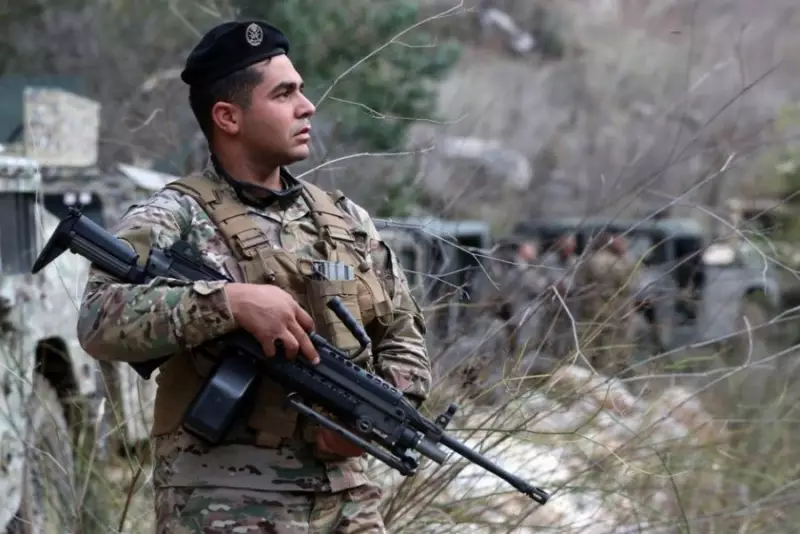
In an official statement, the military confirmed it has now taken over operational command of the territories located south of the Litani River. This area is significant because a United Nations Security Council resolution explicitly bans Hezbollah from operating there. The army noted, however, that this control excludes five Israeli military positions that remain inside Lebanese territory.
While not declaring Hezbollah fully disarmed, the army stated its efforts to confine weapons have reached "an advanced stage" after meeting the first-phase objectives in what it described as a tangible and effective manner. It reaffirmed the commitment of the Lebanese state and its security agencies to be the sole authority responsible for security and stability, especially south of the Litani River.

The ongoing operation is part of the government's broader "Homeland Shield" security plan. The army's announcement avoided directly naming Hezbollah but outlined that work would continue to clear unexploded bombs and tunnels and to prevent armed groups from restoring their military capabilities.
Israeli Skepticism and Ceasefire Tensions
Reacting to the news, Israel described Lebanon's move as an "encouraging start" but insisted it falls short of what is required. Netanyahu pointed to the US-brokered ceasefire agreement from November 2024, which mandates Hezbollah's full disarmament. He accused the group of trying to rearm and rebuild its military infrastructure with Iranian support, claims that have not been independently verified.
The Lebanese army, in its defence, blamed the slow pace of extending state authority and disarmament on ongoing Israeli attacks, the continued occupation of Lebanese sites, and repeated violations of the November 2024 ceasefire. This ceasefire ended over a year of fighting that began after Hezbollah launched attacks following the Hamas-led assault on Israel on October 7, 2023.
Despite the truce, Israel has continued frequent airstrikes in Lebanon, citing Hezbollah violations. United Nations peacekeepers have warned these strikes undermine the ceasefire and threaten the fragile progress achieved so far.
The Road Ahead: Disarmament North of the Litani
The United Nations Special Coordinator for Lebanon acknowledged the army's announcement as "undeniable progress," while emphasising that significant work lies ahead. The core of the November 2024 agreement commits Lebanon to ensuring only state security forces bear arms, starting south of the Litani River, and to dismantling all non-state military infrastructure there.
Lebanese President Joseph Aoun has stated the government's goal is to establish a full state monopoly on weapons and favours negotiations to achieve Hezbollah's complete disarmament. A major sticking point remains: while Hezbollah has largely permitted disarmament efforts south of the Litani, it has refused to surrender its weapons further north, citing continued Israeli occupation of Lebanese land.
Looking forward, Lebanon's information minister revealed the army is expected to present a new plan in February aimed at disarming the Iran-backed group north of the Litani River. This next phase will be a critical test for the government's authority and the long-term stability of the region.