Nigeria's First Military Jetty to Generate Over 7,000 Jobs for Retirees and Civilians
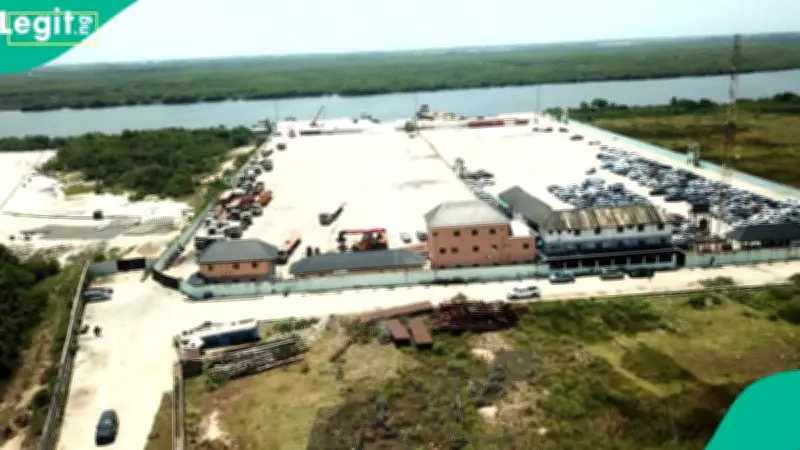
Nigeria is preparing to officially commission its inaugural dedicated military jetty in Lagos by June 2026, a landmark defense infrastructure initiative projected to create employment opportunities for more than 7,000 individuals, including retired military personnel and civilian specialists. The facility, developed by the Defence Industries Corporation of Nigeria–D7G (DICON-D7G), is strategically located near Tin Can Island Port and aims to serve as a critical gateway for importing, assembling, and exporting military hardware.
Strategic National Asset to Enhance Defense Production
During a recent inspection visit to the proposed site, Mr. Osman Chennar, Chief Executive Officer of DICON-D7G, emphasized the jetty's role as a vital component of Nigeria's ambition to strengthen domestic defense production. "This jetty is not just a maritime structure; it is a strategic national asset," Chennar stated. "It will redefine how Nigeria sources, assembles, produces, and exports defense equipment. It is about efficiency, security, and national pride."
The facility is designed to streamline the movement of essential components and raw materials required for local assembly of defense equipment. By enabling direct handling of Completely Knocked Down (CKD) and Semi-Knocked Down (SKD) components, the jetty will reduce Nigeria's reliance on third-party maritime logistics, cutting down turnaround times, lowering demurrage costs, and securing the supply chain.

Significant Employment Opportunities for Retirees and Civilians
The project is expected to deliver substantial job creation, with plans to engage over 2,000 retired senior military officers alongside approximately 5,000 civilian professionals, including engineers, welders, fabricators, and drone specialists. Chennar highlighted the deliberate inclusion of retired officers, noting that their operational experience and discipline would be invaluable to the initiative.
"We are deliberately integrating retired military personnel because they bring decades of operational knowledge and discipline," he explained. "At the same time, we are opening doors for thousands of Nigerians in technical and engineering roles. This is defense industrialization meeting job creation."
Supporting Local Production of Military Equipment
Once operational, the jetty will support the local assembly and manufacture of various defense systems, such as small and medium arms, ammunition, tactical drones, and armoured vehicles like Mine-Resistant Ambush Protected platforms. Chennar pointed out that DICON-D7G has already begun producing DG103 rifles at its Kaduna facility for both domestic and African markets, with the jetty set to enhance inbound and outbound logistics.
"Our DG103 rifle production line is active. The next step is strengthening inbound and outbound logistics. This jetty closes that gap," he said. "We are building a fully integrated defense production chain, from import of components to final assembly and export."
Aligning with National Economic and Defense Goals
Major General Mainasara Abdul Masanawa (retd.), a member of the DICON-D7G board, underscored the facility's potential to boost Nigeria's defense independence and expand its role in the regional defense market. He emphasized that beyond meeting local demand, Nigeria aims to position itself as a reliable defense manufacturing hub for friendly African nations, saving foreign exchange and building expertise.
"This facility will serve as both an import and export gateway," Masanawa noted. "Beyond meeting local demand, Nigeria is positioning itself as a reliable defense manufacturing hub for friendly African nations. Every locally assembled rifle, drone, or armoured vehicle saves foreign exchange, builds expertise, and strengthens our security architecture against external supply shocks."

He added that the initiative aligns with President Bola Ahmed Tinubu's Renewed Hope Agenda, which focuses on economic diversification and local industrial growth. "This is not just a defense project; it is an economic project. It reflects a broader vision of industrial transformation under the Renewed Hope framework," Masanawa concluded.
The official commissioning in June 2026 is anticipated to mark a pivotal milestone in Nigeria's transition from heavy reliance on imported defense hardware to becoming a producer and exporter within the global defense industry, fostering a self-sustaining defense industrial base.