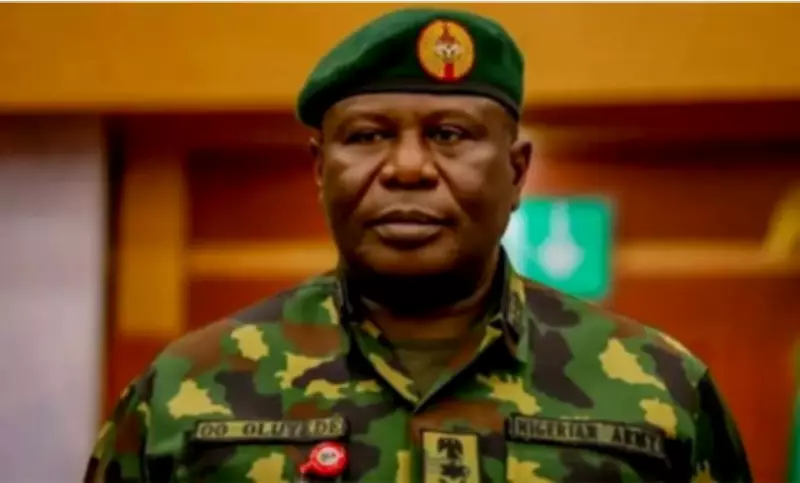
Nigeria's Defence Headquarters has unveiled plans to deploy a specialized military unit to address escalating security challenges in two key states. Chief of Defence Staff, General Olufemi Oluyede, made this significant announcement during a crucial parliamentary session focused on national defence funding.
New Joint Task Force for North-Central Region
During the 2026 budget defence session organized by the House of Representatives Committee on Defence in Abuja on Tuesday, February 10, General Oluyede revealed that a newly trained Joint Special Task Force, codenamed "Savannah Shield," will be deployed to Kwara State and specific areas of Niger State. This strategic move aims to combat terrorist activities that have been destabilizing these regions.
The Defence Chief emphasized that while security conditions have shown improvement in Nigeria's North-East region, significant challenges persist in both the North-West and North-Central zones. "We are evolving modalities to checkmate all these challenges within the ambit of the resources that we have," Oluyede stated during his presentation to lawmakers.

Building on Previous Security Deployments
General Oluyede highlighted that this new deployment follows a similar strategy implemented in other troubled regions. "A new set of special forces was trained and drafted to Benue and Plateau; we are about to deploy another joint task force that will cover Kwara and some parts of Niger to ensure that things get better," he explained.
The military commander confirmed that preparations for the Savannah Shield operation are already underway. "A joint task commander has been appointed, and we are trying to draw resources from other places to ensure that area is covered," Oluyede added, indicating the comprehensive nature of this security initiative.
Call for Enhanced Security Collaboration
Recognizing the limitations of military forces operating alone, the Chief of Defence Staff stressed the importance of inter-agency cooperation. He called for stronger collaboration between the armed forces, the Nigeria Police Force, and the Nigeria Security and Civil Defence Corps to create a more unified security front.
Oluyede also appealed directly to Nigerian citizens, urging them to support intelligence-gathering efforts and avoid any collaboration with criminal elements. "National security requires collective responsibility," he emphasized, highlighting the crucial role communities play in maintaining security.
Parliamentary Emphasis on Security Reforms
Earlier in the session, Chairman of the House Committee on Defence, Representative Benson Babajimi, underscored the fundamental importance of security to national development. "No nation can make sustainable progress without guaranteeing the safety of lives, property and critical national assets," Babajimi declared.
While commending the armed forces for their efforts in degrading terrorist strongholds and confronting insurgency, the committee chairman emphasized that persistent security threats require more comprehensive solutions. "Their valour and sacrifice, often under extremely challenging conditions, continue to inspire national gratitude," he acknowledged.
However, Babajimi stressed that "the persistence of security threats underscores the need for deeper institutional reforms, improved coordination and smarter deployment of scarce resources." He noted that Nigerians have high expectations for tangible security improvements that translate into safer communities and restored livelihoods.
Holistic Approach to National Security
The Defence Committee Chairman advocated for a broader perspective on security that extends beyond military operations. He identified several underlying factors contributing to insecurity across Nigeria:
- Poverty and youth unemployment
- Educational deficiencies and illiteracy
- Weak local governance structures
- Misinformation and community grievances
- Ideological radicalization
Babajimi called for a "whole-of-government and whole-of-society approach" that incorporates multiple strategies:

- Strategic communication initiatives
- Community peacebuilding programs
- Enhanced cyber defence capabilities
- Improved defence intelligence systems
- Stronger border security technology
Budgetary Considerations and Accountability
The parliamentary session also focused on the financial aspects of national security. Babajimi emphasized that increased defence allocations must translate into measurable outcomes with greater transparency and accountability. "Input-focused budgeting without impact is no longer acceptable," he stated firmly.
According to the committee chairman, the 2026 defence budget must achieve a careful balance between immediate military operations and long-term peacebuilding initiatives. Key priorities include personnel welfare improvements, equipment modernization, and ensuring the sustainability of ongoing operations.
Babajimi also addressed systemic challenges within defence procurement and implementation, noting that issues such as abandoned projects, procurement inefficiencies, and budget implementation delays must be resolved to enhance operational effectiveness across all security services.