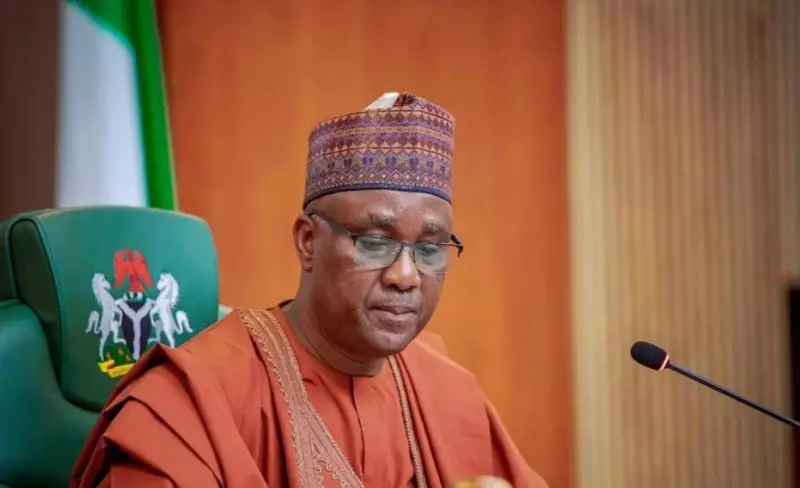
The Speaker of Nigeria's House of Representatives, Rt. Hon. Abbas Tajudeen, has declared that increasing female representation in the Nigeria Police Force is essential for achieving justice, fairness and better policing outcomes nationwide.
Speaking through Hon. Nnamdi Ezechi during a public hearing on a Bill to amend the Nigeria Police Act, the Speaker emphasized that the proposed reform goes beyond gender representation to strengthen professionalism, accountability and public confidence in the police institution.
Strengthening Policing Through Diversity
Abbas stated that the Bill fundamentally addresses justice, fairness and the recognition that effective policing must draw strength from diversity. He explained that boosting women's participation in the Force would enhance professionalism, deepen accountability and improve the overall quality of policing services in Nigeria.

The Speaker expressed concern about the persistently low number of women in the Nigeria Police Force, particularly in command positions. He described this shortage as a structural limitation that has reduced institutional efficiency and prevented the country from fully benefiting from women's contributions to security.
Global Evidence Supports Female Police Representation
According to Abbas, international research consistently demonstrates that police organizations with stronger female representation experience fewer incidents of excessive force, respond more effectively to gender-based violence cases, and enjoy higher levels of public trust.
The Speaker connected the proposed reforms to Nigeria's constitutional and international commitments, including the Convention on the Elimination of All Forms of Discrimination Against Women (CEDAW) and the Sustainable Development Goals, specifically Goal 5 focusing on gender equality and women's empowerment.
While supporting the Bill, Abbas cautioned that legislative changes alone would not be sufficient. He stressed the necessity of establishing robust monitoring mechanisms to ensure compliance with gender-responsive standards.
Implementation Framework and National Collaboration
The proposed legislation includes provisions for a dedicated unit within the Police Force that will maintain records and evaluate compliance with gender-responsive policies. This unit will ensure that good intentions translate into measurable actions and tangible outcomes.
Abbas called for a collaborative approach involving the Executive branch, civil society organizations, Police leadership and advocacy groups. He emphasized that the reform should be viewed as a national responsibility rather than a partisan issue.
This hearing aims to foster partnership and progress through collective dialogue rather than assigning blame, the Speaker noted. He commended the House Committee on Police Affairs and stakeholders advocating for gender inclusion, describing the amendment as a significant step toward building a Police Force that not only enforces laws but also upholds justice, equality and human dignity.
The Bill, sponsored by the Committee on Police Affairs, proposes mandatory recruitment of at least 15 percent women into the Police and establishes a gender-compliance framework covering recruitment, training, posting, discipline and marital considerations.
Committee Chairman Hon. Makki Abubakar Yalleman clarified that greater female participation is crucial for improving policing outcomes, especially in cases involving domestic violence, sexual assault and crimes affecting women and children.
The Ministry of Police Affairs has expressed support for the amendment. Represented by Okorie Kalu from its Legal Unit, the Ministry confirmed it has already begun drafting regulations to eliminate discriminatory enlistment criteria, integrate gender policies into training and operations, and restructure the Inspector General's office to include a Women and Children Protection Centre.
Kalu emphasized that the Bill would provide the legal foundation for ongoing reforms and called for dedicated funding and continuous training to support implementation. He affirmed the Ministry's commitment to any measures that increase women's visibility and responsiveness in the Force, noting that such initiatives would bring positive outcomes.

The Committee is expected to review all submissions before presenting its recommendations to the House for further consideration.