A new policy report has issued a stark warning that Nigeria's recently declared National Security Emergency may not achieve lasting peace unless it is supported by fundamental reforms, including the creation of state police and the formal deployment of forest guards.
Beyond a Kinetic Stopgap: The Need for a New Security Paradigm
The analysis, authored by public policy think-tank Nextier, acknowledges that President Bola Ahmed Tinubu's declaration of a National Security Emergency on 26 November 2025 sent a strong political signal. However, it cautions that the current approach is "in danger of becoming a kinetic stopgap rather than a transformative security strategy." This risk is heightened if the strategy continues to rely heavily on merely expanding troop numbers.
Dr. Ndidi (Anyanwu) Njoku, a governance and peacebuilding expert at Nextier who authored the report, argues that Nigeria's insecurity has evolved. It is now more mobile, driven by economic factors, and thrives in governance vacuums. These complex dynamics cannot be reversed by recruitment-heavy or purely reactive military responses alone.

"The evidence is clear: insecurity is no longer confined to traditional epicentres," the report states, highlighting that armed groups often adapt faster than the state's security deployments.
Core Recommendations for a Sustainable Solution
To prevent a cycle of overstretched and reactive operations, the report proposes a shift towards a new national security paradigm focused on intelligence, territorial governance, and community partnership.
Integrated Intelligence Fusion: A central recommendation is the urgent establishment of integrated intelligence fusion centres. These would link the Department of State Services (DSS), police, and military intelligence with state-level security actors. The goal is to connect real-time threat detection directly to rapid-response units, enabling prevention rather than reaction after attacks.
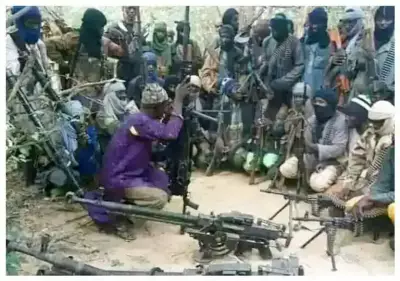
Reclaiming Ungoverned Spaces: A major pillar of the strategy involves denying armed groups access to their safe havens. The report calls for the institutionalisation of forest guards and their integration with existing border security and agro-ranger units. This coordinated force would be tasked with regaining control of forest corridors and rural sanctuaries used by non-state armed groups.
Grassroots Security and Policing Reform: At the local level, Nextier advocates for stronger security coordination at the Local Government Area level, revitalising traditional justice systems, and expanding community policing to resolve disputes before they turn violent.
On the critical issue of state policing, the report supports the President's proposal to amend the Police Act but warns it must be a carefully sequenced institutional reform, not an emergency fix. It stresses the need for enforceable federal standards, mandatory intelligence sharing, and independent oversight to prevent potential abuses.
Human Rights and Socioeconomic Foundations
The analysis emphasises that human rights compliance and transparent oversight are operational necessities, not optional add-ons. It warns that abuses and a shrinking civic space erode public trust, weaken intelligence gathering, and ultimately fuel more insecurity.
Finally, the report concludes that security measures alone are insufficient. Emergency actions must be paired with targeted socioeconomic interventions, including livelihood programmes, rural development, and reintegration pathways for at-risk youth. This holistic approach is vital to reduce recruitment into armed groups and prevent a relapse into violence.