Record-Breaking Heatwave Claims Over 1,300 Lives Across Europe
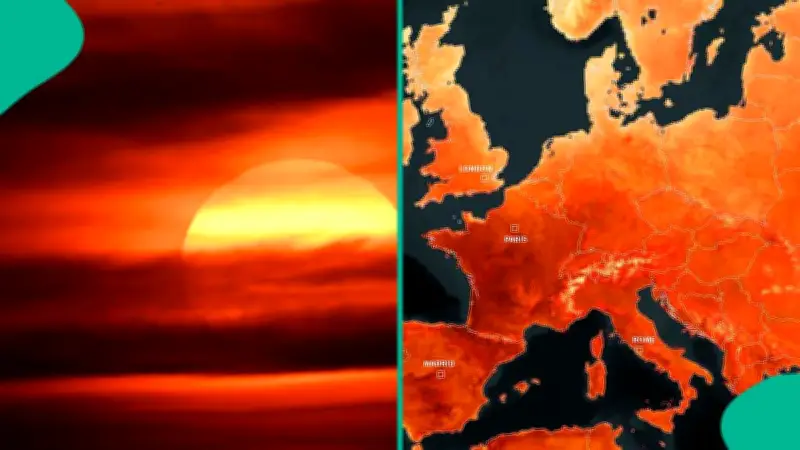
Europe is enduring a severe heatwave, with temperatures soaring above 40°C (104°F) in multiple countries, leading to at least 1,300 excess deaths since mid-June. The extreme heat has caused widespread illness, fatalities, and disruption to transport and infrastructure.
On Sunday, June 28, 2026, parts of Germany, the Czech Republic, and Poland recorded temperatures of 40°C, severely impacting rail and road services. France reported 1,000 excess deaths since June 20, with most victims aged 65 and above, according to the country's public health agency. Spain confirmed fatalities including a 90-year-old woman near Bilbao and a 68-year-old man in Almeria, both from heatstroke. In Germany, at least seven people died from heat-related incidents, including swimming accidents in Berlin. Additionally, France recorded 40 drowning deaths linked to the heatwave.
Health Experts Warn of Heat Stress and Heatstroke Risks
Garyfallos Konstantinoudis of Imperial College London explained: “Heatwaves pose serious health dangers, primarily by causing heat stress, which occurs when the body struggles to regulate its temperature. This can lead to dehydration, heat exhaustion, and in severe cases, heatstroke, a medical emergency.” The elderly and those with pre-existing conditions are particularly vulnerable.

The heatwave is attributed to a heat dome sustained by an omega block weather pattern, which traps hot, stagnant air over regions for days or weeks. Scientists emphasize that man-made climate change is intensifying these events. Global average temperatures are now 1.25°C (2.25°F) above pre-industrial levels, with 2024 reaching 1.55°C (2.79°F).
Climate Change Makes Heatwaves 30 Times More Likely
Laurie Parsons of Royal Holloway University noted: “Heatwaves like we are seeing now are about 30 times more likely to happen than in the pre-climate change era.” This stark statistic underscores the urgent need for adaptation and mitigation measures.
European governments are responding with various initiatives. Paris and Denmark have launched welfare monitoring programs for the elderly, while Barcelona has opened over 500 climate shelters. The European Trade Union Confederation has urged the EU to set maximum working temperature laws to protect laborers.
Call for EU-Wide Occupational Heat Standards
Enrico Somaglia stated: “We can’t accept another summer where legislators come with too little, too late. A binding EU directive on occupational heat is essential to keep workers safe.” Without such measures, workers in sectors like construction and agriculture face heightened risks.
While air conditioning provides short-term relief, experts caution that it exacerbates global warming. The United Nations Environment Programme (UNEP) reports that cooling could account for 10% of greenhouse gas emissions by 2050. Hydrofluorocarbons used in cooling systems are thousands of times more harmful than carbon dioxide.
The Cooling Paradox: Air Conditioning Worsens Climate Change
Martin Krause of UNEP said: “Cooling is essential for the health and well-being of billions. The irony is that, right now, as current systems are highly polluting and energy-intensive, it’s making the problem with extreme heat worse.” This highlights the need for sustainable cooling solutions.
Long-term strategies include passive cooling techniques such as tree planting, urban planning to dissipate heat, and phasing out fossil fuels. Joeri Rogelj of the Grantham Institute stressed: “The response must therefore address both symptoms and causes.”
Passive Cooling and Infrastructure Resilience Recommended
UNEP advises countries to establish early warning systems, strengthen healthcare, protect workers, and reinforce critical infrastructure against rising temperatures. These measures are crucial as heatwaves become more frequent and intense due to climate change.
The current heatwave follows a pattern of record-breaking temperatures across Europe. Earlier in June, temperatures exceeded 40°C from Scandinavia to the Alps, breaking records in several countries and causing dozens of deaths. The crisis underscores the urgent need for comprehensive climate action.