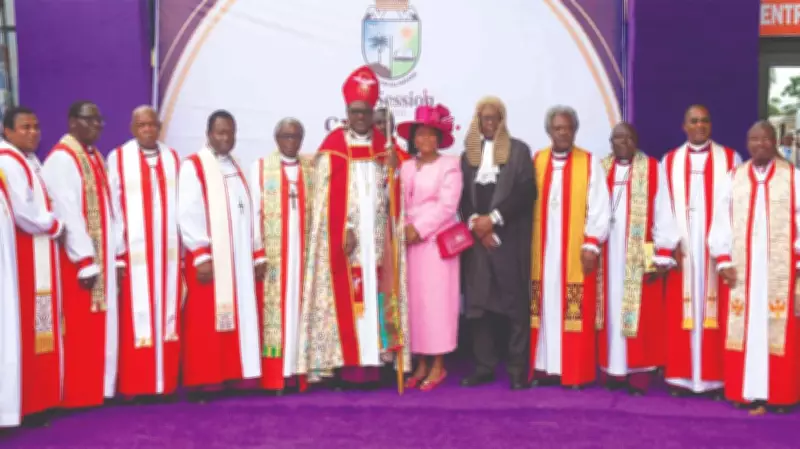
The Rt Rev'd James Odedeji, Bishop of the Diocese of Lagos West, Church of Nigeria (Anglican Communion), has expressed deep concern over the escalating insecurity in Nigeria, stating that it has brought the nation to its knees. He called on the government to address the situation with the urgency it demands.
Speaking during his address at the third session of the ninth Synod of the Diocese, held at Archbishop Vining Memorial Church Cathedral in Ikeja, Lagos, Odedeji noted that the upcoming elections have consumed much of the government's attention, allowing bandits to exploit the situation and expand their operations.
He highlighted that people are being killed nearly every week, kidnapping has become a lucrative enterprise, and many communities have turned into ghost towns. Farmers are no longer safe on their farmlands, and their crops have become food for cattle.

Odedeji remarked that insecurity is not exclusive to Nigeria, as Sahel countries face similar challenges. He cited the recent ISWAP attack on Bamako, Mali, which was repelled by the military. However, he emphasized that Nigeria's case is peculiar because government institutions have been infiltrated by bandit apologists.
He alleged that the sponsors and financiers of bandit groups appear to be politicians within the executive, legislative, and even judicial branches. Furthermore, bandits use local populations as shields, making it difficult for security forces to identify them. Locals, who know the bandits, fear reporting them due to potential retaliation.
Odedeji provided examples of the havoc caused by bandits, noting that within the last eight months, they have overrun two military formations in Borno State, injuring many, including two Army Generals. He praised the military for repelling attacks but acknowledged that they are overwhelmed and under-equipped to handle the sophisticated weaponry and numbers of the guerrilla fighters.
He appealed to the government to reconsider the de-radicalization of repentant fighters, arguing that releasing them after a six-month program may not achieve its intended purpose.
On the synod theme, “Who Is On The Lord’s Side,” based on Exodus 32:26, Odedeji urged church members to reexamine their relationship with God and avoid compromise. He described compromise as a quiet, gradual erosion of conviction that dulls sensitivity to God and weakens spiritual authority.
He called on Christians to love the Lord wholeheartedly, obey God's word, pursue holiness, and separate from idolatry. Odedeji also addressed the rising cost of living, governance, health, and education.