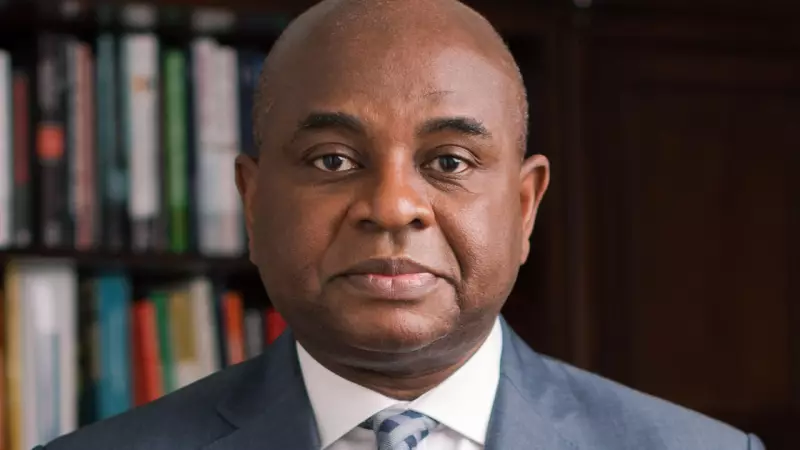
Former Deputy Governor of the Central Bank of Nigeria, Kingsley Moghalu, has publicly defended the recent United States military action against terrorists in Sokoto State. He argues that the heated debate over Nigeria's sovereignty being violated misses the critical point that the state's authority had already been severely eroded by armed groups controlling parts of the country.
The Core of Moghalu's Argument on Sovereignty
In a detailed post on the social media platform X, Moghalu addressed the wave of criticism that followed the United States strike authorized by President Joe Biden on December 25, 2025. He stated that the sovereignty argument fails to acknowledge the years of territorial loss Nigeria has suffered to violent non-state actors.
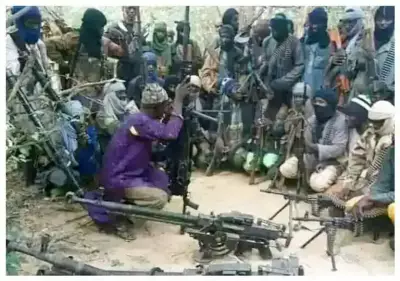
"Nigeria's sovereignty was ALREADY violated by terrorists who have long controlled ungoverned spaces in the country such as Sambisa forest and other areas," Moghalu wrote emphatically. He elaborated that in several regions, particularly in the northwest and northeast, these armed groups have established parallel governance systems, including administering taxes on citizens—a clear sign of the state's receding power.

Moghalu pointedly questioned why this prolonged and tangible erosion of sovereignty did not generate the same level of national outrage now being directed at the American counter-terrorism operation. "If this violation of sovereignty was not of strong concern for some critics, it strikes me as crocodile tears to worry about a 'loss' of sovereignty by virtue of the American military intervention," he stated.
Moral Questions and Reported Cooperation
The former presidential candidate also challenged the moral foundation of the criticism. He asked whether it was acceptable that "the lives of Nigerians of all faiths or none" had been "casually destroyed by terrorist attacks over the past 16 years," while a foreign intervention aimed at degrading those same terrorists is condemned.
Furthermore, Moghalu noted that the sovereignty debate is significantly undermined by the reported operational cooperation between Nigerian authorities and their American counterparts. He suggested that such collaboration, irrespective of its specific nature, provides a form of cover for all parties involved in the strike.
"The sovereignty argument is largely neutralised by the 'cooperation' between the Nigerian military and government, on the one hand, and the United States on the other regarding the military strikes against terror," he argued.
Sovereignty as Theory Versus Reality
Moghalu presented a pragmatic definition of sovereignty, arguing that it is not merely a legal concept but a functional one. "Sovereignty is meaningless when a state cannot control its territory or protect its citizens from external attacks. In that case it's simply a theory, not a reality," he wrote.
For him, the central and more critical question is strategic: how can Nigeria recover and reassert its authority? He framed the US intervention not as an end, but as a potential starting point for addressing a deeply complex security crisis.
"The real issue is whether and how Nigeria can strategically recover and establish its sovereignty over its territory and effectively protect the lives and property of its citizens," Moghalu asserted.
He stressed that building a cohesive nationhood, which fosters a shared worldview and unity of purpose, is just as crucial—if not more so—than any external military support. Moghalu also highlighted internal divisions as a fundamental security threat, pointing to sectionalism, religious extremism, and a pervasive 'us versus them' mindset as factors that weaken collective security when citizens prioritize narrow sectarian interests over a pan-Nigerian identity.