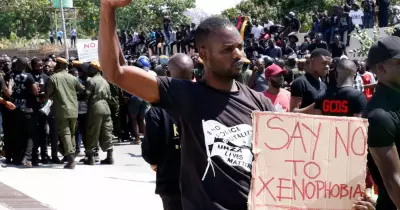
The Senate, yesterday, descended into a heated and emotionally charged session over renewed xenophobic attacks on Nigerians in South Africa, with lawmakers sharply divided between calls for tough retaliatory sanctions and appeals for diplomatic restraint.
ECOWAS Parliament Intervenes
Worried by the attacks, the ECOWAS Parliament has directed its committee on Political Affairs to wade into the matter and present proposals to plenary for adoption. This was as the House of Representatives urged the Federal Government to suspend the issuance of business permits to South African firms operating in Nigeria in response to the renewed attacks.
Senate Debate Heats Up
The debate, triggered by a motion of urgent national importance, exposed deep anger in the red chamber as senators recounted fresh reports of killings, displacement and harassment of Nigerians in South Africa and Ghana. Opening the discussion, senators described the attacks as “barbaric, dehumanising and unacceptable,” warning that continued violence against Nigerians abroad could no longer be ignored.

Contributing to the motion, Osita Izunaso said Nigerians were being increasingly targeted abroad in a manner that violated both regional and international laws. Aniekan Bassey, sponsor of the motion, described the situation as a “systematic pattern of persecution.” He stated: “Nigerians are increasingly profiled as though being a Nigerian is itself a crime. This is not just violence; it is humiliation, displacement and psychological torture,” he stated.
Oshiomhole Calls for Economic Retaliation
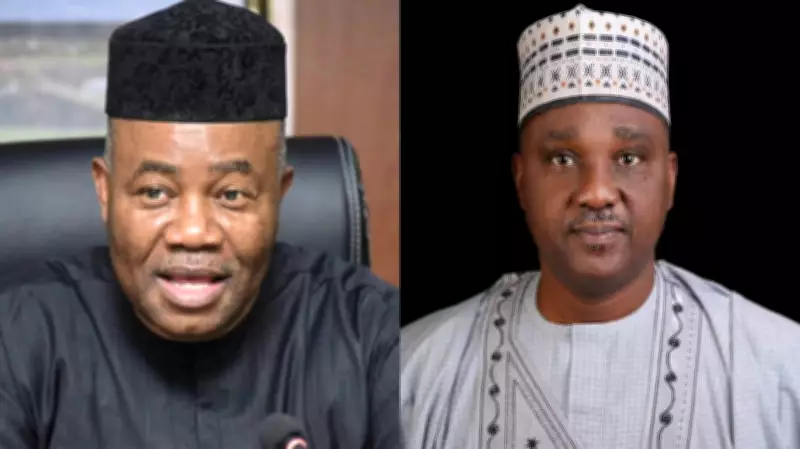
Tensions peaked when Adams Oshiomhole launched a fiery intervention, calling for economic retaliation against South African interests in Nigeria. “By the time we withdraw MTN’s licence, revoke DStv licence, those workers from South Africa will have good jobs to do here,” Oshiomhole declared. “Let South Africa continue with their own jobs. When we balance this madness, there will be sanity. We must bite in a manner that they will come begging.”
Akpabio Urges Diplomatic Restraint
As debates grew increasingly heated, Senate President Godswill Akpabio intervened to calm tempers and steer the chamber away from immediate retaliatory measures. “We must not allow emotion to override diplomacy,” Akpabio said. “Nigeria will act firmly, but responsibly. We cannot solve this crisis by escalating it into economic warfare.” He urged lawmakers to allow structured diplomatic engagement while ensuring protection for Nigerians abroad.
In a key outcome of the session, lawmakers agreed that a high-powered delegation, to be led by Akpabio, would engage South African authorities to formally register Nigeria’s concerns.
Expert Reactions
In his reaction, a scholar in international laws, Dr Festus Ogwuche, described the xenophobia as unfortunate. He disagreed with the impression that the country’s government was not in support, stressing that their inability to address the situation was borne out of their support for it. Also, a public affairs analyst, Paul Ejime, recalled that Nigeria spent over $61 billion in the liberation struggle against apartheid in the country. “The point is that some of these youths are not familiar with or interested in reading history. There are also economic undertones. When the governments are not delivering, citizens find strangers as the scapegoats.”
ECOWAS Parliament Addresses Sahel Extremism
Speaking yesterday during the ongoing First Ordinary Session of the Parliament for the year, the ECOWAS Parliament also directed the committee to investigate the prevailing violent extremism in the Sahel, especially in Mali and Burkina Faso. The house feared that although both countries may have withdrawn their membership from the Economic Community of West African States (ECOWAS), their proximity to ECOWAS member states calls for concern. The Parliament warned that failure to collaborate with Mali and Burkina Faso to tackle insecurity would affect the regional bloc, especially countries that share boundaries with the affected countries.

They equally called for ratification of the African Union Protocol on Free Movement of People, decrying the failure of the continental government to rise to the situation. The Parliament urged every country to summon the South African High Commissioner in their respective countries over the killings and harassment, describing as disappointing, the fact that South Africa easily forgot the support of African countries during its trying period.
House of Representatives Demands Action
The green chamber called for a comprehensive review of bilateral relations between Nigeria and South Africa, including trade and aviation agreements, pending decisive action by South African authorities to curb the attacks and prosecute those responsible. The resolution followed the adoption of a motion of urgent public importance moved by Donald Ojogo (APC, Ondo) and seconded by Billy Osawaru (APC, Edo) during plenary presided over by Deputy Speaker, Benjamin Kalu. The lawmakers condemned the latest wave of violence targeting foreign nationals, particularly Nigerians, describing the development as alarming and unacceptable. They called on the Federal Government to take immediate diplomatic steps to protect Nigerian citizens and halt further attacks.