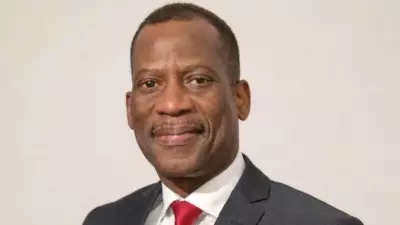
Governor Ahmed Aliyu of Sokoto State has made an uncompromising declaration against banditry, stating that his administration will not negotiate with criminals unless they surrender unconditionally. This statement, delivered at the commissioning of the N12.6 billion Yandaki–Shinkafi–Kofar Sauri Road in Katsina State, has been hailed as a significant shift in Nigeria's counterterrorism approach.
The Katsina Declaration
Standing before his peers, security forces, and the people of the North-West Zone, Governor Aliyu declared: "We will not negotiate with any criminal, nor will we accept any offer from them unless they surrender unconditionally." This position directly contrasts with recent remarks by the Chief of Defence Staff, who described insurgents as "prodigal children" deserving a second chance. The declaration has drawn widespread praise for cutting through the ambiguity that has long shrouded Nigeria's counterterrorism discourse.
Historical Context
The North-West Zone has endured savage banditry, including kidnappings for ransom, mass killings, and displacement of farming communities. Previous attempts at negotiation, such as those by former Katsina State Governor Aminu Masari, failed as armed groups reneged on agreements and regrouped. Governor Aliyu pointed to history as a warning that appeasement, however well-intentioned, carries consequences that often outlast the relief it provides.

Regional Unity
Governor Aliyu was not speaking for Sokoto State alone; he projected the position of the North-West as a united bloc. This regional solidarity is critical because banditry thrives on fragmentation. Armed groups move fluidly across state lines, exploiting the fact that there have not been simultaneous attacks. A united position by the seven North-West states signals a change in strategy and an understanding that defeating banditry requires building a security architecture at multiple levels simultaneously.
Practical Measures
The North-West governors must back their effort with coordinated, practical measures, including:
- A unified regional security framework enabling joint operations across state lines
- Stronger grassroots intelligence
- Working with the Federal Government to disrupt financing networks such as ransom flows and illicit markets
- A "clear, hold, build" approach ensuring security forces remain in reclaimed areas
Additionally, community guards must be properly trained and integrated into formal structures, while efforts to curb recruitment through targeted economic opportunities are expanded. Effective prosecution of suspects and consistent, transparent communication with the public are essential to sustain trust.
Local Collaboration
Governor Aliyu drew attention to the role of local informants, asserting that "no bandit attack occurs without some level of local collaboration." Communities must remain vigilant, monitor suspicious movements, and expose those who provide intelligence or logistical support to criminal groups. The bandits operating in the North-West are not external invaders; they are embedded within the communities they terrorise. To address insecurity without confronting this internal dimension is to treat only the symptoms while leaving the infection untouched.
Security Fund
The 19 Northern States have launched a Security Fund, signaling recognition of the scale of the challenge and their determination to crush the terrorists. The war chest, running into billions of naira, is substantial. Expectedly, the governors are playing their cards close to their chests.
Governor Aliyu's Katsina Declaration pointed towards a more structured way forward. At its core is a clearly articulated position, backed by the need for coordination and a level of execution that has been previously missing in the fight against banditry. By making the declaration at the commissioning of a road project, the governor's message is simple: "By building this road, we expect you to live and work in your community, and we know we must provide you with security."