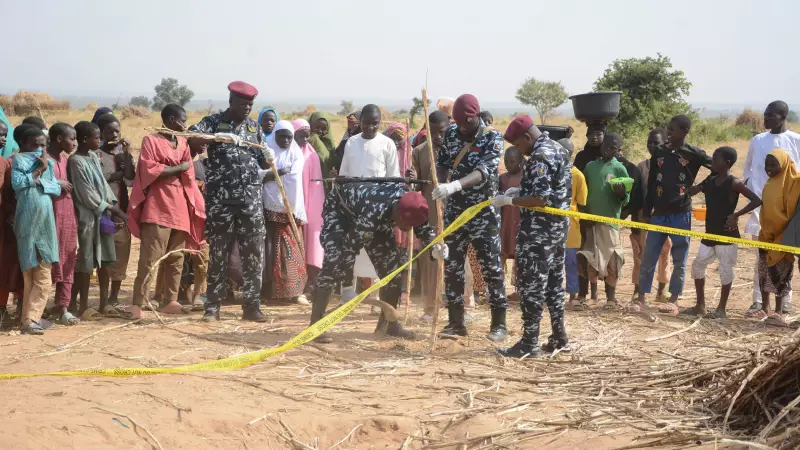
A day after an unexploded projectile from a United States airstrike landed in his domain, His Royal Highness Garba Aliyu, the paramount ruler of Jabo community in Sokoto State's Tambuwal Local Council, convened a crucial meeting with his subjects. The gathering aimed to address the widespread fear and confusion gripping the peaceful village following the shocking incident.
Panic in the Peaceful Village: The Night of the Explosion
The incident occurred around 10:00 p.m. on January 2, 2026. Abubakar Nasiru, a local resident, was preparing for bed when a deafening blast shattered the night's calm. He reported seeing flames as a projectile flew overhead before crashing and exploding in a vast farmland roughly 400 metres from the Primary Health Centre.
"We've never seen anything like this before," Nasiru told investigators. The explosion caused no casualties but sent villagers fleeing in terror. Sani Jabo, a 35-year-old eyewitness whose house is a few kilometres from the site, described a terrifying scene. "As it approached our area, the heat became intense. Our rooms began to shake, and then fire broke out," he recounted.

The traditional ruler, HRH Garba Aliyu, expressed deep concern over the damage to the community's global image, linking it to what he called President Donald Trump's Christmas genocide narratives. He vehemently denied any religious strife in Jabo. "We are predominantly Muslims but accommodate all religious faiths, including Christians. We have never had any religious crisis," Aliyu stated firmly.
From Shock to Scrap: Poverty Drives Dangerous Salvage
In a disturbing aftermath, residents were seen scavenging fragments of the explosive debris, treating them as valuable scrap metal to sell. Community leader Garba Jabo highlighted the dangers of this practice, driven by poverty and a lack of awareness.
"With no clear communication on the hazards, people were treating the debris as if it were gold," he said. He warned that the remnants could contain hazardous chemical substances. Another resident, Nura Jabo, specifically raised concerns about health risks for women and pregnant persons exposed to the debris.
Sani Jabo linked this risky behaviour to a deeper crisis. "Despite the risks, our young people still picked through the debris without protective gear, unaware that unexploded or contaminated fragments could still pose danger," he explained, citing poverty and the absence of immediate government intervention as root causes.
The Lakurawa Insurgents: From Invited Protectors to Oppressors
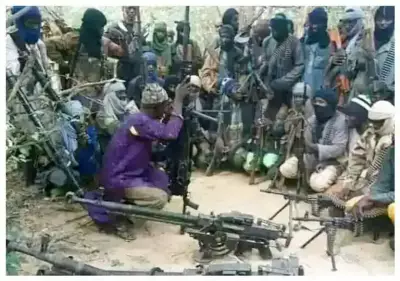
The US airstrike was reportedly targeting terrorists in the nearby Tangaza forest, believed to be the den of the Lakurawa insurgents. Their emergence reveals a complex and tragic local security story.
According to residents like Nura Tangaza, the group was initially known as herdsmen, believed to be Malians who were annual visitors to a forest in the Niger Republic bordering Gudu and Tangaza. Their cattle numbers mysteriously swelled to about 3,000 from less than 1,000 a few years ago.
Multiple accounts confirm that local leaders invited the armed group around 2018 for protection after relentless attacks by bandits from Zamfara State. "Our communities were inundated with cases of kidnappings, cattle rustling, and our Nigerian security forces were not doing much," said Nura Tangaza.
The invitation became urgent when armed bandits kidnapped a community leader. Abubakar Dangaladima, another leader, recounted how the initial ten Lakurawa members successfully rescued the victim and recovered stolen livestock. In gratitude, the host communities accommodated them, offered marriages, and contributed stipends for their welfare.
However, the relationship soured. "Suddenly, they broke this understanding," explained resident Sani Usman. "Now, they are forcing us to pay levies without our volition. People with cows pay as high as ₦500, and those with rams pay ₦200." The group now controls the forest, preaches Islamic teachings, forcefully collects alms (Zakat), and kills defaulters.

Denials and Calls for Accurate Support
Both the monarch and residents like Nura Jabo strongly rejected foreign claims of a "Christian genocide" in their area. "Christians have lived here for decades... We have never had conflicts," Nura Jabo asserted.
Former Senator Engineer Ibrahim Abdullahi Gobir criticised the United States for promoting misleading allegations. He faulted Nigeria's designation as a country of particular concern over religious persecution, calling it inaccurate and harmful. "Bombs do not discriminate between Muslims and Christians," he argued.
Gobir urged the US to instead provide advanced technology to track terrorist and bandit enclaves rather than amplify false narratives. Back in Jabo, HRH Garba Aliyu said the community is working to establish a sensitive committee to promote unity and ensure all stakeholders collaborate to maintain peace.