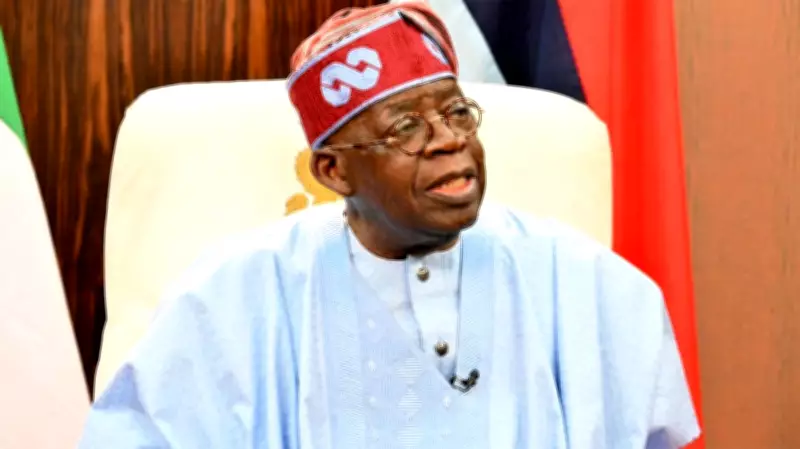
Tinubu Confronts Terrorism as Nigeria's Top Challenge Amid Rising Fatalities
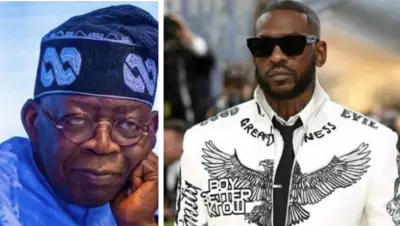
President Bola Ahmed Tinubu has publicly acknowledged that terrorism represents an immediate and significant threat to his administration, a statement made during a period of escalating terrorist activities across the nation. Addressing state governors, Tinubu emphasized, "The next phase of our struggle is staring us in the face; it is the challenge of insecurity in this country. I'm making all the efforts to ensure it is we, collectively, that will share the joy and be proud of victory over tyranny." This admission offers a glimmer of hope to beleaguered Nigerians that the scourge of terrorism, banditry, kidnapping, and related vices might eventually be eradicated.
However, this acknowledgment falls short in light of the daily death tolls recorded in numerous regions. Reports indicate that terrorism-related fatalities surged by 46 percent in 2025, resulting in 750 deaths in Nigeria. This alarming statistic is not only distressing due to the loss of precious human lives but also because of the substantial financial investments made by the federal government to combat this menace in recent years.
Nigeria Ranks Fourth in Global Terrorism Index
According to the Global Terrorism Index (GTI) 2026, Nigeria has climbed to the fourth position among the world's most affected countries, moving up from its previous sixth place. Pakistan leads the index, followed by Burkina Faso and the Niger Republic. It is unacceptable for Nigeria to be labeled as one of the most terrorized nations globally, a designation that highlights the government's failure to safeguard its citizens. The primary duty of any government is to ensure the security of lives, and a state that cannot prevent its people from being slaughtered regularly has no justification for its existence.

This tag must be vehemently rejected by challenging the government to fulfill its responsibility and liberate the country from the grip of terrorists. In 2025, the Federal Government allocated N6.57 trillion to security and defense, yet this massive expenditure has not yielded proportional results, as the nation has become increasingly terrorized.
International Support and Domestic Failures
President Tinubu revealed that French President Emmanuel Macron, along with other European leaders such as former Slovak Prime Minister Eduard Heger, Switzerland's Marc Jost, and Austria's Gudrun Kugler, have pledged support to tackle insurgency in Nigeria. During the Eid-el-Fitr celebration, Tinubu informed governors of extensive discussions with Macron regarding existing lines of credit for acquiring necessary equipment and assistance. He also mentioned efforts to seek support from other nations, stating, "even if we have to spend out goodwill and line of credit, we have those who are willing to support us with equipment and training." Any international aid secured must be utilized effectively to address the crisis.
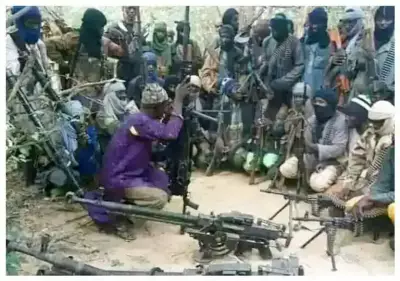
Nigeria is currently experiencing its deadliest wave of terrorism since 2019, when Boko Haram initially emerged as a localized insurrection in Borno State. Today, terrorism has evolved into a national calamity, with splinter groups like ISWAP, Ansaru, and Lakurawa establishing territories and operating parallel governments in the Northwest and North-central regions. These groups impose taxes and security fees on citizens, controlling access to farms and markets. No responsible government should tolerate such activities, as the Constitution of the Federal Republic (1999) does not permit insurgents to establish alternative governments.
Call for Government Action and Accountability
It is crucial that President Tinubu's recognition of terrorism as the government's main challenge transcends mere admission and leads to tangible results. Historically, the government has appeared to prioritize political maneuvers over governance, with accepting defectors becoming commonplace while citizens suffer brutal attacks by terrorists nationwide. The government must proactively engage terrorists rather than merely reacting to attacks.

By now, authorities should possess comprehensive intelligence on terrorist locations in areas such as the Lake Chad region, Sambisa Forest, Mandara Mountain, forests in the Northwest, and the Kainji and Borgo region in Kwara and Niger states. All terrorist leaders should be identified by the government. Islamic cleric Sheikh Ahmad Gumi has asserted that the Nigerian government knows the identities and locations of terrorists and bandits, a claim that the Federal Government has neither confirmed nor denied.
While it is commendable that nearly 400 terrorism suspects were tried and convicted in a mass trial over four days, this number represents only a small fraction of those taking up arms against the state. Many convicted individuals received prison sentences of up to 20 years after appearing before a panel of 10 judges. However, naming and shaming are insufficient; justice must be visibly served. The Tinubu administration must take decisive action immediately.
Strategic Changes and Local Solutions Needed
The government must alter its strategy in combating insecurity. First, it must develop the political will to confront the powers behind terrorism, both within and outside government structures. Boko Haram was initially condoned due to political sentiments, and the Federal Government must now expose and address closet supporters of terrorism. There is little evidence that the origins of Boko Haram and those who enabled it have been thoroughly investigated or that appropriate actions have been taken. Accountability is essential.
Senator Ali Ndume, representing Borno South, one of the hardest-hit constituencies, has warned that terrorists could capture Borno State if precautions are not taken. While this may sound alarmist, the government must cease dismissing citizens' genuine concerns with personal attacks, as this is counterproductive and diverts attention from critical issues. It is undeniable that terrorists are killing both civilians and military personnel, with at least 10 soldiers recently killed in a terrorist ambush in Kebbi State.
Although foreign assistance is valuable, over-reliance on external solutions does not reflect well on Nigeria, once a regional power in West Africa and the continent. Countries like Brazil, India, Pakistan, and Turkey have mastered arms production, yet Nigeria, with its size and resources, has not maximized opportunities to manufacture and sell arms domestically. It is time to look inward, revive the local steel industry, and enhance machine tooling capacity to demonstrate self-reliance and discipline.
The government must boost the morale of security forces through sincere political commitment, ensure transparency in funding and arms procurement, and fully protect human life to prevent the normalization of terrorism and bloodshed. Citizens must be kept alive for the nation to thrive.