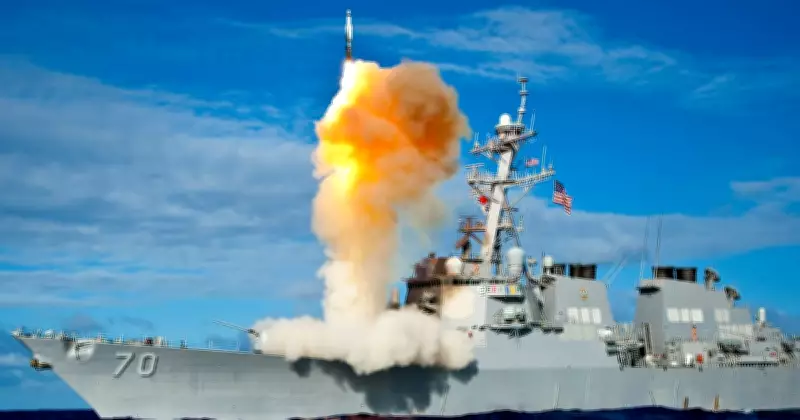
The Strait of Hormuz became a battleground on May 7, 2026, as three U.S. Navy destroyers—the USS Truxtun, USS Rafael Peralta, and USS Mason—were targeted in a massive, coordinated "swarm" attack by Iranian forces. Despite a barrage of missiles and drones, U.S. officials confirmed that not a single American ship was hit, while retaliatory strikes have left Iranian military sites in ruins.
Ambush in the Strait
The engagement began as the three destroyers were transiting the narrow waterway toward the Gulf of Oman. According to U.S. Central Command (CENTCOM), Iranian forces launched a coordinated attack featuring anti-ship ballistic and cruise missiles, explosive drone swarms, and high-speed fast boats. Using advanced Aegis defence systems, Phalanx Gatling guns, and Apache helicopters, the U.S. forces intercepted every incoming threat. A Navy spokesperson stated the ships emerged with zero damage and no reported casualties, refuting Iranian state media claims that the vessels were forced to flee.
U.S. Hammers Back: Qeshm and Bandar Abbas Struck
The American response was immediate and overwhelming. U.S. jets and ship-based missiles targeted the origins of the attack, hitting Iranian military infrastructure on Qeshm Island and near Bandar Abbas. Targets included missile and drone launch facilities, command and control centers, and intelligence nodes. NASA FIRMS satellite data confirmed the success of the mission, recording fire ignitions consistent with destroyed Iranian vessels and coastal facilities.

President Trump's Warning
President Donald Trump took to Truth Social to praise the Navy’s performance and issue a stern warning to Tehran. He described the destruction of Iranian drones in vivid terms, calling them "butterflies dropping to their grave." Trump labeled the current Iranian leadership as "lunatics" and warned that future provocations would be met "a lot harder and a lot more violently."
A Truce in Jeopardy
This clash marks the most serious violation of the ceasefire established in April 2026. While Trump later downplayed the massive retaliation as a "love tap," the scale of the strike suggests a significant shift in U.S. engagement rules. Global oil markets reacted sharply, as the Strait of Hormuz remains the world’s most vital energy chokepoint. The U.S. maintains that its "Wall of Steel" naval blockade will continue until a new deal is signed.