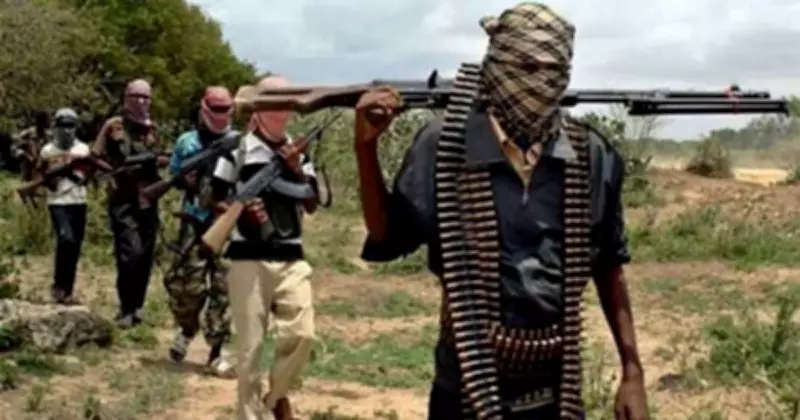
A new report by the United States Commission on International Religious Freedom (USCIRF) has claimed that approximately 30,000 armed Fulani militants are currently operating across Nigeria, exacerbating insecurity and instigating attacks in various regions. The report, released in May 2026 and titled "Nonstate Violators of Religious Freedom in Nigeria: Fulani Militants," identifies these groups as some of the deadliest non-state actors responsible for religious freedom violations in the country today.
Report Details and Scope
According to the commission, the militants operate in cells ranging from small groups of about 10 fighters to larger formations of up to 1,000 members, spread across the Middle Belt and parts of Southern Nigeria. The violence linked to these armed groups has left thousands dead, displaced entire communities, and deepened tensions between Christians and Muslims in several states. The USCIRF report states that over 1.3 million people have been displaced in the Middle Belt due to persistent raids on rural farming communities.
"Violence by Fulani militants caused the highest number of deaths among all religious communities in Nigeria over the last year as compared to attacks by organized insurgent groups and criminal gangs," the report stated. USCIRF noted that many attacks targeted Christian communities, although Muslim communities have also suffered killings, kidnappings, and raids. The commission emphasized that the militants do not appear to operate under a single leadership structure, but some factions reportedly coordinate with criminal gangs and extremist organizations.

Attack Patterns and Motivations
The report highlights that attacks are often carried out at night in remote communities, with attackers arriving on motorcycles and armed with guns and machetes. "They often wield machetes and descend on vulnerable communities during the night, eliciting terror as a way to force victims to quickly leave and to achieve greater control of desired land," USCIRF said. Militants frequently time their operations to coincide with religious holidays like Easter and Christmas to maximize psychological impact.
USCIRF referenced several deadly incidents recorded in 2025 and early 2026, especially in Benue and Plateau states. "One attack in Benue in June 2025 killed at least 200 people, including internally displaced persons living in a Catholic mission," the report stated. The Yelwata massacre in Benue State reportedly killed over 200 Christians, mostly sleeping women and children, displacing over 3,000 residents.
Government Response and Criticism
While the Nigerian government has classified violent armed groups as terrorists, the USCIRF report criticizes the official response as often being "consistently slow." Victims have long reported that security forces are consistently slow to respond to attacks on their communities. The report also notes that some Christian groups have accused security agencies of bias in favor of Muslim communities, allegations Nigerian authorities have denied.
At the federal level, USCIRF linked recent security actions to the decision by former US President Donald Trump to redesignate Nigeria as a Country of Particular Concern over religious freedom violations in October 2025. Following that, President Bola Ahmed Tinubu reportedly classified kidnappers and violent armed groups, including Fulani militants, as terrorists in December 2025. The commission also said Nigerian security forces rescued 309 hostages during operations in Kogi and Kwara states in January 2026, arresting 129 suspected Fulani militants and killing 55 others.
Broader Context and Future Outlook
USCIRF acknowledged conflicting views on what drives the violence. "Some observers have argued that environmental and economic factors are the driving force behind Fulani militants’ acts of violence, while others have suggested that these actors are engaged in a concerted campaign of outright genocide against non-Muslims, especially Christians. In fact, multiple and overlapping factors, including religion in many cases, likely spur Fulani militants to attack communities or individuals."

The report also mentioned the growing scrutiny surrounding the Miyetti Allah Cattle Breeders Association of Nigeria (MACBAN). Christian leaders have accused the group of failing to stop violent attacks, though MACBAN denied supporting any criminal activity. The US Congress introduced the Nigeria Religious Freedom and Accountability Act of 2026 in February, proposing sanctions against MACBAN.
Despite ongoing military operations and peace-building efforts, USCIRF warned that insecurity in central Nigeria remains severe. "As a result, central Nigeria remains entrenched in an intense, daily, and seemingly perpetual crisis of insecurity," the report concluded. The commission added that the violence may continue unless both federal and state governments create conditions that support peaceful coexistence and the protection of religious freedom across affected communities.