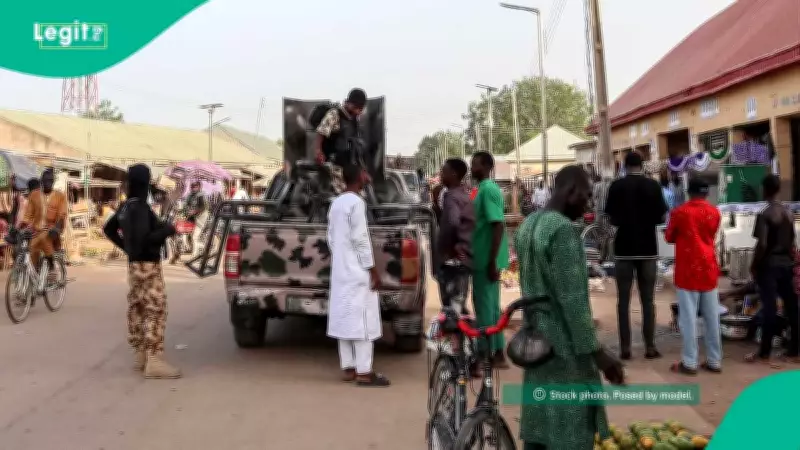
A new report published in May 2026 by the United States Commission on International Religious Freedom (USCIRF) has identified Fulani militants as the armed group responsible for widespread deadly attacks and mass abductions in Nigeria. The report, titled “Nonstate Violators of Religious Freedom in Nigeria: Fulani Militants,” details the worsening security situation in northern and central Nigeria, where rural communities suffer repeated raids, kidnappings, and killings.
Scope of Violence
The commission estimates that tens of thousands of armed fighters operate in loose networks across the country. These groups, lacking central command, often strike in coordinated patterns using motorcycles, firearms, and machetes, mostly in rural areas. The report states that violence by Fulani militants caused the highest number of deaths among all religious communities in Nigeria over the past year.
“An estimated 30,000 Fulani militants likely operate across the country, traditionally concentrating in the northwest, then migrating down through the Middle Belt, and becoming increasingly active in the South. Each group consists of anywhere from 10 to 1,000 members. While these militants do not share a centralized leadership, some collaborate on attacks,” the report noted.

Major Attacks and Abductions
The document cites several major attacks, including deadly raids in Benue and Plateau states where hundreds were killed. One striking case involved an attack in Benue in June 2025 that killed more than 200 people, including displaced families sheltering in a church mission. Kidnappings have also become a growing tactic, with armed groups abducting pastors, worshippers, and villagers from churches and mosques, demanding large ransoms. Some victims remain missing for months due to ongoing negotiations.
Attacks during religious holidays, such as Christmas and Easter, have increased fear among worshippers and disrupted religious gatherings.
Drivers of Violence
The report attributes the violence to a mix of factors, including land pressure, poverty, and competition over grazing routes. While religion plays a role in some cases, it is not described as the sole cause. The report also questions the government’s response, noting that security forces are often slow to reach attacked communities.
However, it acknowledges recent government actions, such as declaring armed groups, including Fulani militants, as terrorists in December 2025. Military operations in 2026 have led to arrests and the rescue of hundreds of kidnapped victims in different states. “There has been some evidence of increased government efforts, both before and after the October CPC designation, to address Fulani-led violence through prosecutions and community-level engagement. In September, prosecutors filed initial terrorism charges against nine Fulani herders,” the report stated.
Role of MACBAN
The report examines the role of the Miyetti Allah Cattle Breeders Association of Nigeria (MACBAN), which defends Fulani herders and denies any link to violence. Critics accuse the organization of failing to stop militant activity. MACBAN has argued that violent Fulani militants represent only a minority of the greater Fulani population but perpetrate the majority of the violence against all religious communities, including Muslims. In 2025, the organization demanded a presidential directive for security agencies to protect herding communities, citing threats from violent militants and criminal gangs.
International Pressure and Conclusion
The report recalls Nigeria’s placement on the US “Country of Particular Concern” list in 2025, increasing diplomatic attention on religious violence. It warns that without stronger security and sustained conflict resolution efforts, violence against both Christians and Muslims may continue to destabilize affected areas.