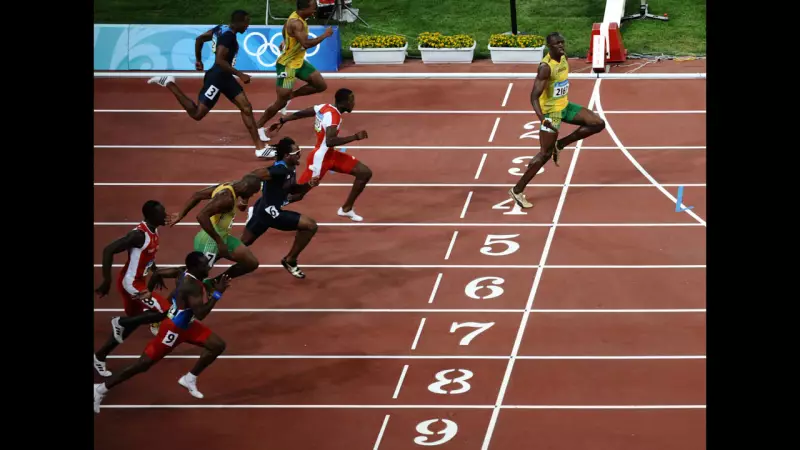
The world of athletics is in a state of fierce condemnation following revelations that the controversial Enhanced Games plans to directly target and break legendary sprinter Usain Bolt's long-standing world records using performance-enhancing substances.
What Are The Enhanced Games?
Proposed by Australian businessman Aron D'Souza, the Enhanced Games is a planned multi-sport event that explicitly allows athletes to use banned performance-enhancing drugs without any form of drug testing. The first event is scheduled for June 2026. This concept has been met with universal criticism from official sporting bodies, who view it as a dangerous and illegitimate spectacle.
World Athletics has stated it does not recognise the Enhanced Games as a legitimate competition. Consequently, any record set there, including a potential new 100m mark, would not be entered into the official record books. In August, the World Anti-Doping Agency (WADA) reinforced this stance, calling the Games an "ill-conceived event."

The Direct Threat to Bolt's Legacy
The focus of the controversy is the 100m and 200m world records set by Jamaican icon Usain Bolt. His time of 9.58 seconds in the 100m, achieved at the 2009 World Championships in Berlin, has remained untouched for nearly 17 years. His 200m record of 19.19 seconds is equally untouchable in the modern, drug-tested era.
For context, the fastest legal time in 2025 was run by Jamaica's Kishane Thompson at 9.75 seconds, which is still a significant 0.17 seconds behind Bolt's peak. The Enhanced Games organisers have reportedly offered American sprinter Fred Kerley a $1 million prize if he can break Bolt's 100m record at their event. Kerley, a 2020 Olympic silver medallist with a personal best of 9.76 seconds, is seen as a prime candidate to challenge the time under doped conditions.
Stakeholders React with Fury and Disappointment
The backlash from the athletics establishment has been swift and severe. An athlete commission from UK Anti-Doping labelled the Games a 'reckless venture' that could "damage the integrity of world sport irrevocably."
The criticism became more personal with the announcement that retired British sprinter Reece Prescod has signed up for the Enhanced Games. Prescod, 29, retired in August last year with a personal best of 9.93 seconds. In response, UK Athletics chief executive and former Olympian, Jack Buckner, issued a strong statement.
"As a former athlete, I find this particularly appalling," Buckner said. "Those of us who have competed know what it takes to succeed the right way — through talent, dedication, and respect for the rules. To see a British athlete aligning themselves with an event that celebrates the use of performance-enhancing drugs is profoundly disappointing."
UK Athletics further stated it does not recognise the Enhanced Games and that any event promoting harmful substances to push the body for short-term goals is not sport as they value it. Prescod follows British swimmer Ben Proud, who in September 2025 became the first UK athlete to join the controversial project.
The core conflict highlights a fundamental clash of values: the pursuit of ultimate human performance without limits versus the protected integrity of fair competition that has defined modern athletics for decades. As the 2026 date approaches, this debate is set to intensify.