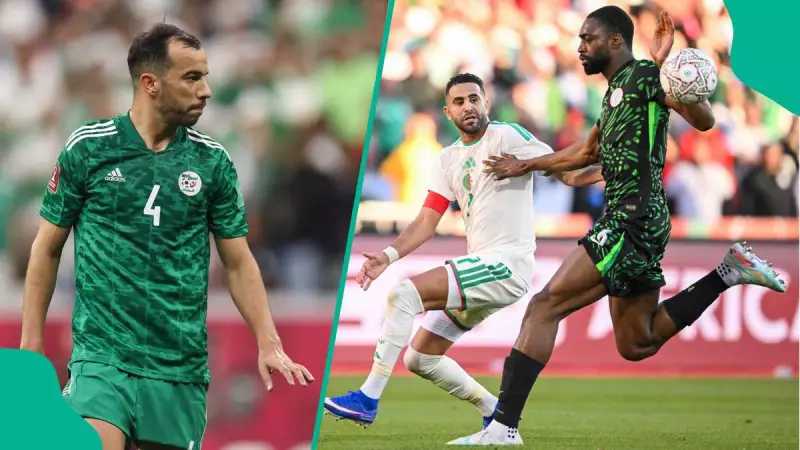
Former Algerian International Advocates for Stronger Protest in Nigeria Quarter-Final Clash
Djamel Benlamri, a veteran of Algeria's 2019 Africa Cup of Nations triumph, has publicly stated that his national team should have taken more drastic action during their controversial AFCON 2025 quarter-final encounter against Nigeria's Super Eagles. The former defender specifically referenced Senegal's dramatic walkout protest during the tournament final as a model the Desert Foxes should have followed.
Senegal's Controversial Final Protest Sets Precedent
The context for Benlamri's comments stems from the highly contentious AFCON 2025 final between Senegal and Morocco. During that match, Senegalese referee Jean-Jacques Ndala awarded a late penalty to Morocco just minutes after disallowing what appeared to be a legitimate goal for the Teranga Lions. In response, the entire Senegalese team staged a temporary walkoff the pitch in protest.
"After the Senegalese players left the pitch to protest the referee's decisions, he became much more consistent in the remainder of the match. That's exactly what you have to do in these kinds of situations, while remaining professional," Benlamri explained in an interview with Africa Soccer.

The Algeria-Nigeria Quarter-Final Controversy
During Algeria's quarter-final match against Nigeria on January 10, 2026, a pivotal moment occurred when Nigerian defender Semi Ajayi appeared to handle the ball in his own penalty area. Senegalese referee Issa Sy waved away Algerian appeals, ruling the incident as accidental ball-to-hand contact rather than a deliberate handball offense.
"Algeria should have adopted the same attitude against Nigeria to make a point. It wasn't necessarily about actually leaving the pitch, but above all about expressing strong protest," Benlamri emphasized, drawing direct parallels between the two controversial officiating incidents.
The match remained scoreless at that critical juncture, but Nigeria ultimately secured a 2-0 victory with second-half goals from Victor Osimhen and Akor Adams within a ten-minute span.
Widespread Officiating Concerns at AFCON 2025
The tournament has been marred by numerous complaints regarding refereeing standards, with many observers noting a significant decline from the quality demonstrated at AFCON 2023 in Côte d'Ivoire. These concerns reached their peak during the final, where Senegal's protest sparked global debate about officiating integrity in African football.
Confederation of African Football (CAF) President Patrice Motsepe has acknowledged these widespread complaints, confirming that the governing body is actively investigating the various officiating controversies. Motsepe had previously emphasized to tournament referees the need to maintain exceptionally high standards throughout the competition.
Algeria's Formal Response to Quarter-Final Officiating
The Algerian Football Federation has taken official action following their elimination, submitting formal petitions to both CAF and FIFA requesting investigations into the alleged poor officiating during their match against Nigeria. In an official statement, the federation confirmed they had written to the superior football bodies seeking clarification and accountability for the controversial decisions.
This development adds to the growing scrutiny surrounding tournament officiating, particularly as Morocco eliminated Nigeria in the semi-finals under similarly questionable circumstances involving Ghanaian referee Daniel Nii Ayi Laryea.
Broader Implications for African Football
The combination of Senegal's unprecedented walkout protest, Algeria's formal complaints, and widespread fan dissatisfaction has created a significant crisis of confidence in African football officiating. While many African supporters expressed sympathy for Senegal's protest against perceived Moroccan favoritism, the incident has raised complex questions about appropriate responses to controversial refereeing decisions.

CAF's ongoing investigation into the Senegal walkout incident, coupled with pressure from Morocco for severe sanctions including potential title stripping, indicates the profound consequences such protests can generate within international football governance structures.