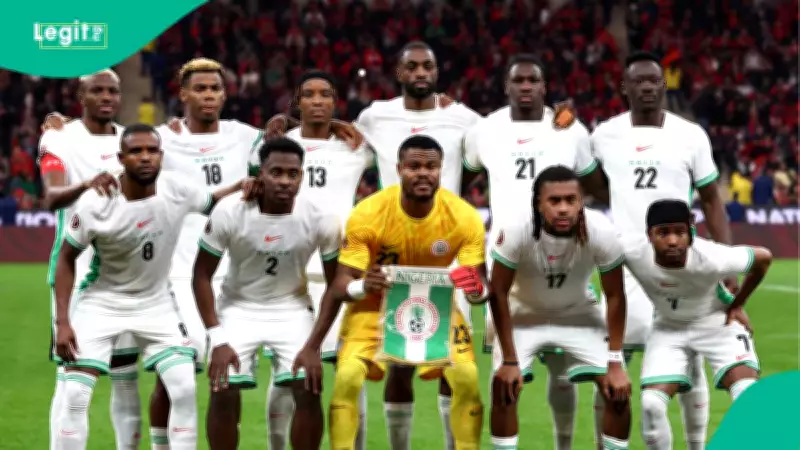
Iran Withdraws From Four-Nation Football Tournament Involving Nigeria
In a significant development for international football, the Islamic Republic of Iran has reportedly withdrawn from a proposed four-nation invitational tournament that was scheduled to include Nigeria, Jordan, and Costa Rica. The tournament was set to take place in Jordan from March 27 to 31, 2026, but has been thrown into uncertainty due to escalating geopolitical tensions in the Middle East.
Geopolitical Conflict Forces Football Cancellation
The decision comes amid ongoing military conflict in the region, which began on February 28, 2026, when the United States and Israel launched coordinated airstrikes against Iran. These offensive actions targeted political and military personnel, resulting in the elimination of Iran's Supreme Leader Ayatollah Ali Khamenei. The volatile situation has created a chain reaction of hostilities, with Iran retaliating against Israeli and US bases in neighboring countries.
According to reports from OwnGoal Nigeria, Iran has formally withdrawn its participation from the tournament. The Middle East's instability has placed the entire sporting event in jeopardy since the conflict erupted, and Iran has now taken the decisive step to pull out entirely. This withdrawal represents a significant disruption to international football scheduling and highlights how geopolitical tensions can directly impact global sports.

Tournament Reorganization and Potential Relocation
With Iran's withdrawal, Nigeria's scheduled friendly match against Jordan is now expected to be moved to a European venue. The ongoing conflict shows no signs of immediate resolution, prompting tournament organizers to consider safer locations outside the Middle East. If Iran's withdrawal is confirmed, Nigeria would face only Jordan in the revised tournament format, with the match likely taking place at a European football stadium.
The tournament's future remains uncertain, with Costa Rica also scheduled to participate in the original four-team format. Football authorities are now scrambling to reorganize the event, potentially reducing it to a two-nation competition between Nigeria and Jordan. This development represents a significant logistical challenge for all involved football federations and tournament organizers.
Broader Implications for Iranian Football
Iran's withdrawal from the Jordan tournament is not an isolated incident. According to the New York Times, Iran is considering withdrawing from the 2026 FIFA World Cup, which will be jointly hosted by the United States, Mexico, and Canada. This potential boycott stems from the current political tensions with the United States, which could complicate visa approvals for the Iranian contingent.
Mehdi Taj, President of the Iran Football Federation, has expressed that his country cannot approach international tournaments with optimism given the recent escalations with the United States. This sentiment reflects broader concerns within Iranian sports administration about participating in events hosted by or involving nations with which they have political conflicts.
Potential Replacements and FIFA's Role
While Iran's withdrawal has not been officially confirmed by FIFA, football's global governing body maintains several options for tournament reorganization. Fellow Middle Eastern nations Iraq and the United Arab Emirates could potentially replace Iran in the tournament lineup if the withdrawal proceeds. FIFA holds discretionary power to select replacement teams, which may not necessarily come from the same continental association as the withdrawing nation.
The situation also raises questions about Nigeria's potential role in broader international football scenarios. Analysis has considered whether Nigeria could replace Iran in the 2026 World Cup if political tensions prevent Iranian participation. However, FIFA would need to exercise its authority carefully in such circumstances, balancing sporting considerations with geopolitical realities.

Historical Context and Additional Factors
Iran's decision to withdraw from international football engagements may be influenced by additional factors beyond immediate geopolitical tensions. Recent incidents, such as the Iranian women's national team refusing to return home after their elimination from the Asian Cup, have created internal pressures within Iranian football. These domestic challenges, combined with external political conflicts, create a complex environment for Iran's international sports participation.
The United States' previous denial of visas to Iranian football officials, including Mehdi Taj during the World Cup draw in December 2025, establishes a precedent that complicates future sporting engagements. This history of travel restrictions adds another layer of difficulty to Iran's participation in international tournaments, particularly those involving or hosted by nations with which they have strained diplomatic relations.
As the situation continues to develop, football fans and administrators alike await official confirmation from FIFA and the involved national football federations. The intersection of international sports and global politics has rarely been more apparent, with the beautiful game becoming an unexpected casualty of broader geopolitical conflicts.