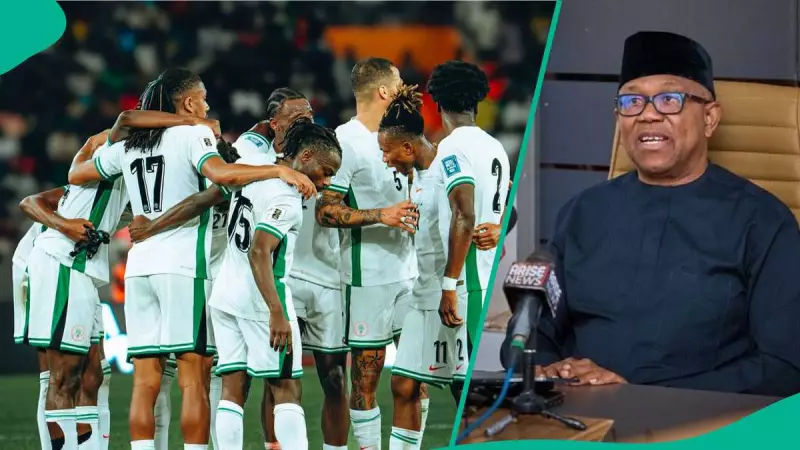
Super Eagles Crisis Deepens as Players Protest Unpaid Bonuses
The Nigerian national football team, the Super Eagles, has thrown their World Cup qualification campaign into uncertainty after players boycotted training in Rabat, Morocco. The protest action occurred on Tuesday, November 11, 2025, just days before their crucial 2026 FIFA World Cup playoff match against Gabon.
According to reports from the London Evening Standard, the players' dramatic move stems from unpaid bonuses dating back to 2019. The Nigeria Football Federation (NFF) has allegedly failed to honor financial commitments to the team despite repeated promises and assurances.
Peter Obi's Powerful Intervention
Former Anambra State Governor and presidential aspirant Peter Obi has weighed in on the controversy with a strongly worded statement published on his X social media account. The political leader condemned what he described as systemic failure to reward public service in Nigeria.

In his statement, Obi referenced the term "disgraced country" previously used by former US President Donald Trump when describing Nigeria. "It is truly unfortunate that our Super Eagles, who consistently give their best in representing our dear nation, are being owed their allowances," Obi declared.
The former Labour Party presidential candidate highlighted the irony of Nigeria's spending priorities, noting that "We always seem to find money to waste on needless lavish spending and political patronage, yet we cannot pay those who patriotically raise our flag, bring us pride, and serve with dedication."
National Outrage and Social Media Backlash
The boycott has sparked widespread condemnation across Nigerian social media platforms, with many citizens expressing solidarity with the players while criticizing the football administration.
One social media user, @marvellousisra3, captured the prevailing sentiment: "When a nation fails to honour those who sacrifice for her pride, it reveals her misplaced priorities. The Super Eagles have done their part, the question is, will the government do theirs?"
Another comment from @felixherbt pointed to broader governmental spending controversies: "Super Eagles Unite Nigeria, federal government repay them with empty promises. Meanwhile the presidential yacht still dey float. Boys dey play for pride, politicians dey fly for swag."
Super Eagles captain William Troost-Ekong has confirmed that the protest specifically targets unpaid bonuses rather than any special additional payments. The defender took to his social media platforms to clarify the team's position and dispel misinformation surrounding the boycott.
Historical Precedent Raises Concerns
Football analysts have pointed to a worrying historical parallel. The last time Nigerian players staged a similar boycott before a crucial match was at the 2014 World Cup, where the Super Eagles suffered a 2-0 defeat against France.
This historical context adds significant pressure to Thursday's crucial World Cup qualifying match against Gabon at the Prince Moulay Abdellah Stadium. The timing of the protest, just two days before the must-win encounter, has raised concerns about team morale and preparation.
Peter Obi emphasized the broader implications of the situation, stating that "When those who serve their country are not treated with dignity, it sends the wrong message to our youth that hard work and service are not rewarded." He insisted that "Those who represent Nigeria deserve to be paid promptly and treated with respect."
The growing crisis highlights ongoing administrative challenges within Nigerian football and raises serious questions about the nation's preparedness for crucial international competitions.