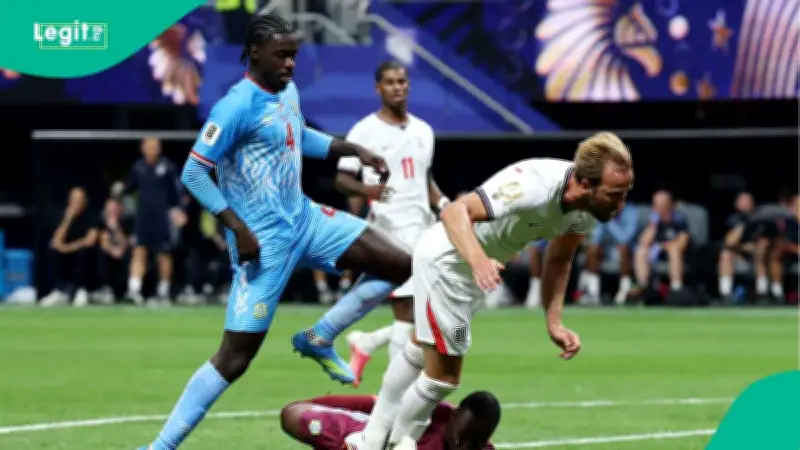
England captain Harry Kane was denied a penalty during their Round of 32 match against DR Congo on Wednesday, July 1, 2026, at the FIFA World Cup. Referee Adham Makhadmeh insisted that the striker had dived, and VAR elected not to send the referee to review the decision. Despite the controversial call, Kane led a comeback as the Three Lions came from behind to beat the Leopards 2-1, with the Bayern Munich forward scoring a brace.
Match Overview: England's Comeback Victory
DR Congo took the lead in the seventh minute through Brian Cipenga, who finished off an assist from captain Chancel Mbemba in DR Congo's first-ever FIFA World Cup knockout match. England struggled to create clear-cut chances in the first half, with Kane largely kept quiet in front of goal.
Manager Thomas Tuchel introduced Anthony Gordon in place of Manchester United forward Marcus Rashford, and the substitution proved decisive. Gordon provided the cross for Kane to head home the equaliser in the 75th minute. The Bayern Munich striker completed the comeback in the 86th minute, rifling home a stunning strike to beat Lionel Mpasi Nzau for the second time in the match.

Historic Context: First Comeback Since 1966
This marked the first time England had won a World Cup match after conceding first since the 1966 FIFA World Cup final, according to ESPN. The victory secured England's place in the Round of 16, where they will face co-host Mexico at the Azteca Stadium on Monday, July 6, per Sky Sports.
Penalty Incident: Why Kane Was Denied
Kane raced behind the DR Congo defence and attempted to round goalkeeper Lionel Mpasi before going to ground following what appeared to be contact from the Congolese shot-stopper. Jordanian referee Adham Makhadmeh immediately waved away the appeal, seemingly judging that the England captain had gone down too easily.
VAR official Khamis Al Marri reviewed the incident but did not recommend an on-field review, allowing the referee's original decision to stand. Makhadmeh also chose not to caution the Three Lions captain for simulation. According to the IFAB Laws of the Game, simulation occurs when a player fakes or exaggerates an action to deceive the referee into awarding a free kick or penalty, or to have an opponent sanctioned.
Officials' Perspective: No Booking for Simulation
The decision not to book Kane suggests the match officials were not convinced he had deliberately attempted to deceive the referee. At the same time, they were equally unconvinced that the contact was sufficient to justify awarding a penalty. This left England fans and pundits debating the call, but Kane's match-winning performance ultimately overshadowed the controversy.