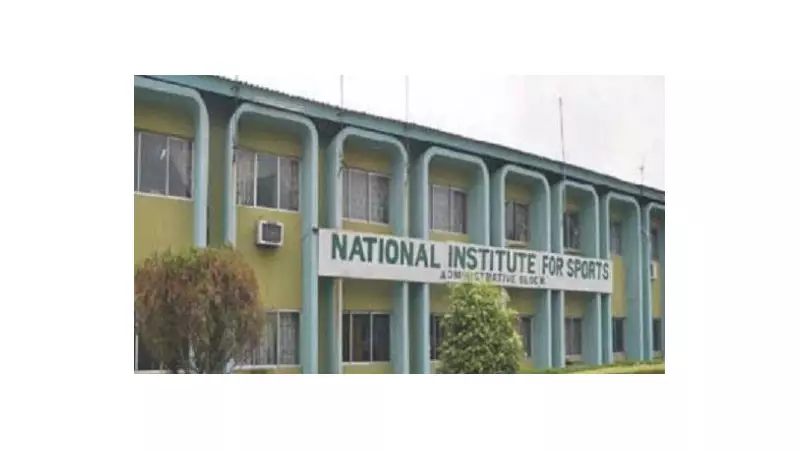
The Director General of the National Institute of Sports (NIS), Phillip Shaibu, has levelled serious allegations against the Federal Government, claiming it has deliberately withheld funding from the institute for decades. This is despite what he calls record-high budgetary allocations to the sports sector in recent years.
A Deliberate Exclusion from Funding
Shaibu made these claims during an appearance on the programme Sunrise Daily on Monday, January 5. He stated that while sports funding under President Bola Tinubu's administration is the highest the sector has ever received, the NIS continues to be completely left out of these financial provisions.
"Sports funding has seen one of the highest allocations in this administration. The last budget was the highest the sports sector has ever had, but NIS was not captured in that funding, and it has been like that for decades," Shaibu asserted.

He described this long-standing omission as a conscious act, pointing fingers at former sports ministers and the nation's budgeting framework. According to him, this system has led to the gradual decline of the crucial institute. He went as far as to call for the National Assembly to summon past sports ministers to explain their roles in the situation.
Flawed System and a New Roadmap
The NIS boss argued that Nigeria's entire sports administration structure is fundamentally flawed. He emphasized that the government's primary role should be to develop infrastructure, not manage daily sports activities.
"In simple economics, government has no business in business but has business in providing enabling environments. In sports, the government has no business in the daily running of sports, but they have business in developing and building the infrastructure," he explained.
Shaibu, who assumed office about five months ago, revealed he met an institute that was 51 years old but operated without a clear development plan. "I met the NIS, who is 51 years old, five months ago, without a plan, so we had to create a roadmap. Funding is a major problem, so we had to get the private sector involved," he said.
He noted that past frustration over Nigeria's inconsistent sports performance had initially discouraged private sector investment. However, he senses a new willingness to help make the NIS work.
Revival Against All Odds and a Stern Warning
Despite inheriting what he termed a "very lean budget," Shaibu said the institute has kick-started key programmes through public-private partnerships. One significant achievement has been the revival of the institute's Abuja office, which had been inactive for decades, without any direct budgetary allocation.
"We brought the Abuja office back to life with no resources. We had our first three-month coaching programme after 30 years in Abuja... The office is back and well renovated without budget and can compete with any office in Nigeria in terms of standard," he disclosed.
Shaibu concluded with a stark warning: Nigeria's sports fortunes will remain unstable and unpredictable until the NIS is properly funded and fully functional. "NIS is the critical sector that produces the players, the coaches, the referees. It's the training institute for the sports ecosystem. When that system is not functioning, don't expect anything better in Nigerian sports because the engine room for sports is not functioning," he added.