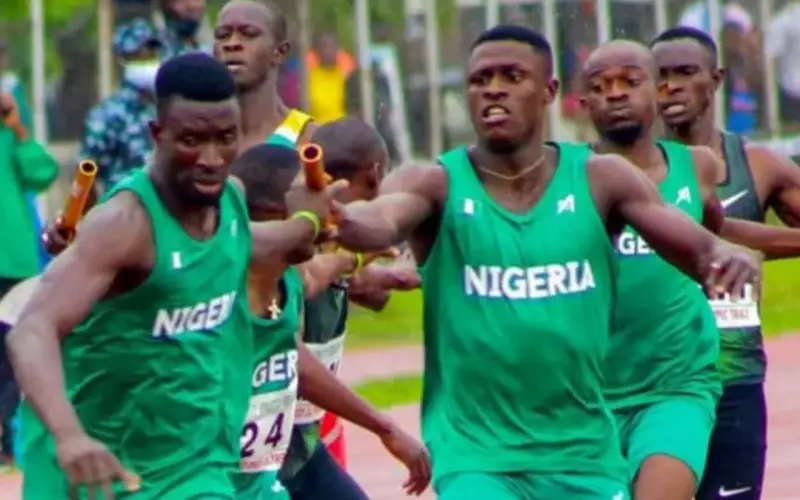
One year after its much-heralded return, the National Sports Commission (NSC) finds itself under intense scrutiny, with stakeholders questioning its ability to halt the continuous slide in Nigerian athletics. The commission, revived by President Bola Tinubu's administration, was touted as the definitive solution to the nation's long-standing sports malaise, but the initial optimism is now giving way to a more sober assessment.
A Global Benchmark and Nigeria's Structural Musical Chairs
Globally, sports are recognized as a major economic driver and employer. Nations like the United States and the United Kingdom have established robust, dedicated systems. The U.S. Olympic & Paralympic Committee (USOC) works with bodies like the NCAA and National Governing Bodies (NGBs) to nurture talent. Similarly, the UK's Department for Digital, Culture, Media, and Sport (DCMS) crafts policy to boost participation and elite performance.
Nigeria's journey, however, has been marked by instability. The country has oscillated between a National Sports Council, a Ministry of Sports, and the NSC as a parastatal. Experts identify this constant restructuring, beginning around 1991, as the albatross stifling growth. The return to the NSC model in 2025 was meant to end this cycle, leveraging sports technocrats to rebuild from the grassroots up.

High Hopes and the Reality Check
Upon assuming office, NSC Chairman Shehu Dikko outlined an ambitious vision. He stated President Tinubu mandated a shift "from consumption to production," aiming to create a proper sporting economy. With a budget allocation of N78 billion for infrastructure and programmes, the commission promised to address crippling facility deficits and establish systems to discover and train every talented Nigerian.
A key initiative was the creation of the Elite Athletes Development and Podium Board (EADPB), designed to provide targeted support to top athletes. However, the first anniversary has revealed a gap between promise and perception, leaving stakeholders divided.
Stakeholders' Verdict: Too Early or Too Little?
Opinions on the NSC's first-year performance vary sharply. Former African tennis champion, Dr. Sadiq Abdullahi, argues it is too early for definitive judgment. He highlights a critical impediment: the federal government's failure to constitute the NSC's full governing board as per the NSC Act of 2023. This omission, he says, centralizes power in Abuja, slows policy implementation, and hampers funding flow to the six geopolitical zones.
"The old structure inherited by the NSC has not given way to a new structure," Abdullahi noted, pointing to retained ministry staff in key roles. He advised the swift enactment of the NSC Act provisions and the implementation of the National Sports Industry Policy (2022-2026).
Conversely, an anonymous stakeholder was blunt, calling the NSC "a big disappointment." They criticized a focus on organising competitions over building foundational infrastructure and cited a viral video where an EADPB member lamented never being consulted after inauguration. "It is like these people live by pronouncements without action," the source said.
Former footballer Theodore Chukwuemeka suggested internal friction, noting a perceived power tussle between Chairman Shehu Dikko and Director-General Bukola Olopade that creates confusion. "We see different press statements... and one begins to wonder if there is no order in the commission," he observed.
A Defensive Optimism and the Road Ahead
In contrast, former Lagos State Sports Commission chairman, Kweku Tandoh, offered a more optimistic review. He celebrated the autonomy of sports under the NSC and praised Dikko and Olopade for beginning to reposition the commission as a serious brand in the corporate world.
"The optics are a bit better now," Tandoh stated, arguing that the NSC has worked to shed the ministry's baggage and attract private sector partnership, which is vital for sustainable funding. On infrastructure decay, he cautioned, "It's not in one year that we're going to fix... what has been in decay over the years."

The consensus, even among critics, is that one year is a short time to reverse decades of decline. The fundamental question remains whether the current NSC structure, once fully operational with its zonal commissioners and board, can break the cycle of failure and deliver the sporting renaissance Nigeria desperately seeks. The coming year will be crucial in determining if the commission is truly the long-awaited solution or merely another chapter in the nation's sports governance struggles.