Education specialists from across West Africa have issued a critical call for a cautious and value-driven approach to adopting Artificial Intelligence (AI). Their goal is to ensure the continent's rich cultural and intellectual identity is not erased by foreign digital models.
A Regional Call for Culturally-Grounded AI
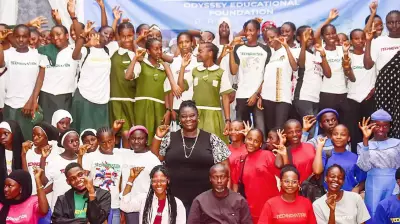
This urgent appeal was made during a significant two-day regional workshop held recently. The event, themed 'Open Educational Resources (OER) Practices in the Age of Artificial Intelligence (AI)', was convened by the National Open University of Nigeria (NOUN) in partnership with the Commonwealth of Learning (COL) via its Regional Training and Research Institute for Distance and Open Learning (RETRIDOL).
The forum gathered a diverse group of academics, policymakers, and education officials from six West African nations, creating a unified front to address the AI challenge.

Leading with African Values, Not Foreign Models
Professor Olufemi Peters, the Vice-Chancellor of NOUN, set the tone by highlighting the dual nature of AI's promise. He acknowledged the exciting possibilities AI presents for transforming education but insisted on vigilant implementation.
"African institutions must lead with their values, not merely adopt foreign models," Peters stated emphatically. He stressed that African knowledge systems, histories, and cultural perspectives are indispensable and must be deliberately woven into the fabric of AI tools and the policies that govern them.
Echoing this sentiment, Professor Dorothy Ofoha, Deputy Director of RETRIDOL, reinforced the need for protective measures. While recognising AI's potential to enable more flexible, inclusive, and high-quality learning, she issued a clear warning.
"African countries must protect their unique values and identities as they adopt AI tools," Ofoha said, cautioning that these powerful technologies must not be allowed to override established cultural and educational values.
Designing an African-Centric AI Framework for Education
The core objective of the workshop was to move beyond discussion and into action. Participants worked to design practical frameworks and policies that would support the development of AI-enhanced Open Educational Resources. The key condition is that these resources must be firmly rooted in African contexts and realities.
Professor Jane-Frances Agbu, Adviser on Higher Education at COL, pointed to the unprecedented speed at which AI is reshaping global education. She identified the central challenge as maintaining openness and equity in this rapid transformation.
"OER must continue to serve as trusted digital public goods for all learners," Agbu noted. She called for institutions to prepare to use AI thoughtfully, ethically, and responsibly. Her concluding point was unequivocal: "Most importantly, African languages and knowledge systems must stay central in this evolution."
The collective message from the workshop is clear: for Africa, the journey into the AI age cannot be a passive one. It requires active stewardship to ensure that technological advancement becomes a tool for cultural preservation and intellectual sovereignty, not a force of erosion.