Across the world, intensive care units stand as the pinnacle of technological achievement in medicine. Machines monitor vital signs with extraordinary precision, and clinicians intervene at the edge of life itself. Yet something profoundly human is often absent: the presence of nature, and the deeper wisdom traditions that have long guided how we understand healing. As healthcare systems confront rising costs, prolonged recovery times and increasing mental distress among patients, it is time to rethink what healing environments should look like.
Convergence of Tradition and Technology
A compelling new direction lies in an unlikely yet deeply coherent convergence: the integration of digitally modelled Odù Ifá knowledge with therapeutic herbal gardens in critical care settings. This is not a nostalgic return to tradition, but a forward-looking synthesis of artificial intelligence, ecological design and indigenous African epistemology. It challenges the assumption that cutting-edge medicine must remain detached from nature and culture, and instead proposes a model where technology amplifies, rather than replaces, holistic wisdom.
At the heart of this idea is the recognition that Odù Ifá, the 256-part corpus of the Ifá divination system, is not merely spiritual literature but an advanced knowledge architecture. Each Odù encodes patterns of human experience, including health, imbalance, restoration and resilience. When viewed through a computational lens, these patterns bear a striking resemblance to modern data structures, particularly binary logic systems that underpin digital computing. In effect, Odù Ifá can be interpreted as an indigenous knowledge graph, one capable of informing algorithmic reasoning.

Digital Representation and AI Integration
Each Odù can be digitally represented with attributes such as thematic meaning, associated herbal remedies and contextual guidance. When integrated into an artificial intelligence framework, this structure allows for the development of systems that respond to real-time clinical data with culturally informed, ecologically grounded insights. To understand the practical implications, one must look at the physical environment of care. Intensive care units are typically enclosed, sterile and dominated by mechanical systems. While necessary for infection control and acute intervention, such environments can heighten patient anxiety, disrupt circadian rhythms and prolong recovery.
The Role of Herbal Healing Gardens
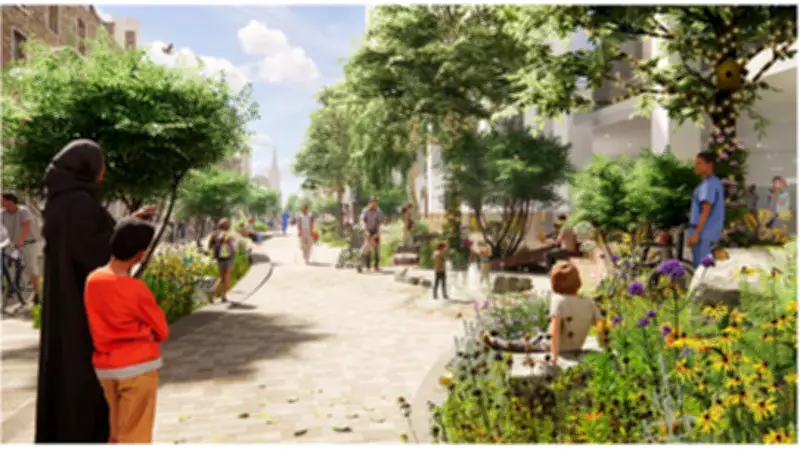
Introducing a carefully designed herbal healing garden into or alongside critical care transforms this landscape. Plants such as neem, moringa and basil are not merely decorative; they possess antimicrobial, anti-inflammatory and respiratory-support properties. More importantly, they contribute to a sensory environment that soothes, stabilises and reconnects patients with natural rhythms. From an Ifá perspective, the proverb that there is no medicine without herbs captures a foundational truth. Healing is not confined to pharmaceutical intervention; it is sustained by the living systems that surround us. In this sense, the garden becomes a therapeutic interface, a living extension of the clinical environment.
Cyber-Physical Systems and Dynamic Care
What elevates this concept into the digital age is the integration of cyber-physical systems. Sensors embedded within both the ICU and the garden can capture data on patient vital signs, air quality, temperature, humidity and even behavioural indicators such as sleep patterns. This data can then be processed through an AI model informed by encoded Odù Ifá principles. The result is a dynamic system in which patient conditions are continuously interpreted through both biomedical parameters and indigenous knowledge frameworks. A patient experiencing inflammation, for example, may trigger associations with Odù that emphasise cooling and balance. The system could then recommend increased exposure to specific herbal zones, subtle environmental adjustments and complementary clinical considerations for the attending physicians.

Crucially, this approach does not seek to replace evidence-based medicine. Rather, it augments it with an additional layer of intelligence, one that recognises the interconnectedness of body, environment and meaning. It is an attempt to move from a purely reactive model of care to one that is anticipatory, responsive and deeply humane.
Broader Implications for Healthcare
There are also broader implications. The incorporation of digitally modelled Ifá knowledge into healthcare challenges long-standing hierarchies that have marginalised indigenous systems as unscientific. On the contrary, when properly structured and analysed, these systems reveal sophisticated approaches to pattern recognition, decision-making and ecological balance. For the United Kingdom and other advanced healthcare systems, such an approach offers an opportunity to rethink design principles in hospitals, particularly as conversations around wellbeing, sustainability and patient-centred care grow more urgent. Healing gardens informed by computational intelligence could form part of a new generation of hospital architecture, one that is as attentive to psychological and environmental health as it is to clinical precision.
Moreover, this model resonates with ongoing efforts to integrate artificial intelligence responsibly into healthcare. Rather than treating AI as a purely technical tool, it positions it as a bridge between knowledge traditions. In doing so, it opens up new forms of interdisciplinary collaboration involving clinicians, technologists, botanists and scholars of indigenous knowledge.
Philosophical Foundations
The philosophical foundations of this approach are equally compelling. Within Ifá, illness is often understood as a disruption of balance between the individual and their environment. Recovery, therefore, requires restoration, not only of biological function but of harmony. The integration of herbal ecosystems into critical care reflects this principle in tangible form, while digital modelling ensures that such interventions are guided by structured knowledge rather than intuition alone. At a time when healthcare systems are under strain, innovation must extend beyond new machines and pharmaceuticals. It must also encompass how we think about care itself.
A critical care unit that incorporates living plant systems, guided by intelligent algorithms rooted in ancient wisdom, may appear unconventional. Yet it may also be precisely the kind of bold reimagining needed for the future. The convergence of digital Ifá intelligence and ecological design points towards a more integrated vision of medicine, where technology, nature and culture are not in competition but in conversation. In such a system, healing is not imposed; it is cultivated. As we look ahead, the question is not whether such models are possible, but whether we are willing to rethink our assumptions about knowledge, healing and innovation. The answer may well determine how humane and effective our healthcare systems become in the decades to come.
Professor Ademola is the first African Professor of Cybersecurity and Information Technology Management, Global Education Advocate, and Chartered Manager.