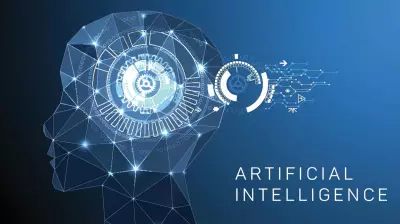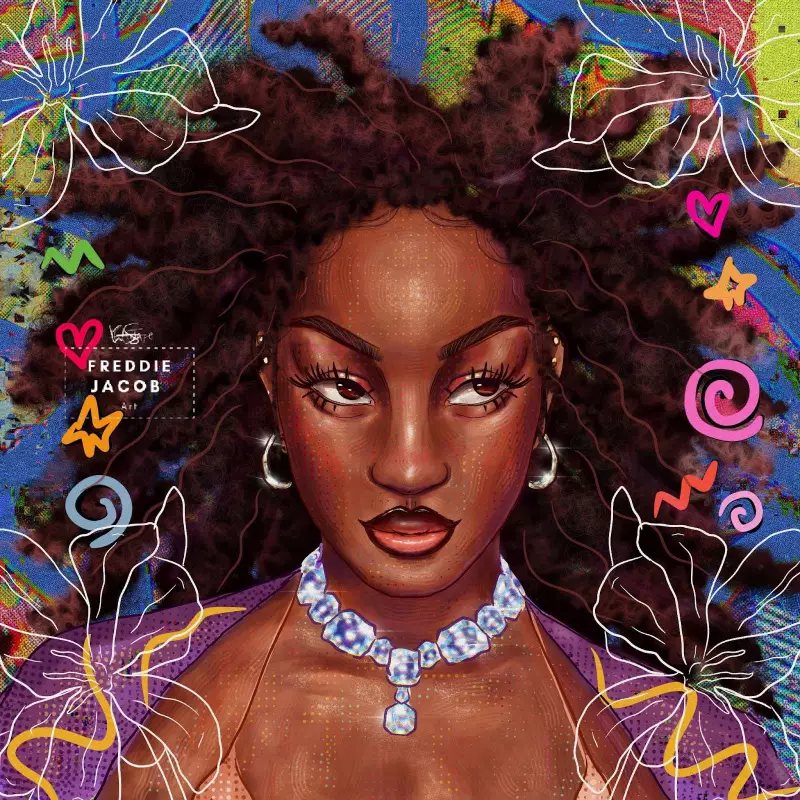
In Nigeria's vibrant creative landscape, a silent revolution is underway that threatens to redefine what we consider original art and photography. Artificial intelligence tools like Midjourney, DALL·E, and Runway are transforming how Nigerian artists create, challenging centuries-old notions of human creativity and originality.
The Rise of AI Remix Culture in Nigerian Art
Artificial intelligence has emerged as the ultimate remix machine in Nigeria's art scene. Platforms including Adobe Firefly, Stable Diffusion, and OpenAI's DALL·E don't simply generate new images—they learn from millions of existing artworks and photographs, then remix colors, styles, and themes to produce something that appears fresh yet stands on the shoulders of human creators.
This technological advancement raises crucial questions for Nigerian digital artists and photographers: when an AI system draws inspiration from someone else's creative work, can the resulting output genuinely claim originality? Many creators now describe AI art as derivative creativity—innovation constructed from pre-existing material rather than pure human imagination.

The Harvard Gazette recently explored this dilemma in an article examining how AI-image generators challenge traditional concepts of originality and emotional depth in art. The piece profiled various creators who reflected that while AI can mimic style and technique effectively, it often lacks the personal experience, emotional resonance, and human insight that define authentic artistic expression.
Photography's Authenticity Crisis in Nigeria
Photography, once considered an undeniable documentation of truth, now faces an identity crisis in Nigeria. With advanced editing tools and AI-enhancement features on smartphones and software like Photoshop's Generative Fill, even photographs have become subject to extensive manipulation.
In 2024, the line between a captured moment and a created moment has virtually disappeared. An image that appears to be a traditional photograph might actually be entirely generated by artificial intelligence. Consider the explosion of AI-generated portrait images and manipulation tools like Gemini on social media platforms. Nigerians now upload selfies only to receive stylized, cinematic portraits that were never actually captured by a camera.
This trend has made it increasingly difficult to distinguish where reality ends and digital imagination begins. For Nigerian photojournalists and documentary photographers, this represents a serious professional concern. Authenticity has always been the foundation of their work, but when AI can fabricate realistic scenes convincingly, how can audiences trust what they're seeing?
Copyright Battles Reach Nigerian Shores
As AI-generated images flood Nigerian online platforms, complex questions around copyright and ownership have emerged. Who truly owns an AI-generated image: the user who typed the prompt, the company that developed the AI technology, or the artists whose works trained the system?
Legal frameworks globally are scrambling to catch up with this rapidly evolving technology. In 2024, several high-profile cases emerged in the United States and Europe where artists sued AI companies for allegedly scraping their work without permission. Getty Images filed a lawsuit against Stability AI for reportedly using over 12 million copyrighted images to train its model without authorization—and lost the case.
Similarly, a group of visual artists filed a class-action lawsuit against Midjourney, DeviantArt, and Stability AI in the U.S., accusing them of mass infringement through data scraping practices.
In a notable 2023 incident, photographer Boris Eldagsen rejected a first-place prize he was awarded after revealing his winning images were AI-generated. The World Photographer Organisation stated they expected some AI elements but felt misled about the extent of its use, emphasizing that their awards exist to champion photographers' skills.
This global debate has now reached Africa, where Nigerian digital artists and photographers are advocating for stronger intellectual property protections. Within Nigeria's creative community, concerns about AI copyright policies have been raised on platforms like X and through art collectives such as Art X Lagos.

Nigerian Artists Embrace AI as Creative Partners
Despite these challenges, not all Nigerian creators view AI's evolution negatively. Many artists and photographers have embraced artificial intelligence as a creative collaborator rather than fearing it as a threat to originality. They perceive AI not as eliminating human creativity but as expanding its possibilities.
Nigerian photographers now utilize AI to enhance lighting, restore damaged historical images, or experiment with surreal compositions previously impossible to achieve. Artists employ AI to rapidly prototype ideas, freeing more time for concept development and cultural storytelling.
In this perspective, originality isn't vanishing—it's being redefined. Human creativity remains the foundation, with AI adding unprecedented layers of possibility. Across Nigeria's creative circles, from photographers to painters and digital artists, originality continues to carry immense cultural and emotional weight.
For many Nigerians, images created by human hands tell stories that technology cannot replicate. Esteemed photographers like Kelechi Amadi-Obi, TY Bello, and Emmanuel Oyeleke have built their reputations on capturing raw, unscripted human moments that reflect Nigeria's unique energy, beauty, and imperfections.
The Future: Human Intuition Meets Machine Intelligence
Artificial intelligence doesn't signal the death of creativity but rather its rebirth in a new form. The challenge lies in ensuring this evolution respects human artistry and establishes ethical boundaries.
To preserve originality in Nigeria's age of artificial intelligence, creators must adapt strategically. This means using AI responsibly, crediting sources transparently, and maintaining the emotional core that machines cannot replicate.
The future of Nigerian art and photography likely lies in coexistence: human intuition guided by machine intelligence. Together, they can redefine what it means to create—not by erasing originality, but by expanding its potential in ways we're only beginning to imagine.