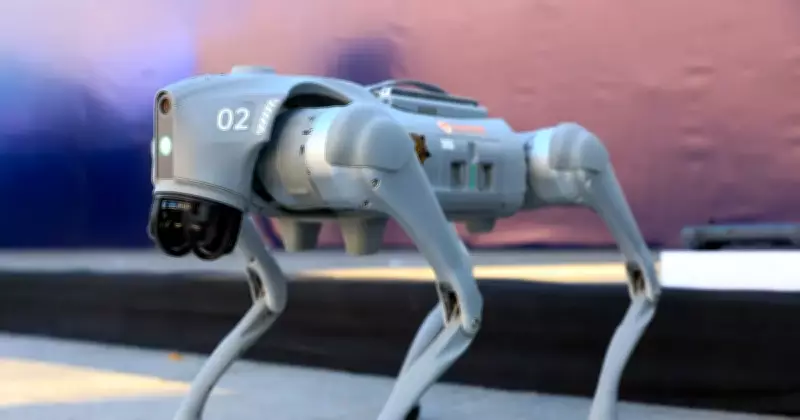
Mexico's 2026 World Cup Security Features AI-Powered Robot Dogs
As the 2026 FIFA World Cup approaches, Mexico is making headlines with a groundbreaking security initiative. Authorities in Guadalupe, Nuevo León, have unveiled a unit of robotic dogs that will patrol areas around the BBVA Stadium during the tournament. This move integrates artificial intelligence and advanced surveillance technology into the safety protocols for one of the world's largest sporting events, setting a new standard for stadium security.
Robotic Patrols for Enhanced Safety
The robotic dogs, part of a specialized security division called K9-X, are designed to assist police officers in Monterrey, a host city for the World Cup. These units are not armed but are equipped with high-definition cameras, night vision capabilities, motion sensors, and real-time communication systems. Their primary functions include patrolling public spaces, monitoring crowds, detecting suspicious behavior, and streaming live footage to security teams. With the ability to walk, climb stairs, and navigate complex environments, these robot dogs serve as mobile surveillance devices that reduce immediate risks to human officers.
Why Robot Dogs Are Crucial for the World Cup
The 2026 FIFA World Cup, co-hosted by the United States, Canada, and Mexico, is expected to draw massive crowds, making stadium security a top priority. Major sporting events often face risks such as overcrowding, public disorder, and potential threats. By deploying robotic security dogs, authorities aim to improve crowd monitoring, increase rapid response capabilities, reduce risks to human personnel, and enhance overall surveillance coverage. These robots can enter tight or hazardous spaces first, allowing officers to assess situations from a safe distance before intervening.

How the AI Robot Dogs Operate
These machines function in a semi-autonomous manner, moving independently while being monitored by trained operators. They utilize artificial intelligence systems to process visual data, real-time video streaming to send footage to command centers, thermal and night vision cameras for low-light detection, and obstacle detection technology to navigate crowds safely. Unlike drones that fly overhead, these four-legged robots patrol on the ground, offering steady movement across uneven terrain, stairs, and outdoor surfaces. Officials have already tested them during a recent football match at BBVA Stadium, using them for preventive surveillance around the venue.
Significance of AI Security at Global Events
The deployment of AI security technology at the 2026 World Cup reflects a broader global shift towards robotics and surveillance in public safety. As cities worldwide increasingly rely on such tools, this high-profile event highlights growing confidence in automated systems. Robot dogs have previously been used in search-and-rescue operations, hazardous material handling, and bomb disposal, but their role in crowd monitoring at a football tournament marks an expansion into mainstream law enforcement. This development signals how AI-powered security is becoming integral to everyday public life, from airports to shopping centers and major concerts.
Future Implications for Stadium Security
The use of robot dogs at the 2026 FIFA World Cup may set a precedent for future international events. If successful, other countries hosting global tournaments could adopt similar approaches, leading to expanded use of robotics, automated monitoring systems, and AI tools for safety management. This trend underscores how large-scale gatherings accelerate technological adoption, blurring the lines between science fiction and reality. For Mexico, the goal is to ensure a safe and well-organized tournament, while for the world, it offers a glimpse into how artificial intelligence and robotics are reshaping public safety in the coming years.