In a significant policy reversal, the United States government has given the green light for technology giant Nvidia to sell its advanced artificial intelligence (AI) semiconductors to Chinese buyers, albeit with strict conditions. This move, confirmed by the US Commerce Department on Tuesday, 14 January 2026, marks a notable shift from the previous administration's hardline stance on exporting cutting-edge AI technology to China over national security fears.
Details of the New Export Policy
The updated policy, which follows through on a change announced by President Donald Trump in December 2025, permits Nvidia to sell its powerful H200 AI chips to the Chinese market. However, this approval is not blanket. The US Bureau of Industry and Security will now handle applications on a case-by-case basis, moving away from a previous presumption of denial.
Key conditions attached to the sales include Nvidia providing proof of "sufficient" supply within the United States first. Crucially, Nvidia's most advanced and state-of-the-art processors will remain completely off-limits for export to China. The H200 chips themselves are reported to be roughly 18 months behind the company's latest offerings available in the US market.

Challenges and Pushback from China
Despite the US opening the door, significant uncertainty clouds the actual demand from Chinese technology firms. Reports indicate that Beijing has been actively encouraging its companies to prioritise homegrown semiconductors over foreign imports.
According to a Tuesday report by The Information, Chinese officials have informed some firms that they would only authorise purchases of Nvidia's H200 chips under special circumstances, such as for use in development labs or university research projects. There were earlier reports that Chinese authorities were considering mandating companies to buy a specific ratio of AI chips from Nvidia's domestic rivals, like Huawei, as a condition for any import approvals.
This domestic capability was highlighted on Wednesday when leading Chinese AI startup, Zhipu AI, announced it had used homegrown Huawei chips to train its new image generator. The company claimed its tool is the first top-tier multimodal model trained entirely on a domestically produced chip.
Political Context and Industry Reactions
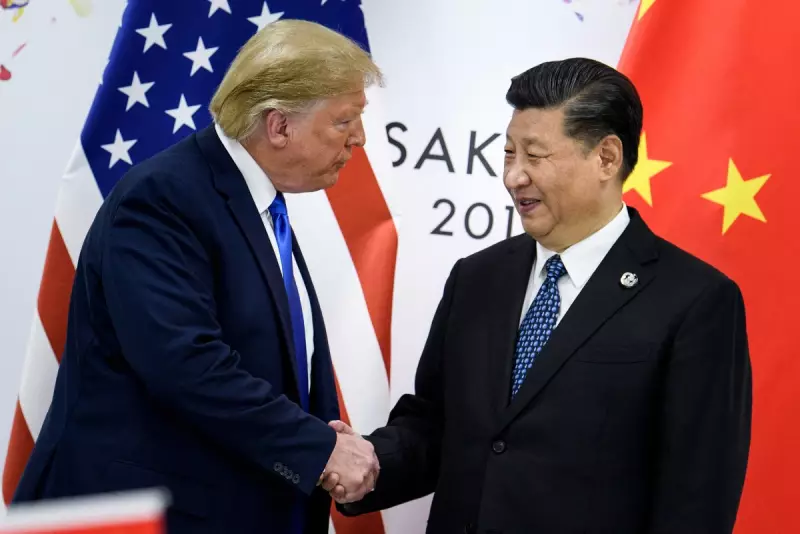
This policy shift stems from an agreement reached in December 2025 between President Trump and Chinese President Xi Jinping. A unique aspect of the deal is that the US government will receive a 25-percent cut of the sales revenue from these chip exports to China.
The move has drawn sharp criticism from Democrats in Congress, who label it a dangerous mistake that could bolster China's military and economic capabilities. It reverses restrictive policies put in place by the prior administration of Joe Biden, which were driven by concerns about Chinese military applications of advanced AI.
Nvidia's CEO, Jensen Huang, has long advocated for such sales, arguing for the importance of global AI systems being built on US technology. He has also warned that China is accelerating its own chip development and is just "nanoseconds behind" the United States. The global frenzy for AI has propelled Nvidia to become the world's most valuable company, dominating the GPU market essential for training models like ChatGPT.
The financial markets reflect high hopes for China's tech sector, with Zhipu AI's shares soaring 75 percent since its Hong Kong IPO last week, joining a wave of successful listings by Chinese chip and AI firms.