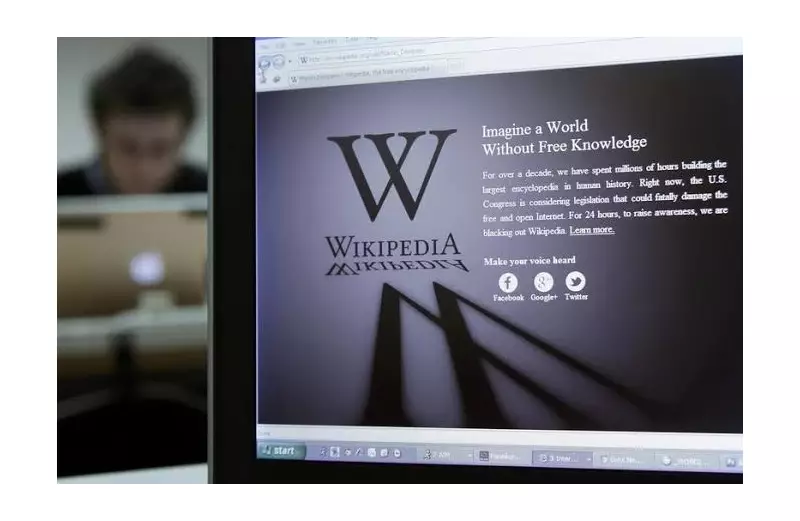
The world's largest online encyclopedia, Wikipedia, has officially turned 25 years old. To mark this significant milestone, the Wikimedia Foundation, the nonprofit behind the platform, has launched a global celebration and its first-ever video "docuseries," shining a light on the volunteer editors who are the lifeblood of the site, including a notable contributor from Nigeria.
Celebrating a Quarter-Century of Human-Powered Knowledge
Wikipedia was founded on January 15, 2001, with a mission to make trustworthy knowledge freely accessible to everyone. Today, it stands as a digital pillar of the internet, with 65 million articles in over 300 languages viewed nearly 15 billion times each month. It is the only site in the global top-ten most-visited websites operated by a nonprofit.
Maryana Iskander, Chief Executive Officer of the Wikimedia Foundation, described Wikipedia as a "digital wonder of the world." She credited its resilience and growth to the global community of nearly 250,000 volunteer editors who write, edit, and fact-check content based on strict standards of neutrality.

The cornerstone of the anniversary celebrations is the release of a new video docuseries. This series offers a behind-the-scenes look at the lives of eight volunteer editors from around the globe, exploring their unique motivations for contributing to the vast repository of free knowledge.
Nigerian Librarian Goodness Ignatius Takes Center Stage
A highlight of the docuseries is the feature on Nigeria's own Goodness Ignatius. An active contributor across Wikipedia, Wikidata, and Wikimedia Commons, Ignatius embodies cultural stewardship. She uses the platform to ensure that Nigerian and Igbo traditions are documented authentically by those who live them.
By profession a librarian, Ignatius is a committed member of the Igbo Wikimedians User Group. She co-founded the Ig Wiki Librarians Hub to foster collaboration among information professionals within Nigeria's Igbo community. Her story powerfully underscores a key message of the anniversary: even in the age of AI, knowledge is human, and knowledge needs humans.
Navigating the Future: AI, Infrastructure, and Global Reach
The Wikimedia Foundation is using this anniversary to outline its vision for the future. Acknowledging Wikipedia's critical role as one of the highest-quality datasets for training Large Language Models (LLMs), the Foundation has implemented an AI strategy that prioritizes human contributors. The goal is to support volunteers so they can focus on creating knowledge rather than technical hurdles.
To ensure sustainability, the Foundation has expanded its Wikimedia Enterprise platform, a service for large-scale commercial users of Wikipedia content. New partners including Microsoft, Mistral AI, and Perplexity have joined existing ones like Google and Amazon. These partnerships help fund the nonprofit mission while ensuring responsible use of its content.
Other key initiatives for growth include:
- Strengthening Tech Infrastructure: Continuous updates to the desktop interface, dark mode, new data centers, and mobile apps improve accessibility and speed for users worldwide.
- Closing Knowledge Gaps: Efforts like Abstract Wikipedia and community-led projects aim to make content more representative of the global population and available in more languages.
- Engaging New Generations: Experiments with online games and social media content are designed to reach new users and adapt to evolving internet trends.
Wikipedia founder Jimmy Wales reflected on the journey, stating, "Wikipedia demonstrates 25 years of humanity at its best, proving that when people come together in the spirit of building trust and collaboration, they can make the impossible possible."
Selena Deckelmann, Chief Product and Technology Officer at the Foundation, emphasized, "Especially now, in the age of AI, we need the human-powered knowledge of Wikipedia more than ever."

The anniversary celebrations will continue throughout 2026, featuring a global virtual birthday event, a digital birthday card initiative, and the introduction of a new mascot named "Baby Globe." As Wikipedia enters its next quarter-century, its commitment remains unchanged: to ensure everyone, everywhere can access and share free, reliable knowledge.