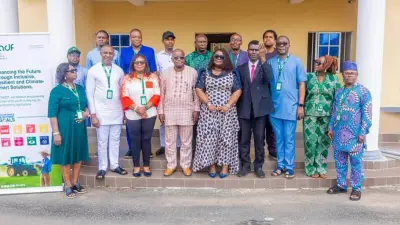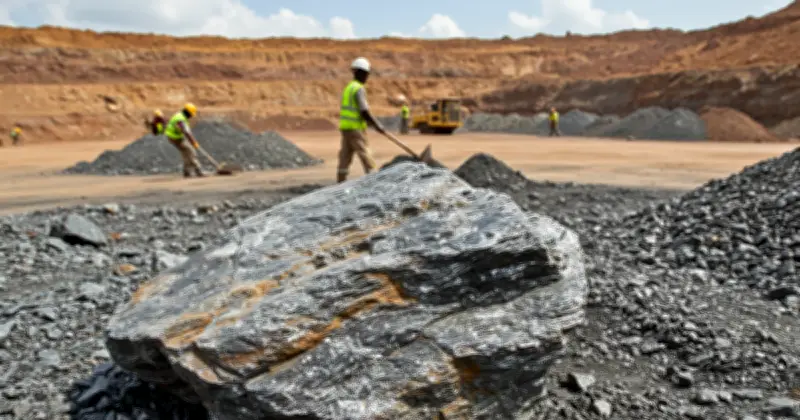
The Federal Government has announced the discovery of commercially significant deposits of platinum, gold, lithium, nickel, copper, and rare earth elements in Kaduna State, describing it as a "world-class polymetallic mineral province." The announcement was made by the Minister of Solid Minerals Development, Dr. Dele Alake, at the African Natural Resources and Energy Investment Summit. The extensive exploration work was conducted by the Nigerian Geological Survey Agency (NGSA).
Economic potential beyond oil
For decades, Nigeria's economy has been heavily dependent on crude oil, but the discovery of these critical minerals could help diversify revenue streams. According to the Nigeria Extractive Industries Transparency Initiative (NEITI), the mining sector currently contributes less than 1% of Nigeria's GDP, despite the country's vast mineral wealth. If developed responsibly, the Kaduna deposits could increase government revenue through taxes and royalties, attract local and foreign investment, create thousands of jobs, and improve infrastructure around mining communities.
Global market value of critical minerals
These minerals are in high demand globally due to their use in modern technologies. Gold is trading at historic highs of over $4,100 per ounce, driven by global economic uncertainty. Platinum is hovering around $1,300–$1,500 per ounce, used in green hydrogen technology and automotive catalytic converters. Nickel is positioned at roughly $15,000–$16,000 per metric tonne, essential for electric vehicle (EV) batteries. Copper is trading near $9,500–$10,000 per metric tonne, critical for electricity and power grids. Lithium remains highly strategic for vehicular electrification, while rare earth elements command hundreds of dollars per kilogram for their role in defence hardware and clean energy infrastructure.

Security challenges and the Zamfara trap
Despite the financial potential, the government must prevent illegal mining and criminal networks from repeating the security challenges seen in Zamfara State. In Zamfara, unmonitored gold mining has been linked to rising rural banditry and insecurity, with criminal syndicates taxing local mining sites, smuggling raw minerals, and funding armed operations. The Kaduna discovery is as much a national security challenge as an economic breakthrough. Without strict oversight, valuable mineral fields can become targets for organised crime.
Way forward for mining regulation
To maximise the windfall, the Ministry of Solid Minerals Development will need to aggressively enforce the Nigerian Minerals and Mining Act. Success will depend on strengthening regulatory enforcement, upgrading security frameworks around mining communities, cracking down on mineral smuggling, and ensuring that international mining leases directly benefit local Nigerians rather than foreign interests or criminal syndicates. According to Dr. Dele Alake, the discovery could become one of the country's biggest solid-mineral breakthroughs in decades if managed properly.