The Federal Government has launched a coordinated, science-driven campaign across the Federal Capital Territory (FCT), Kogi, and Ogun States to combat the persistent threat of tsetse fly infestation and the diseases it transmits. The Nigerian Government, through the Federal Ministry of Livestock Development, initiated this multi-state intervention to safeguard national livestock and public health.
According to a statement from the ministry, the campaign was executed simultaneously from Monday 20th to Friday 24th April, 2026, across key grazing reserves, rural livestock settlements, and high-risk corridors. This decisive move underscores the nation's commitment to protecting livestock productivity, securing rural livelihoods, and strengthening public health outcomes under a unified national framework.
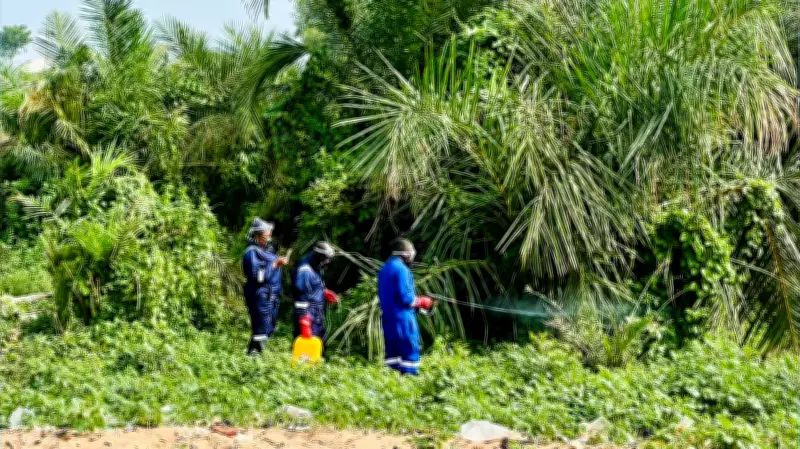
Across the three states, federal teams deployed an integrated strategy combining surveillance, community engagement, and targeted vector control. The field operations included strategic placement of biconical traps to determine tsetse fly prevalence, fumigation of high-risk zones, insecticide application on livestock and breeding grounds, and widespread sensitisation of pastoral communities.

In the FCT, operations at the Paikon Kore Grazing Reserve, home to over 15,000 cattle, focused on structured epidemiological assessment. Traps were positioned at calibrated intervals of 500 meters to generate actionable data for precision response. Deputy Director and FCT Coordinator of the Federal Epidemiology Unit, Dr. Ozoemena Uche, emphasised the broader health implications: "Tsetse flies transmit trypanosomiasis, which affects both animals and humans. Our goal is to reduce its impact on livestock productivity and prevent associated public health risks."
Manager of the Paikon Kore Grazing Reserve, Mohammed Abubakar Bala, highlighted additional concerns: "We are also dealing with diseases like foot-and-mouth and contagious bovine pleuropneumonia. We need sustained veterinary support and access to vaccines to protect our livestock."
In Kogi State, surveillance and control activities spanned six local government areas (LGAs): Adavi, Lokoja, Koton Karfe, Ajaokuta, Ofu, and Idah. The State Commissioner for Livestock Development, Olufemi Bolarin, noted that Kogi's central location makes it a critical point in disease control, and success in the state would have a ripple effect across Nigeria. State Coordinator of the Federal Ministry of Livestock Development, Abba Helen, called for grassroots cooperation, urging communities to support federal efforts for lasting results.
Team Lead of the Tsetse Fly Surveillance and Ground Control Programme in Kogi, Abdulkadiri Adaji, spoke on the urgency: "The prevalence of tsetse flies continues to impact livestock production and livelihoods. This exercise is critical to generating data and implementing control measures to reverse this trend. Diseases transmitted by animals can affect humans, so addressing this challenge is essential for agriculture and national health security."
In Ogun State, operations were carried out across key livestock settlements, including Owowo RUGA Community (Ewekoro LGA), Alamutu RUGA Community (Abeokuta North LGA), and Alabata RUGA Settlement (Odeda LGA). Representing the Ogun Commissioner for Agriculture and Food Security, Director of Veterinary Services Dr. Taiwo Jolaoso reaffirmed the state's commitment to strengthening veterinary services through initiatives like free vaccination to support farmers and improve livestock productivity. State Coordinator Dr. Toyin Ayo-Ajayi stressed the importance of collaboration with state governments to ensure alignment of efforts.