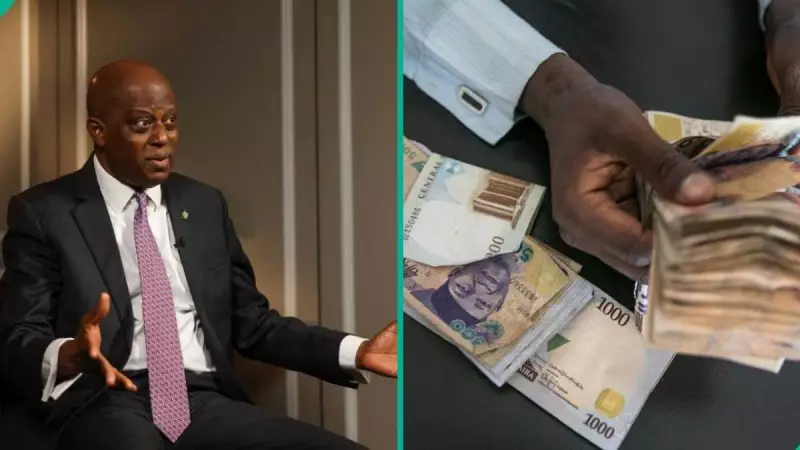
Fresh data from the Central Bank of Nigeria has exposed a staggering disparity in the country's banking sector, with customers paying as much as 60% interest on loans while earning a paltry 2.7% on their savings deposits. The report, endorsed by the Monetary Policy Committee and released over the weekend of January 20, 2026, highlights a widening chasm between what banks charge and what they pay, even with the benchmark Monetary Policy Rate holding steady at 27%.
A Deep Dive into Soaring Loan Costs
The Central Bank, in a move to boost transparency, has now made public the lending rates of all Deposit Money Banks. The figures for January paint a grim picture for several critical sectors of the Nigerian economy. Borrowers in manufacturing, construction, mining, and public utilities are facing the brunt, with maximum lending rates hitting 60% at certain institutions.
The data shows that loans for power and energy are priced as high as 48%, while the oil and gas and real estate sectors see rates around 46% to 46.5%. General commerce attracts rates up to 45%, and information and communication loans hover near 30%. In contrast, capital market and government loans are relatively cheaper, at about 19.5% and 19% respectively.

The Meager Returns for Savers
On the flip side, the reward for depositing money with these same banks remains dismally low. The CBN report indicates that the average interest on demand deposits ranges from a mere 0.48% to 7.33%. For savings accounts, which are used by millions of Nigerians, the rates are only slightly better, sitting between 2.70% and 8.15%.
This creates a severe imbalance where customers pay significantly more to borrow than they earn on their deposits. Financial analysts have pointed out that this high cost of credit is directly increasing production costs, especially within the manufacturing sector, and stifling economic growth.
Bank-by-Bank Breakdown and Sectoral Impact
The lending rates vary dramatically between banks and are heavily influenced by a customer's perceived creditworthiness. The 'Prime' rate is offered to clients with strong credit, while the 'Maximum' rate is for those deemed higher risk.
Stanbic IBTC Bank shows the widest range, with a prime rate as low as 1.00% but a maximum rate soaring to 60.00%. Ecobank's maximum rate is 48.00%, and First Bank of Nigeria charges up to 38.00%. Guaranty Trust Bank offers a prime rate of 3.00% with a maximum of 35.00%.
This pricing model means that essential, job-creating sectors like manufacturing and construction are burdened with the highest financing costs, which analysts warn could hamper investment and consolidation of recent macroeconomic gains. They suggest that a potential reduction in the MPR might be necessary to ease credit expansion to the real sector.
The publication of this data coincides with the Federal Competition and Consumer Protection Commission's approval of 457 digital lending companies, offering Nigerians alternative, though often scrutinized, sources of credit.