CBN Inaugurates Committee to Drive New Payments System Vision and Reforms
The Central Bank of Nigeria (CBN) has taken a significant step towards strengthening the country's digital finance landscape by establishing the Payment Service Providers Committee (PSPC). This move underscores the apex bank's renewed commitment to tightening regulation, accelerating reforms, improving coordination, and resolving industry bottlenecks in the payments ecosystem.
Committee Formation and Objectives
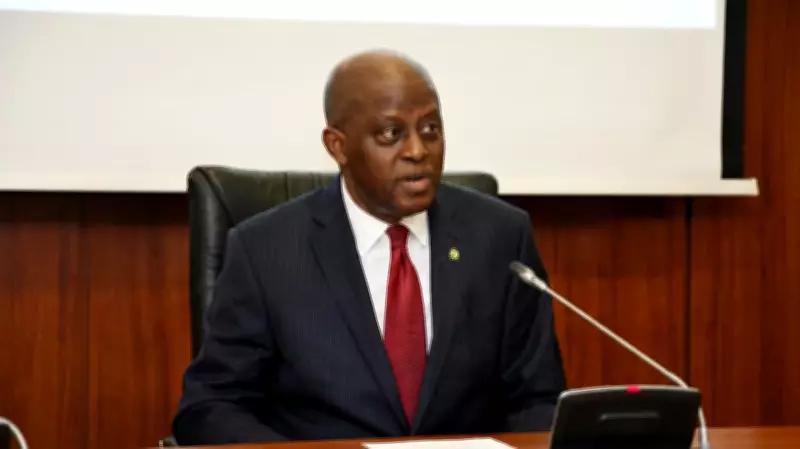
Inaugurated by CBN Governor Olayemi Cardoso at its inaugural meeting in Lagos, the committee brings together key regulatory bodies, including the Nigerian Communications Commission (NCC), the Nigeria Deposit Insurance Corporation (NDIC), the Securities and Exchange Commission (SEC), and the Nigeria Inter-Bank Settlement System Plc. This marks the birth of a structured inter-agency engagement aimed at addressing issues affecting Nigeria's payment system.
Deputy Governor of the Economic Policy Directorate, Muhammad Sani Abdullahi, emphasized that the committee was established to reinforce policy alignment, deepen knowledge sharing, and facilitate collective problem-solving in a sector increasingly central to economic growth. He highlighted that the CBN is set to unveil a new payment systems vision within a month, designed to shape the trajectory of Nigeria's fast-evolving digital finance ecosystem over the next three years.

Growth and Impact of Digital Payments
Abdullahi noted the remarkable growth in Nigeria's digital payment landscape, with over 11.2 billion electronic transactions processed in 2024 alone, amounting to over N1.07 quadrillion. This milestone represents the first time digital payments crossed the quadrillion naira threshold, signaling significant expansion. The momentum has continued into 2025 and the early months of 2026, underscoring the ecosystem's critical role in driving inclusive growth, trade, and other positive economic outcomes.
He explained that prior to the committee's establishment, engagement between operators and regulators was often fragmented, relying on supervisory processes that could slow response times. The new framework is expected to deliver faster issue resolution and more proactive policy development, ensuring a more cohesive approach to challenges in the payments sector.
New Vision and Collaborative Efforts
The upcoming payment systems vision has been co-created with financial technology players, mobile money operators, and payment service providers, reflecting a collaborative effort to chart the future of digital finance. Abdullahi stressed the importance of this initiative in reinforcing policy coordination and knowledge sharing to address industry-wide issues effectively.
Enhanced Security Measures
Deputy Governor in charge of Financial System Stability, Philip Ikeazor, announced new policies on automated anti-money laundering and fraud controls to be deployed across banks and payment service providers. He highlighted a 50% drop in fraud numbers between 2024 and 2025 and expressed confidence that these new measures would further reduce incidents once implemented, strengthening safeguards in the financial system.
Industry Support and Future Prospects
Managing Director of NIBSS, Premier Oiwoh, commended the CBN for the initiative, stating it would deepen the development of payment systems. From an industry perspective, Chief Executive Officer of Enhancing Financial Inclusion and Advancement (EFInA), Foyinsolami Akinjayeju, noted the great progress in financial inclusion driven by non-bank financial services providers, mainly through payments. She emphasized the tremendous potential of payment service providers to enhance inclusive growth and welcomed the platform as a means to quickly resolve issues plaguing Nigeria's payment system.
This committee represents a pivotal move towards a more integrated and efficient payments ecosystem, poised to support Nigeria's economic growth and financial inclusion goals in the coming years.