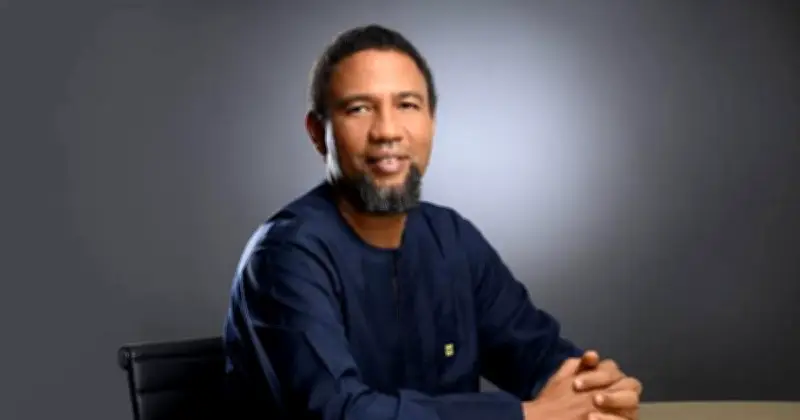
MTN Nigeria CEO Karl Toriola has stated unequivocally that the telecom company belongs to Nigerians, countering the widespread perception that it is a South African-owned entity. Speaking during an interview on Arise News, Toriola detailed the company's ownership structure, financial challenges, and the reasons behind persistent network issues and data consumption complaints.
Ownership and Nigerian Identity
Toriola explained that while MTN Group was founded in South Africa, its current shareholding is globally diverse. "Only about 50 per cent of the shareholding is African, while the rest is held by investors from North America, Europe, the United Kingdom, the Middle East and Asia-Pacific," he said. He emphasised that MTN Nigeria is incorporated in Nigeria, listed on the Nigerian Exchange, and pays all taxes, duties, and regulatory fees locally.
"MTN Nigeria is a Nigerian company through and through. We are domiciled in Nigeria. We are listed on the Nigerian Exchange. We pay all the taxes, duties and levies expected of us, and we are run by Nigerians," Toriola stated. He noted that apart from one executive, every member of the executive committee is Nigerian, and the entire expatriate workforce in Nigeria is just four people.

According to Toriola, over 201,000 retail investors directly own MTN Nigeria shares, while approximately 11 million Nigerians have indirect ownership through pension funds. "We have over 201,000 retail investors, while about 11 million Nigerians own MTN shares indirectly through pension funds. We are very proud of our Nigerian identity," he added.
Tariff Increase Justification
Toriola defended the recent telecom tariff increase approved by the Federal Government, asserting that it was necessary to prevent financial collapse. "People perceived the tariff increase as an aspiration for profitability, but the reality was that we were on our knees financially. We couldn’t even pay our month-to-month bills with the revenues we were generating. The tariff adjustment was an absolute necessity. It enabled us to stay alive," he said.
Following the tariff review, MTN has significantly increased network investment. Capital expenditure rose from about ₦250 billion in 2024 to roughly ₦1 trillion in 2025. "In the first quarter of this year alone, we spent N390 billion on capital expenditure, compared with a profit after tax of N359 billion. That demonstrates our commitment to improving quality of service," Toriola stated.
Network Challenges and Data Consumption
On complaints about poor network service, Toriola admitted customers still face challenges but attributed them to factors beyond MTN's control. He cited increasing data demand, fibre cuts during road construction, vandalism, insecurity, and Nigeria's unstable electricity supply. "There are people who deliberately pour petrol into our manholes and set them on fire. A single incident can knock out services for millions of subscribers. We also face security challenges that prevent our engineers from accessing some sites quickly," he explained.
MTN operates approximately 18,000 network sites nationwide, many of which rely heavily on generators due to unreliable power. Toriola assured customers that the company is investing aggressively to improve service. "We are not perfect, but we are investing aggressively and continuously striving to do better," he added.
Addressing the issue of rapidly depleting data, Toriola dismissed claims that MTN deliberately consumes customers' data. He said internal investigations repeatedly show that background applications, such as Apple iCloud, WhatsApp, and other cloud-based services, often perform automatic backups using mobile data when Wi-Fi is unavailable. "There is a perception that MTN goes and takes customers’ data, but our studies have shown repeatedly that background applications are consuming much of that data," he said. He advised subscribers to check their phone settings and configure automatic backups to occur over Wi-Fi to avoid unnecessary mobile data usage.