Nigeria's ongoing economic transformation is sending powerful signals across West and Central Africa, influencing investment, policy, and regional market integration. According to Dahlia Khalifa, the International Finance Corporation's (IFC) Regional Director for Central Africa and Nigeria, the country's scale makes its reform journey a critical reference point for neighbouring economies.
Powering Productivity: Electricity as a Foundation for Growth
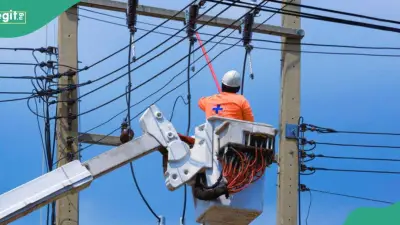
Unreliable electricity remains one of the most significant barriers to productivity for businesses across Nigeria and Central Africa. Khalifa emphasises that for small and medium-sized enterprises (SMEs) and industrial players, consistent power determines their ability to operate, control costs, and expand. This is why energy access is central to the World Bank Group's Mission 300, which aims to connect 300 million people to electricity by 2030.
Nigeria is advancing these objectives through the Distributed Access through Renewable Energy Scale-up (DARES) programme. IFC plays a key role by mobilising private capital for this initiative. A practical example is IFC's investment in Husk Power Systems, which is deploying over 100 mini-grid sites in Northern Nigeria. These grids are creating nearly 29,000 new connections, benefiting around 115,000 people and businesses, and cutting energy costs by roughly 25% by replacing diesel.

Complementing this, IFC's investment in Sun King is scaling pay-as-you-go solar solutions nationwide. These efforts demonstrate that privately-led energy solutions, when aligned with public reform, can deliver commercially viable gains. The biggest near-term economic gains are expected in agro-processing, light manufacturing, and trade-linked services, where reliable power most directly boosts output and job creation.
Transforming Agriculture into a Job Engine
While energy enables productivity, Khalifa notes that agriculture determines whether that productivity translates into large-scale employment, especially for youth and rural communities. The challenge is structural: farming creates sustained jobs only when linked to processing, logistics, finance, and markets.
IFC's strategy in Nigeria focuses on strengthening entire agricultural value chains. Investments in companies like Johnvents Industries are expanding local cocoa processing, improving market access for smallholders, and creating jobs in processing and logistics. Similarly, engagements with Dangote Fertiliser, Robust International, and Indorama in fertiliser production boost farm productivity while generating industrial employment.
The upcoming AgriConnect initiative will systematise this approach, linking farms, firms, and finance to transform agriculture into a modern, job-creating sector. Nigeria's experience is vital for Central Africa, where agriculture employs most people but value chains are fragmented.
Mobilising Capital and Creating Regional Ripple Effects
Mobilising private investment is the third pillar of the jobs agenda. Investors are watching for macroeconomic stability, policy consistency, and the ability to execute reforms. Nigeria's recent reforms in foreign-exchange management and fiscal policy have begun rebuilding investor confidence.
Tools like guarantees and risk-sharing mechanisms are crucial for converting reform momentum into investable opportunities. Platforms like InfraCredit enable pension funds and insurers to invest in local-currency infrastructure bonds, unlocking long-term domestic capital.
Nigeria's reforms influence the entire region. As Africa's largest economy, its policy shifts affect investor perceptions and capital flows across West and Central Africa. The removal of fuel subsidies and FX market liberalisation since mid-2023 have contributed to a sharp recovery in investor confidence. Nigerian firms expanding regionally, especially in digital finance, further strengthen cross-border trade and market integration.

Khalifa concludes that the World Bank Group's integrated approach—combining policy reform, public investment, and private capital—is essential. When these elements align, as seen in Mission 300 and AgriConnect, they create momentum that drives durable job creation, accumulates productivity gains, and builds economic resilience for long-term growth across the region.